Ampere's Law for Magnetic Fields
Electric Currents
What is Electric Current?
Think of an electric current like water flowing through a pipe. Just as the flow of water is a current, the flow of electric charge is an electric current. In most materials, like the copper wires in your walls, this charge is carried by tiny moving particles called electrons.
An electrical current is a flow of electric charge, measured in amperes (symbol A), where a current of one ampere is a total charge of one coulomb flowing in one second.
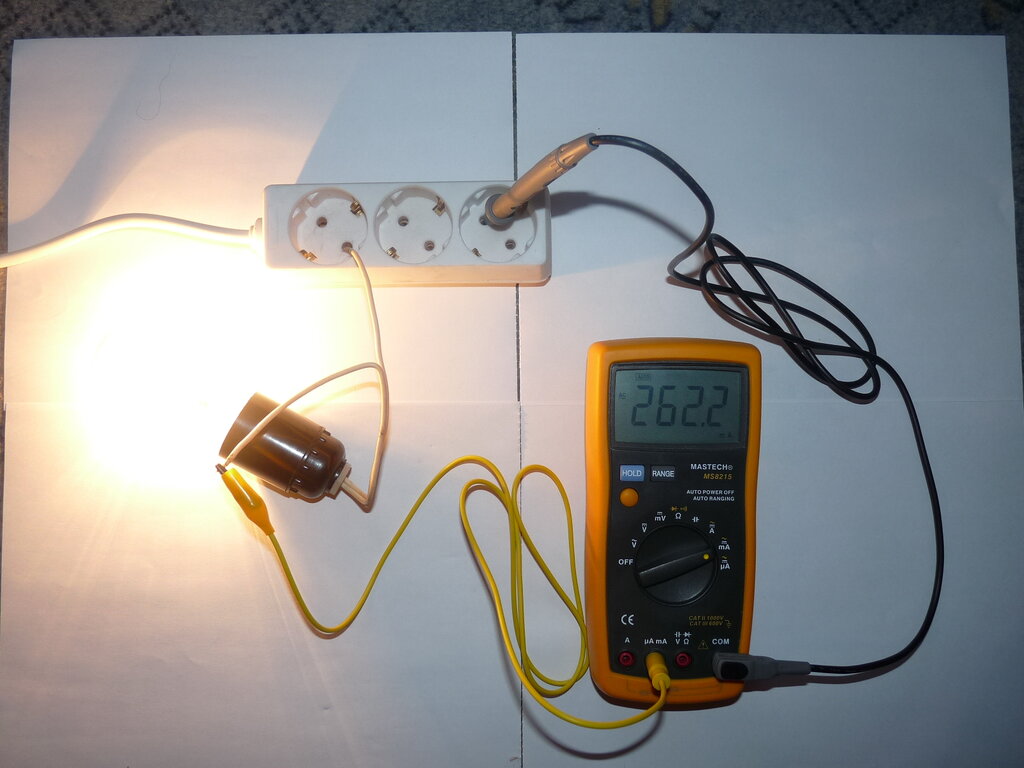
We measure current in units called amperes, or "amps" for short, named after the French physicist André-Marie Ampère. An ammeter is a device used to measure this flow. If one amp is flowing through a wire, it means a specific amount of charge, one coulomb, is passing a single point every second.
The relationship between current (), charge (), and time () can be written as a simple equation.
Which Way Does It Flow?
Here's a slightly confusing historical quirk. We know that in a typical wire, it's the negatively charged electrons that move. They flow from the negative terminal of a battery to the positive one.
However, early scientists like Benjamin Franklin studied electricity before the electron was discovered. They guessed that the current was a flow of positive charge. So, they defined the direction of current as moving from positive to negative. This is called conventional current.
For nearly all work in electronics and circuit analysis, we use conventional current, which assumes charge flows from positive to negative.
It might seem backward, but it works. The math is the same regardless of which direction you assume. The important thing is to be consistent. Unless you're studying the specific physics of particles inside a material, you'll always use the conventional direction for current.
The Laws of Flow
For a current to flow, two things are needed: a push and a path. The push is provided by a voltage source, like a battery. Voltage is a measure of electric potential energy, similar to how water pressure pushes water through a pipe. The path is a closed loop of conductive material, called a circuit.
But the flow isn't always easy. All materials resist the flow of current to some degree. This opposition is called resistance, measured in ohms (Ω). A thin wire has more resistance than a thick one, just as a narrow pipe restricts water flow more than a wide one.
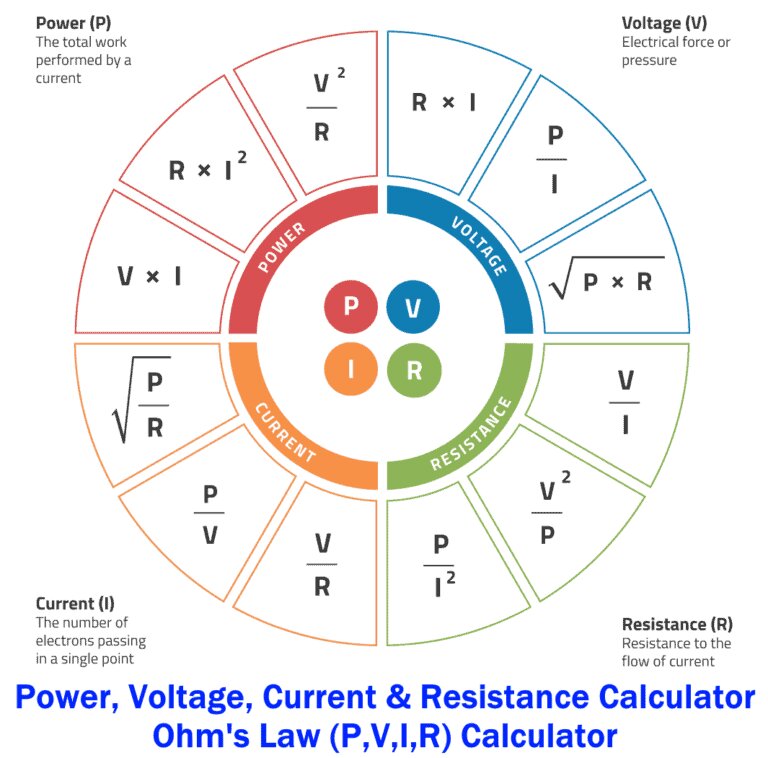
The relationship between voltage, current, and resistance is described by a fundamental rule called Ohm's Law.
Ohm's Law tells us that for a given resistance, a higher voltage will produce a higher current. You can also rearrange the formula to solve for current () or resistance (). For instance, if you connect a 12-volt car battery to a headlight with a resistance of 3 ohms, the current that flows is .
Current Density
Sometimes, knowing the total current isn't enough. Imagine two rivers: one is wide and slow, and the other is narrow and fast. They might carry the same total amount of water per second (the current), but the flow in the narrow river is much more concentrated.
In electricity, this concentration of flow is called current density. It measures how much current is flowing through a specific cross-sectional area of a conductor. It's not just about how much charge is flowing, but how packed together that flow is.
current density
noun
The amount of electric current flowing per unit of cross-sectional area.
We represent current density with the symbol . If the current flows uniformly through a conductor with a cross-sectional area , the magnitude of the current density is:
Unlike current, which is a scalar (just a number), current density is actually a vector. It has both a magnitude and a direction, pointing in the direction of the charge flow at that specific location. This concept becomes very important when analyzing how currents create magnetic fields.
Ready to test your knowledge? Let's see how well you've grasped these fundamental ideas about electric current.
What is the standard unit used to measure electric current?
Conventional current is defined as the direction of flow of which type of charge?
Understanding current is the first step in exploring the deep connection between electricity and magnetism. It is the movement of charge that brings the world of electromagnetism to life.