American Parallels to Historical Authoritarianism
Defining Authoritarianism and Fascism
Understanding Authoritarianism
At its core, authoritarianism is a form of government where power is concentrated in the hands of a single leader or a small group. In these systems, individual freedoms take a backseat to state control. The rulers are not constitutionally accountable to the people they govern, and there are few, if any, ways for citizens to replace them through fair elections.
Authoritarianism
noun
A form of government characterized by the rejection of political plurality, the use of a strong central power to preserve the political status quo, and reductions in the rule of law, separation of powers, and democratic voting.
Authoritarian regimes don't all look the same. They can range from military juntas to absolute monarchies to single-party states. What they share is a structure designed to maintain power for the ruling elite, often by limiting free speech, controlling the press, and suppressing any political opposition that might challenge their authority.
What is Fascism?
Fascism is a specific, more extreme form of authoritarianism. It combines the centralized power of an authoritarian state with a fervent, ultranationalist ideology. Fascist movements typically arise during times of severe economic or social crisis, promising to restore national greatness and purge society of supposedly corrupting influences.
Fascism
noun
A far-right, authoritarian, ultranationalist political ideology and movement, characterized by a dictatorial leader, centralized autocracy, militarism, and forcible suppression of opposition.
Unlike some other authoritarian systems that might just seek to maintain control, fascism has a revolutionary energy. It aims to fundamentally transform society according to its vision. This involves mobilizing the masses through propaganda, glorifying violence and the military, and creating a narrative of national rebirth. A charismatic, dictatorial leader is always at the center, embodying the will of the nation.
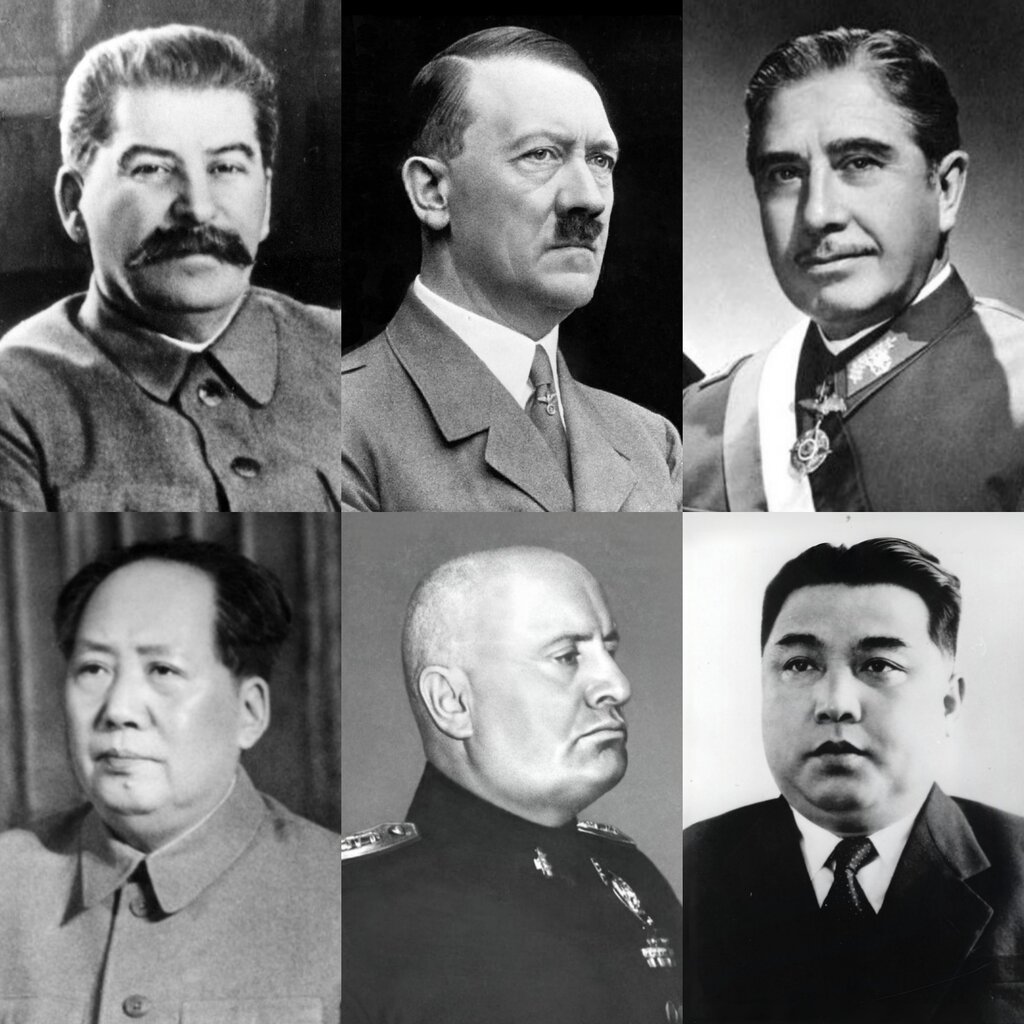
To see the distinctions more clearly, let's compare their key features.
| Feature | Authoritarianism | Fascism |
|---|---|---|
| Primary Goal | Maintain power and control | National rebirth; radical social transformation |
| Ideology | Often lacks a detailed ideology beyond control | Ultranationalist, militaristic, and revolutionary |
| Political Pluralism | Severely limited or eliminated | Completely eliminated; single-party state is essential |
| Social Control | Represses opposition | Aims to mobilize and control all aspects of society |
| Economic System | Can coexist with various economic systems | Corporatist; state heavily directs the economy for national goals |
A simple way to remember the relationship is that all fascist regimes are authoritarian, but not all authoritarian regimes are fascist.
Fascism is a specific flavor of authoritarian rule, defined by its unique blend of extreme nationalism, militarism, and a cult of personality around its leader. Let's review these key terms.
Now, check your understanding of these core concepts.
What is the primary characteristic that defines an authoritarian government?
Which of the following features is more distinctly characteristic of fascism compared to other forms of authoritarianism?
Understanding these definitions is the first step. It provides the framework for analyzing how these ideologies have shaped history and how their characteristics might appear in different political contexts.