American Government Essentials
Foundations of American Government
The Ideas Behind the Rules
Before the United States was a country, it was an idea. Or rather, a collection of ideas borrowed from Enlightenment thinkers. One of the most influential was an Englishman named John Locke. He argued that every person is born with certain rights that no government can take away.
Natural Rights
noun
Fundamental rights inherent to all human beings, not granted by any government.
Locke identified these as the rights to life, liberty, and property. He believed people are generally reasonable but need a government to protect these rights from those who would violate them. This leads to another big idea: the social contract.
The social contract is a simple trade-off: citizens agree to give up a small amount of absolute freedom in exchange for the government's protection of their natural rights. If the government fails to hold up its end of the bargain, the people have the right to change or even replace it.
These concepts were revolutionary. They suggested that power comes from the people, not from a king or a god. The American colonists took these ideas to heart as their relationship with Great Britain began to sour.
A Declaration of Ideals
By 1776, many colonists felt that the British government had broken the social contract. They argued the king was taxing them without their consent and denying them their fundamental rights. It was time to make a formal break.
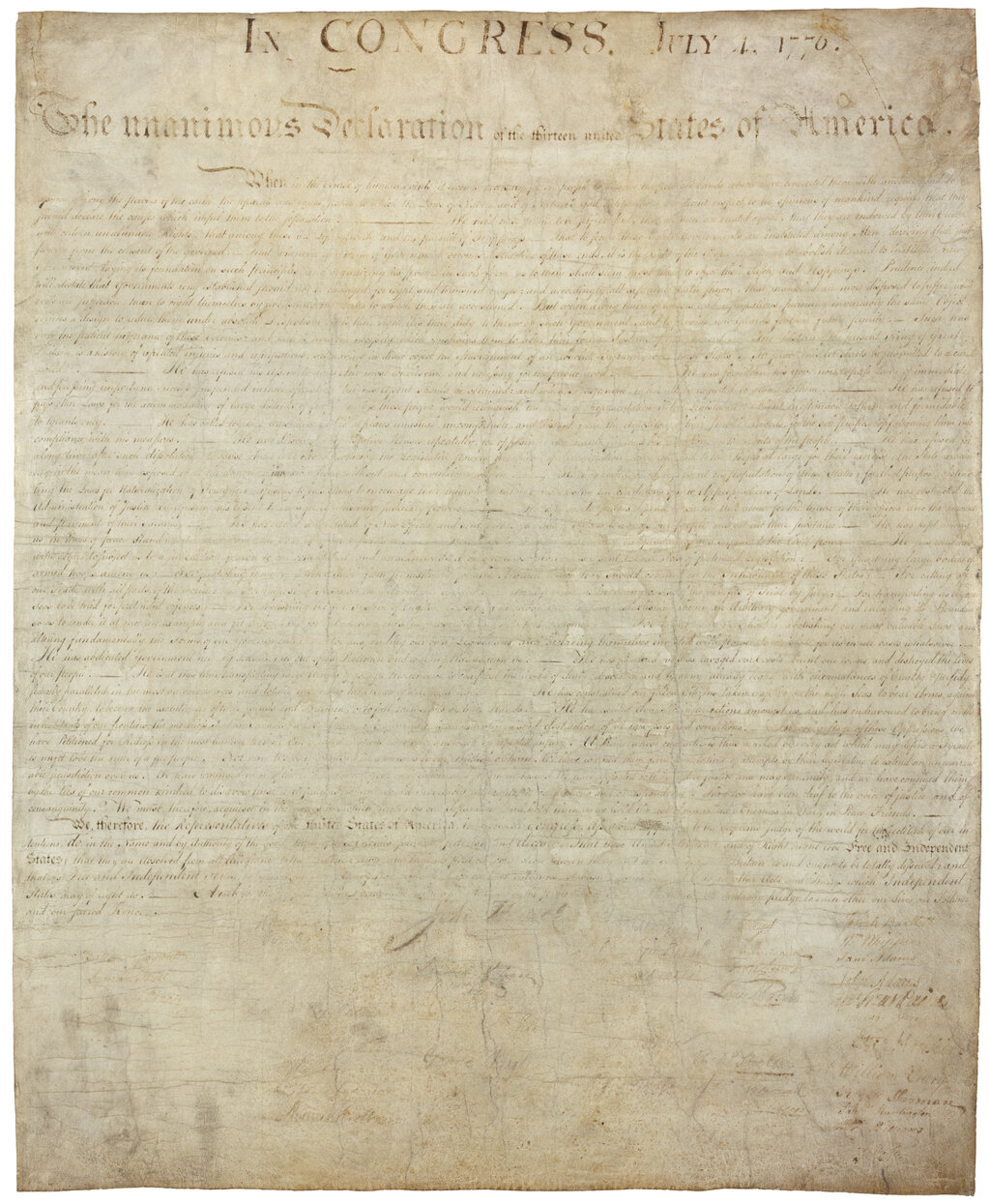
The Declaration of Independence, drafted mainly by Thomas Jefferson, was essentially the colonies' breakup letter to King George III. It wasn't a plan for a new government. Instead, it was a statement of principles, announcing to the world why they were justified in separating.
It famously echoed Locke's ideas, stating that all men are created equal and have unalienable rights, including "Life, Liberty and the pursuit of Happiness." The rest of the document is a long list of grievances, detailing all the ways the king had violated their rights.
It laid out the philosophical foundations for a new nation, drawing on Enlightenment ideas of natural rights and social contract theory.
The First Government
Once independence was declared, the new states needed to form a government. Their first attempt was called the Articles of Confederation. This document created a "firm league of friendship" among the states, but it established a very weak central government on purpose.
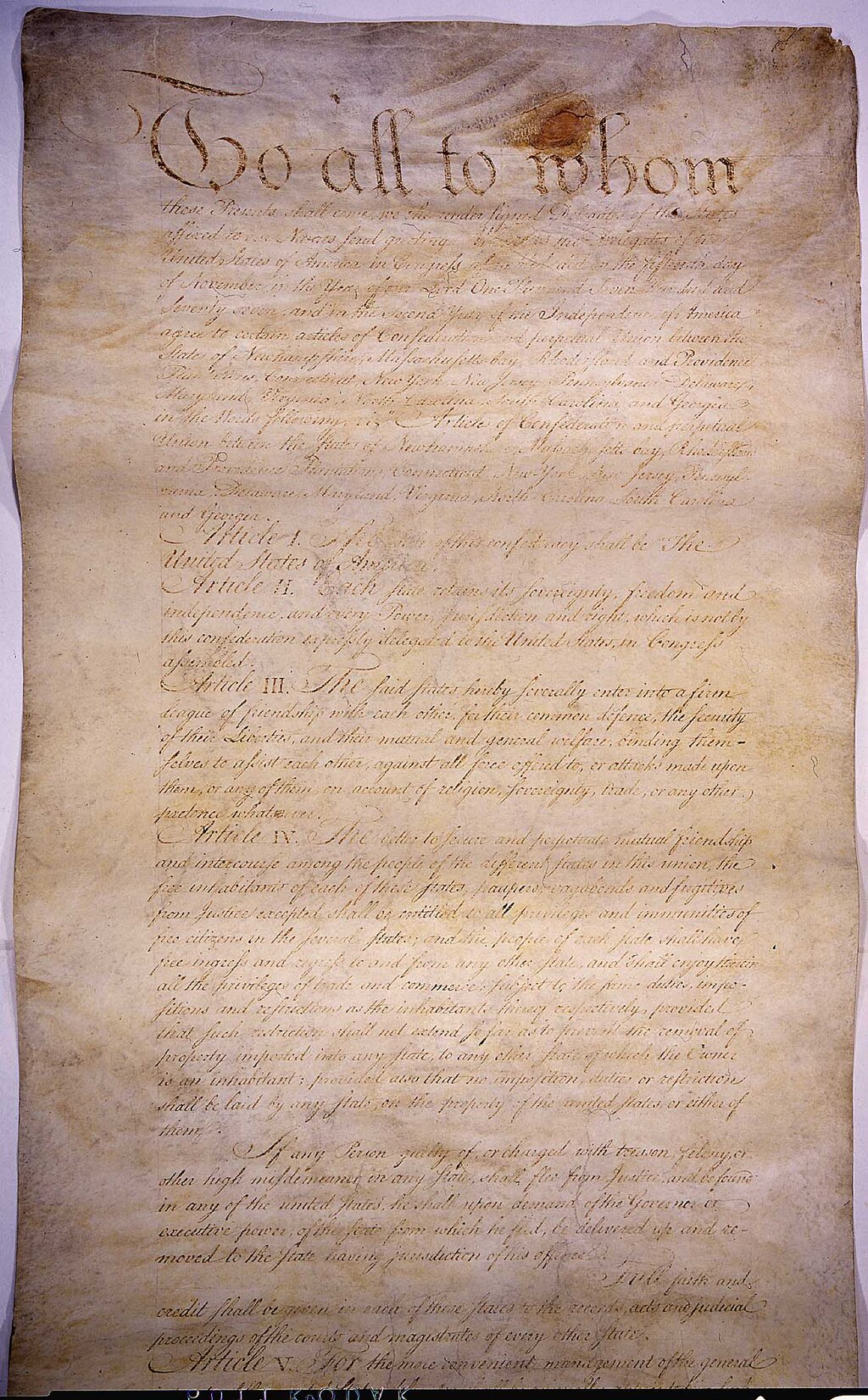
Having just escaped the powerful rule of a king, the founders were wary of creating another strong central authority. They wanted to keep power with the individual states. Under the Articles, the national government had very limited powers. Here's a look at what it couldn't do:
| Weakness | Consequence |
|---|---|
| No power to tax | Had to ask states for money, but couldn't force them to pay. |
| No executive branch | No single leader to enforce laws or act decisively. |
| No national court system | Disputes between states were difficult to resolve. |
| No power to raise an army | Had to rely on state militias for defense. |
| Required 9 of 13 states to pass laws | Made it very difficult to get anything done. |
| Required all 13 states to amend | Almost impossible to fix the system's problems. |
It quickly became clear that this system wasn't working. The national government couldn't pay its debts from the Revolutionary War, handle threats from other nations, or manage conflicts between the states. The country was falling apart.
A New Plan
The breaking point came with Shays' Rebellion in 1786, an uprising of debt-ridden farmers in Massachusetts. The national government was powerless to stop it, highlighting the weaknesses of the Articles. This event scared many leaders and convinced them that a change was necessary.
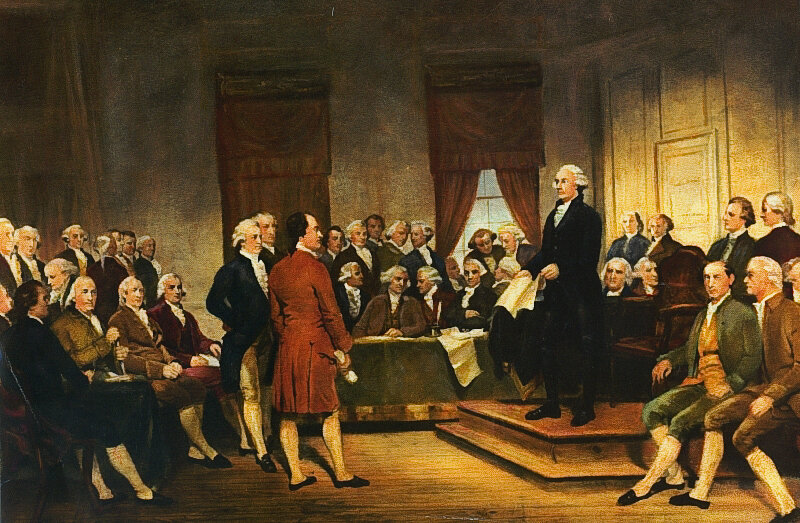
In 1787, delegates from 12 of the 13 states met in Philadelphia for the Constitutional Convention. Their original goal was just to revise the Articles of Confederation. But they soon realized the old system was too broken to fix. Instead, they decided to start from scratch and write an entirely new constitution.
This new document would need to create a government that was strong enough to be effective but not so strong that it would threaten the rights of the people. Finding that balance was the central challenge for the delegates, setting the stage for the government we have today.
Which of the following best summarizes the 'unalienable rights' as originally identified by Enlightenment philosopher John Locke?
What was the primary purpose of the Declaration of Independence?