American Football Positions Explained
Offensive Positions
Meet the Offense
An offense is a team's scoring unit. Its goal is simple: move the ball down the field and into the end zone. To do this, eleven players work together in two main groups: the offensive line and the skill positions. The line provides the muscle, while the skill players handle the ball and make the big plays.
The Unsung Heroes
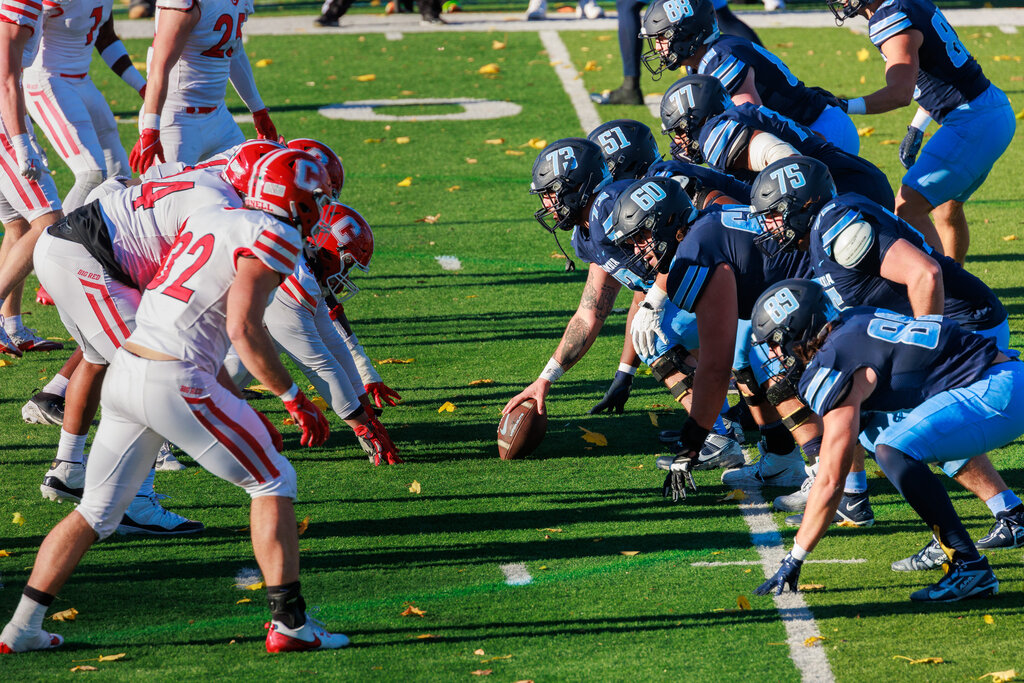
Every play starts with the offensive line. This group of five large, powerful players lines up at the line of scrimmage, ready to block defenders. Their job is twofold: protect the quarterback from being tackled on passing plays and create running lanes for the running backs. They don't get the glory of scoring touchdowns, but without them, the offense wouldn't go anywhere.
The offensive line is a group of football players who stand in front of the quarterback, protecting the quarterback on passing plays and creating openings for the running back on running plays.
The five positions on the offensive line each have a specific job.
- Center (C): The anchor of the line. The center snaps the ball to the quarterback to start the play. They are often responsible for reading the defense and calling out blocking assignments to the other linemen.
- Guards (G): Two guards line up on either side of the center. They are key in run blocking, often pulling out from their position to lead the running back through a hole in the defense.
- Tackles (T): The two tackles are positioned on the outside of the guards. They are typically the most athletic linemen, responsible for blocking the opposing team's best pass rushers. The left tackle is especially crucial, as they protect a right-handed quarterback's blind side.
The Playmakers
Behind the offensive line are the skill position players. These are the players who run, catch, and throw the ball, and they're usually the ones who end up in the highlights.
Quarterback
noun
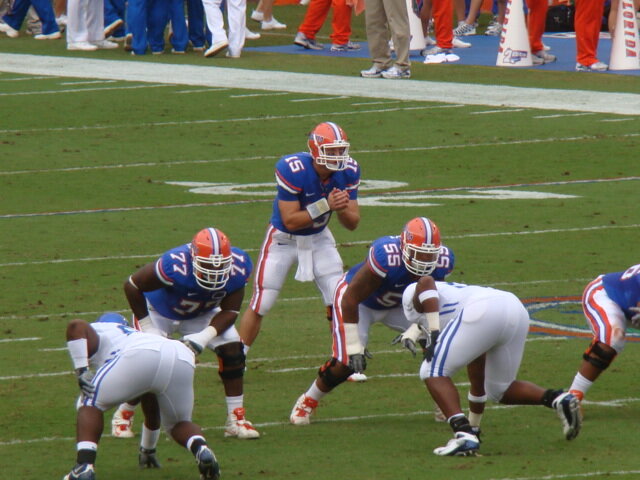
The leader of the offense. The quarterback receives the ball from the center and initiates the play, either by throwing the ball to a receiver, handing it off to a running back, or running with it themselves.
The quarterback (QB) calls the play in the huddle and is responsible for executing it. They need a strong arm, great accuracy, and the ability to read the defense quickly to make smart decisions under pressure.
Running Backs (RB): These players line up in the backfield behind the quarterback. Their primary job is to take the handoff and run with the ball. They need speed, power, and agility to avoid tacklers. Running backs are also valuable receivers out of the backfield and are sometimes asked to stay and help block for the quarterback.
Wide Receivers (WR): The primary pass-catchers. Wide receivers line up near the sidelines and run precise routes to get open for a pass from the quarterback. They need excellent speed, hands, and route-running ability.
Tight Ends (TE): A hybrid position with a unique skill set. The tight end lines up next to the offensive tackles. They are a mix between an offensive lineman and a wide receiver, meaning they are expected to be strong enough to block defenders but also athletic enough to run routes and catch passes. Their versatility makes them a valuable weapon in any offense.
Each position has a specific role, but they all must work together to create a successful offensive play. The linemen block, the quarterback decides, and the skill players execute the run or the catch.
Time to check your understanding of the offense.
Which player is primarily responsible for snapping the ball to the quarterback to begin a play?
The primary job of the offensive line is to score touchdowns.
Now that you know the players on offense, you're ready to see how they match up against the defense.