American Football Fundamentals
Origins and Early Development
From Kicks to Carries
American football didn't appear out of thin air. It evolved from two popular English games: rugby and soccer. In the mid-19th century, students at American colleges played informal versions of these sports. Each school had its own set of rules, making it a chaotic, localized pastime. Some games looked more like soccer, emphasizing kicking the ball, while others were closer to rugby, allowing players to run with it.
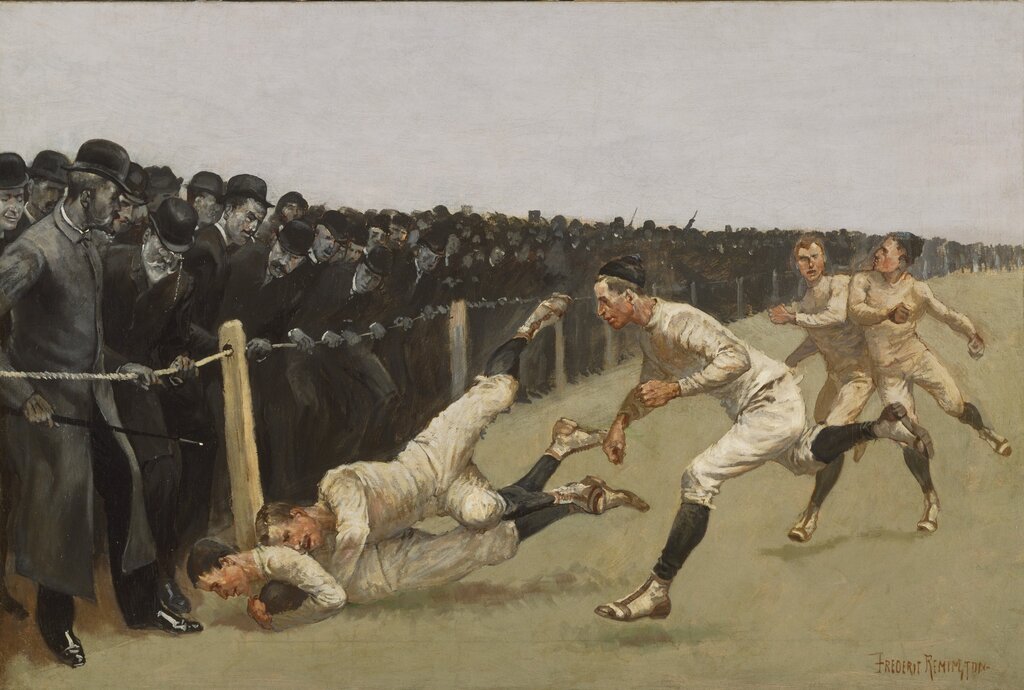
This lack of standardization meant that playing against other schools was nearly impossible. A game between Harvard and Yale, for instance, would require lengthy negotiations just to decide which version of “football” they would play.
The First Game
The first official intercollegiate football game took place on November 6, 1869. Rutgers University faced the College of New Jersey, now known as Princeton University. But this contest would be almost unrecognizable to a modern fan.
Each team had 25 players on the field at once. The rules were based on the London Football Association's version of soccer. Players could not pick up or carry the ball. The goal was to advance it only by kicking or batting it with their feet, hands, heads, or sides. The first team to score six “goals” won. Rutgers came out on top, 6-4.
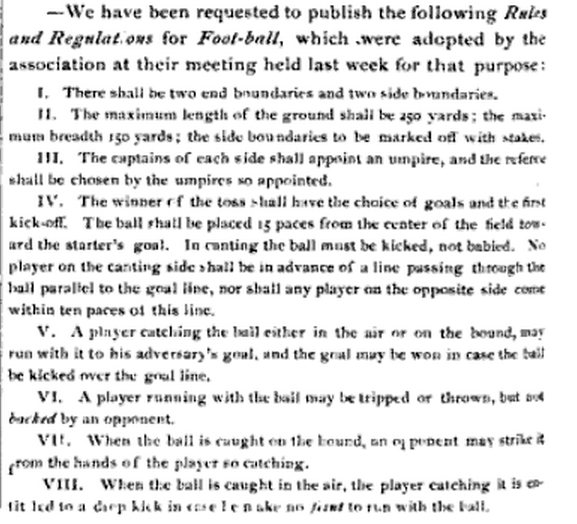
While historic, the game highlighted the need for a unified code. The sport was gaining popularity, and the desire for intercollegiate competition was growing. The jumble of different rules was holding it back.
Crafting a New Game
In 1873, representatives from Yale, Columbia, Princeton, and Rutgers met in New York City to establish a common set of rules. This was a crucial step in separating American football from its English ancestors. The new rules still largely resembled rugby, but for the first time, there was a consistent framework for competition among the major football-playing schools.
This laid the groundwork for the sport's greatest innovator, Walter Camp. A player and coach at Yale, Camp is often called the "Father of American Football" for the revolutionary changes he introduced in the 1880s.
Camp's two most important contributions were the line of scrimmage and the system of downs.
Before Camp, play began with a chaotic scrum, just like in rugby. He replaced it with the line of scrimmage. This established two distinct lines of players facing each other, separated by the length of the football. The team with possession, the offense, had uncontested control of the ball to start the play. This single change brought order, strategy, and distinct plays into the game.
His other key invention was the down-and-distance system. To prevent teams from holding the ball indefinitely without trying to score, Camp proposed that a team should have three attempts, or "downs," to advance the ball five yards. If they succeeded, they earned a new set of downs. If they failed, they had to give up the ball to the other team. This rule created the familiar stop-and-start rhythm of American football and placed a premium on gaining territory.
Let's check what you've learned about the early days of football.
American football primarily evolved from which two English sports?
What was a key feature of the first official intercollegiate football game in 1869?
These early changes transformed a disorganized mix of kicking and running games into a uniquely American sport, setting the stage for the complex strategy and explosive action we know today.