Amazon.com An E-commerce Giant
Amazon's Founding
The Idea
In 1994, Jeff Bezos was a senior vice president at a successful New York City hedge fund called D. E. Shaw & Co. He was doing well, but he came across a startling statistic: the internet was growing at a rate of 2,300% per year. This number sparked an idea.
Bezos envisioned an online “everything store,” but he knew he had to start small. He made a list of 20 possible products to sell online and landed on books. Why books? They were pure commodities; a copy of a book in one store is identical to a copy in another. They are also relatively easy to ship, and the sheer number of books in print meant no physical store could possibly stock them all. This was the perfect opening for an online retailer.
He developed what he called a “regret minimization framework” to make his decision. He imagined himself at 80 years old, looking back on his life. Would he regret leaving his secure, high-paying job? Or would he regret not trying to be part of the internet boom? The answer was clear. He quit his job, and the journey began.
From Cadabra to Amazon
Bezos initially incorporated his new venture as “Cadabra, Inc.,” as in “abracadabra.” The name was short-lived. During an early phone call, his lawyer misheard the name as “cadaver.” Realizing the name was too obscure and potentially off-putting, Bezos went back to the drawing board.
He wanted a name that suggested scale. While looking through a dictionary, he landed on “Amazon.” The Amazon River is the largest river in the world, a fitting metaphor for what he hoped his business would become. As a bonus, names starting with “A” appeared at the top of alphabetized web directories, which were common in the early days of the internet.
Why Seattle?
Bezos and his then-wife, MacKenzie Scott, drove cross-country from New York to Seattle, Washington. The choice of location was highly strategic. Washington state had a small population, which meant the company would not have to collect sales tax from most of its customers across the country. This provided a significant price advantage over brick-and-mortar bookstores.
Seattle also offered two other key benefits. First, it had a large pool of tech talent, thanks to nearby companies like Microsoft. Second, it was geographically close to a major book distributor, Ingram, which had a large warehouse in Oregon. This proximity made it easier and cheaper to source books quickly.
Launch and Early Days
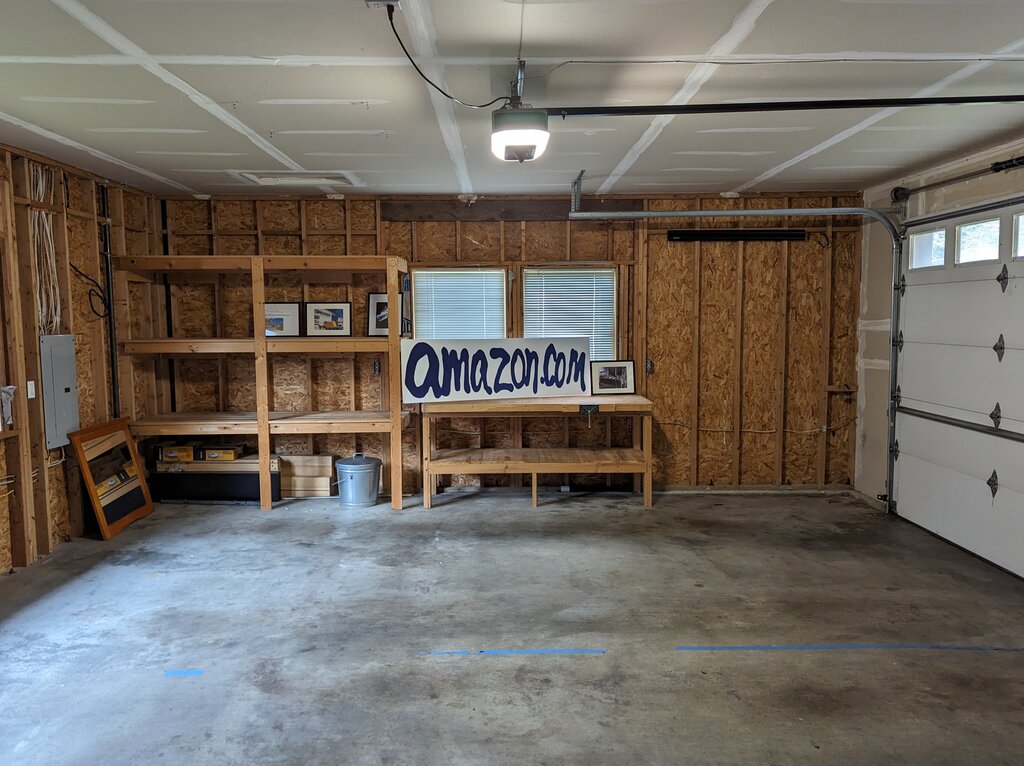
Working from a garage, Bezos and a small team of employees built the website. In the early days, a bell was rigged to ring in the office every time a customer made a purchase. It wasn't long before the bell was ringing so often they had to turn it off.
Amazon.com officially went live on July 16, 1995. The site was marketed as “Earth’s Biggest Bookstore.” The response was immediate and overwhelming. Without any major press or advertising, Amazon sold books in all 50 U.S. states and 45 different countries within its first 30 days. The foundation for the future retail giant was laid.
Let's review what you've learned about Amazon's origins.
What key statistic primarily motivated Jeff Bezos to leave his successful career in finance and start an online company?
Which of the following was NOT a reason Jeff Bezos chose books as the first product to sell online?
That's the story of how Amazon began—a calculated risk based on a powerful idea, a strategic location, and a new name that captured a grand vision.