Amazon SWOT Analysis
Introduction to SWOT Analysis
A Strategic Snapshot
Before making a big decision, it helps to take stock of the situation. Are you playing to your strengths? What could trip you up? Where are the hidden advantages you might be missing? Businesses ask these questions all the time. One of the most common ways they find answers is through a SWOT analysis.
A SWOT analysis is a framework used to evaluate a company’s competitive position and then to develop a strategic plan to address these areas.
Think of it as a structured brainstorming session. It’s a tool for looking at a company or a project from four different angles. The goal is to get a clear, honest picture of where things stand right now. This snapshot helps leaders make smarter, more informed decisions about the future.
The Four Quadrants
SWOT is an acronym that stands for Strengths, Weaknesses, Opportunities, and Threats. The first two, Strengths and Weaknesses, are internal factors. These are things the organization has some control over. The last two, Opportunities and Threats, are external. These are factors out in the world that could affect the organization.
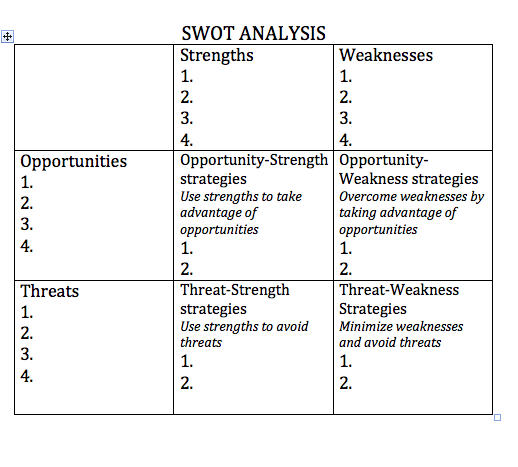
Let's break them down:
-
Strengths: What does the company do well? What unique resources or advantages does it have? This could be a strong brand reputation, loyal customers, or a talented team.
-
Weaknesses: Where does the company fall short? What are its limitations? Examples might include outdated technology, a narrow product line, or high debt.
-
Opportunities: What favorable trends or situations could the company take advantage of? This might be a growing market, new technology, or a competitor's misstep.
-
Threats: What external factors could harm the business? Threats could include new regulations, a changing economy, or a disruptive new competitor.
| Internal Factors | External Factors | |
|---|---|---|
| Helpful | Strengths | Opportunities |
| Harmful | Weaknesses | Threats |
Looking at the grid helps clarify how these elements relate. Strengths are internal advantages to build on. Weaknesses are internal areas that need improvement. Opportunities are external factors to leverage for growth, while Threats are external risks to guard against.
Putting It into Practice
Conducting a SWOT analysis is a straightforward process. It’s most effective when it involves people from different parts of the organization who can offer diverse perspectives.
The basic steps are:
- Gather the right team.
- Brainstorm ideas for each of the four categories. Be specific and realistic.
- Organize and consolidate the points. Group similar ideas and prioritize the most important ones.
- Develop strategies. The real value comes from this step. How can you use your strengths to seize opportunities? How can you minimize weaknesses to avoid threats?
While a SWOT analysis is incredibly useful for gaining clarity and focusing strategy, it has its limits. It’s a snapshot in time, and the business environment is always changing. The analysis can also be subjective, reflecting the biases of the people involved. It's a starting point for a deeper strategic conversation, not the final word.
What does the acronym SWOT stand for?
Which two elements of a SWOT analysis are considered internal factors that an organization has control over?
Now you have a solid grasp of what a SWOT analysis is and how it works. It's a foundational tool for thinking strategically about any business.