Amazon Bedrock Agent Core
Introduction to Generative AI
More Than a Photocopier
Most AI you encounter is what's called discriminative AI. It's trained to classify or make predictions about data. Is this a picture of a cat or a dog? Is this email spam or not? It distinguishes between existing options.
Generative AI is different. Instead of just sorting information, it creates something entirely new. It learns the underlying patterns and structures of data—text, images, sounds, or code—and then uses that knowledge to generate fresh, original content. Think of it as an artist who studies thousands of paintings to learn about color, style, and composition, and then creates a new masterpiece, not just a copy.
Generative AI models create new content, while discriminative AI models classify existing content.
An Overnight Success, Decades in the Making
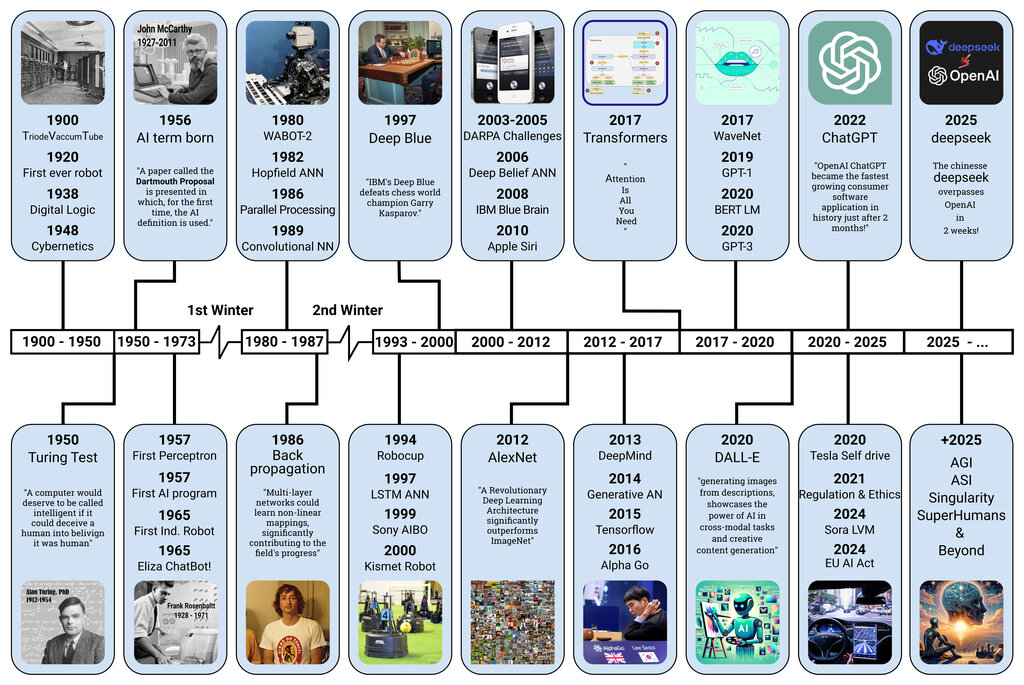
While tools like ChatGPT and Midjourney made generative AI a household name almost overnight, the ideas behind them have been developing for decades. Early experiments in the mid-20th century explored rule-based systems to generate simple text and music. But these models were limited.
The real breakthrough came with the rise of deep learning and neural networks, especially a model architecture called the Transformer, introduced in 2017. This, combined with massive datasets and powerful computers, allowed models to understand context and nuance in a way that was never before possible, leading to the explosion of creative and powerful AI tools we see today.
The Core Techniques
So how does a machine actually create? It comes down to learning patterns and predicting what should come next. Two of the most common applications are language modeling and image synthesis.
Language Modeling: At its heart, this is a sophisticated prediction game. A model is trained on a vast amount of text and learns the probability of which word will follow another. When you type "The quick brown fox jumps over the lazy...", the model predicts "dog" because it has seen that sequence countless times.
By stringing these predictions together, Large Language Models (LLMs) can write emails, generate code, answer complex questions, and even write poetry. They aren't just memorizing sentences; they're internalizing the grammar, style, and facts present in their training data.

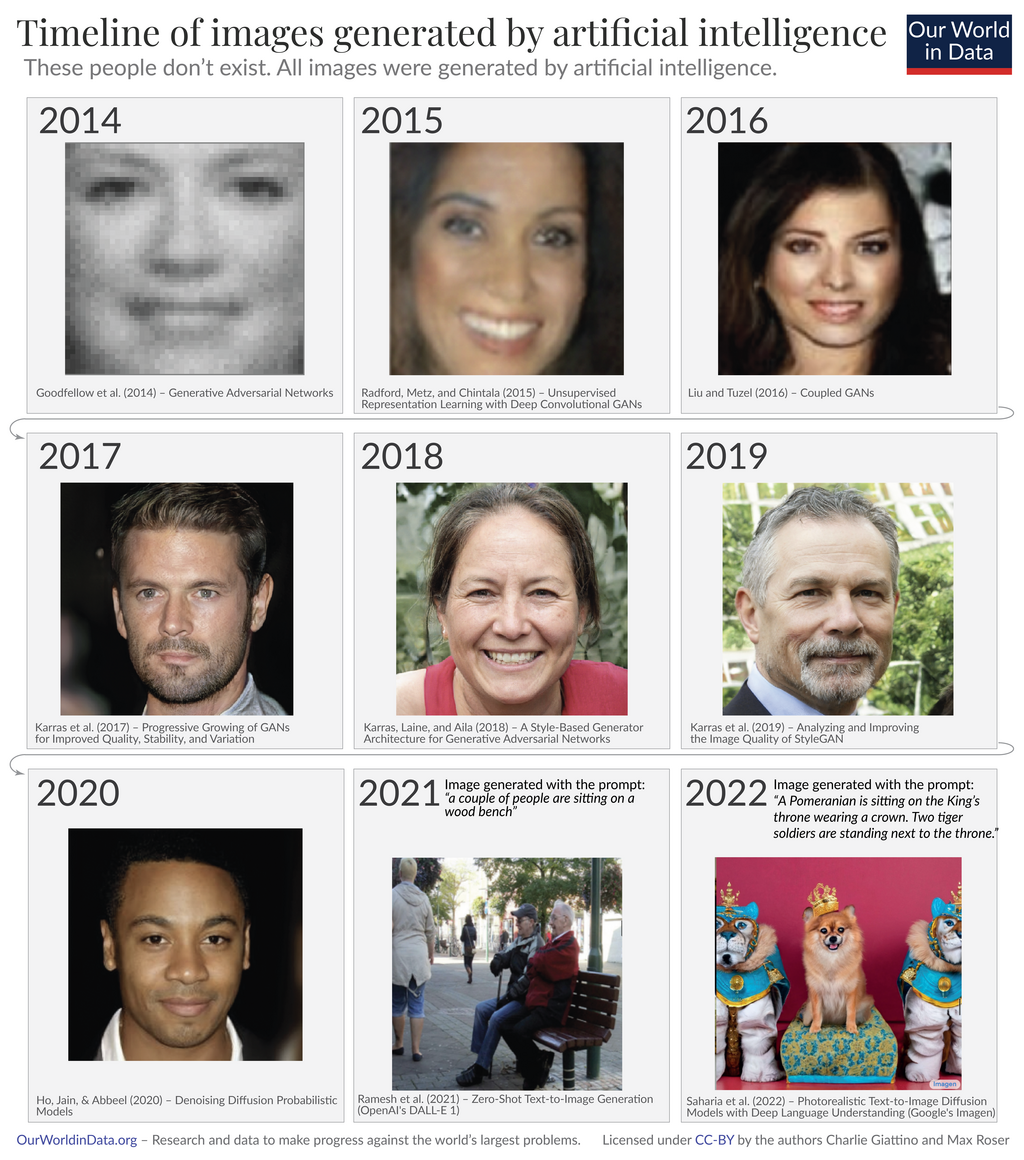
Image Synthesis: This works on a similar principle. Models like DALL-E or Stable Diffusion are trained on millions of images paired with text descriptions. They learn the association between words like "astronaut" and "horse" and the visual characteristics that define them.
When you give it a prompt like "an astronaut riding a horse in a photorealistic style," the model doesn't find a matching picture. It generates a brand new image by combining the learned patterns for "astronaut," "horse," and "photorealistic." The progress in just a few years has been staggering.
Real-World Applications
Generative AI is not just a novelty; it's a powerful tool being applied across many industries to improve efficiency and unlock new possibilities. From drafting legal documents to designing new molecules for medicine, its impact is broad and growing.
| Industry | Application |
|---|---|
| Software Development | Writing code, generating test cases, debugging. |
| Marketing & Advertising | Creating ad copy, generating images for campaigns. |
| Entertainment | Composing music, writing scripts, creating concept art. |
| Healthcare | Drug discovery, generating synthetic patient data for research. |
| Customer Service | Powering intelligent chatbots that can solve complex issues. |
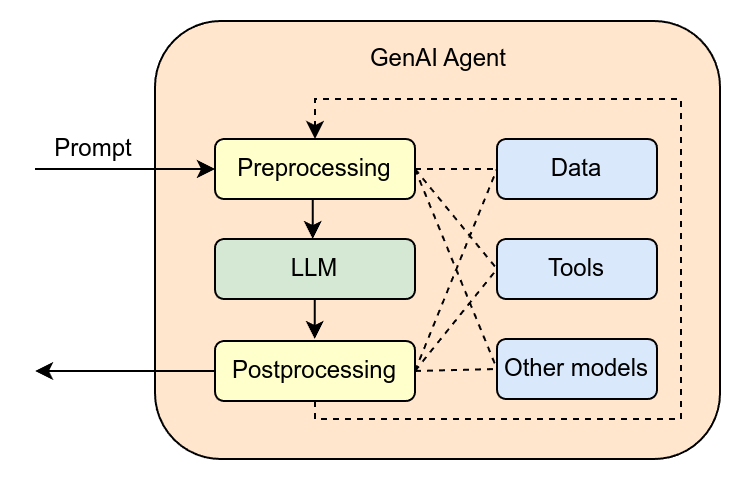
This ability to generate content is the engine behind more advanced AI systems. When you combine a generative model with the ability to take actions—like booking a flight or ordering groceries—you get an AI agent. These agents can understand a user's goal and then perform a series of steps to accomplish it, moving beyond simple conversation to active problem-solving.
Now that you have a grasp of the fundamentals, you're ready to explore how these powerful models can be harnessed to build intelligent, autonomous applications.
Time to check your understanding.
What is the primary function that distinguishes generative AI from discriminative AI?
According to the text, which technological development was a key catalyst for the recent advances in generative AI?
Understanding what generative AI is, where it came from, and how it's used is the first step toward building with it.