Alzheimer's Molecular Subtypes and Treatments
Introduction to Alzheimer's Disease
What is Alzheimer's?
Alzheimer's disease is a brain disorder that slowly destroys memory and thinking skills. Over time, it can affect the ability to carry out even the simplest tasks. It's the most common cause of dementia, a general term for a decline in mental ability severe enough to interfere with daily life.
Alzheimer's disease is the biological process that begins with the appearance of a buildup of proteins in the form of amyloid plaques and neurofibrillary tangles in the brain.
The first signs often involve trouble remembering new information. As the disease progresses, symptoms become more severe. These can include:
- Memory loss that disrupts daily life, like forgetting important dates or events.
- Language difficulties, such as struggling to find the right words or follow a conversation.
- Disorientation, leading to confusion about time or place.
- Impaired judgment, making it hard to make sound decisions.
Inside the Brain
So what's happening on a biological level? Scientists believe the damage to the brain starts years, or even decades, before symptoms appear. This damage is primarily caused by two abnormal protein structures.
Amyloid Plaques
noun
Sticky clumps of a protein called beta-amyloid that build up between nerve cells (neurons).
Think of these plaques like gunk building up in the brain's wiring. They interfere with the signals that neurons send to each other, eventually causing them to die.
Tau Tangles
noun
Twisted fibers of a protein called tau that accumulate inside neurons.
Normally, tau protein helps stabilize the internal structure of neurons, like railroad ties keeping tracks in place. In Alzheimer's, the tau protein changes shape, twists into tangles, and causes the
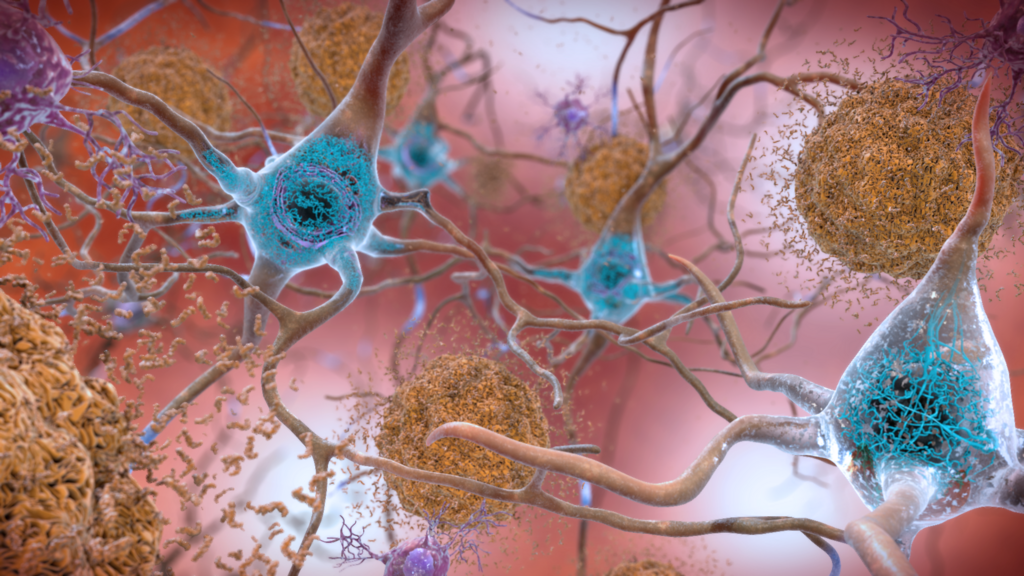
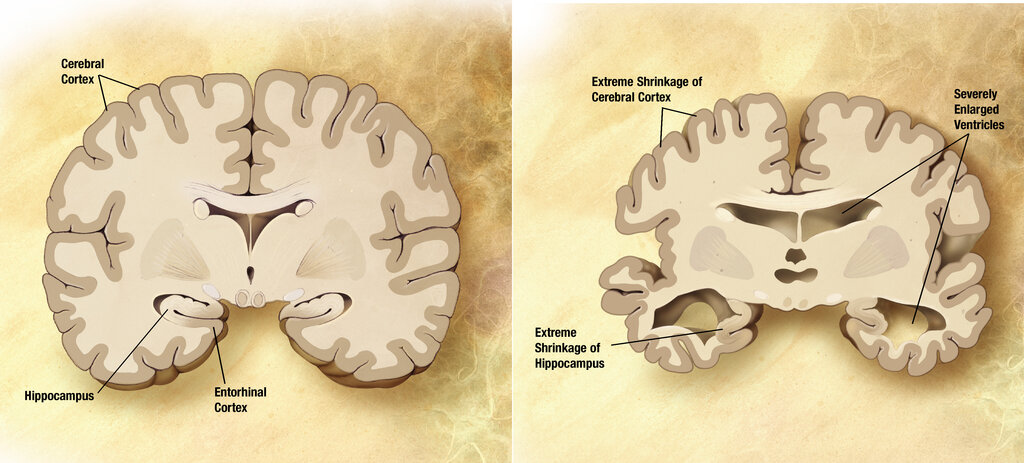
As more and more neurons die, brain regions begin to shrink in a process called brain atrophy. This physical damage is what causes the symptoms of Alzheimer's to appear and worsen over time. The areas of the brain responsible for memory, like the hippocampus, are often affected first.
Risk Factors
While the exact cause of Alzheimer's isn't fully understood, several factors are known to increase a person's risk. Age is the single greatest risk factor; the likelihood of developing the disease doubles about every five years after age 65. However, Alzheimer's is not a normal part of aging.
Genetics also play a significant role. One of the most studied risk genes is apolipoprotein E (APOE).
The APOE gene comes in several different forms, or alleles. The APOE ε4 allele is associated with a higher risk of developing Alzheimer's at an earlier age. Having one copy of this allele increases your risk, and having two copies (one from each parent) increases it even more. It's important to remember that this is a risk factor, not a guarantee. Some people with the APOE ε4 allele never develop the disease, while others without it do.
APOE4 is a major genetic risk factor for AD in a gene dose-dependent manner increasing risk by up to 15 fold in homozygotes [13], whereas APOE2 reduces AD risk by almost half and contributes to longevity [14].
Beyond genetics, certain lifestyle and environmental factors also influence risk. Conditions that damage the heart and blood vessels, such as heart disease, high blood pressure, and diabetes, are linked to a higher risk of Alzheimer's. Conversely, a healthy lifestyle—including regular physical exercise, a balanced diet, and staying socially and mentally active—may help reduce the risk.
What is the relationship between Alzheimer's disease and dementia?
The two primary abnormal protein structures that cause damage to neurons in Alzheimer's disease are: