Allen-Bradley PLC Fundamentals
Introduction to PLCs
What is a PLC?
A Programmable Logic Controller, or PLC, is a ruggedized industrial computer that automates control processes. Think of it as the brain behind the machinery in a factory, a water treatment plant, or even an automated car wash. It takes in information from sensors and switches, makes decisions based on a program, and then sends out commands to control devices like motors, lights, and valves.
Essentially, a PLC continuously loops through a program to read inputs, execute logic, and update outputs. This cycle happens very quickly, often many times per second.
The Core Components
PLCs are modular, meaning they are built from several key components that work together. This design makes them adaptable to a huge variety of tasks.
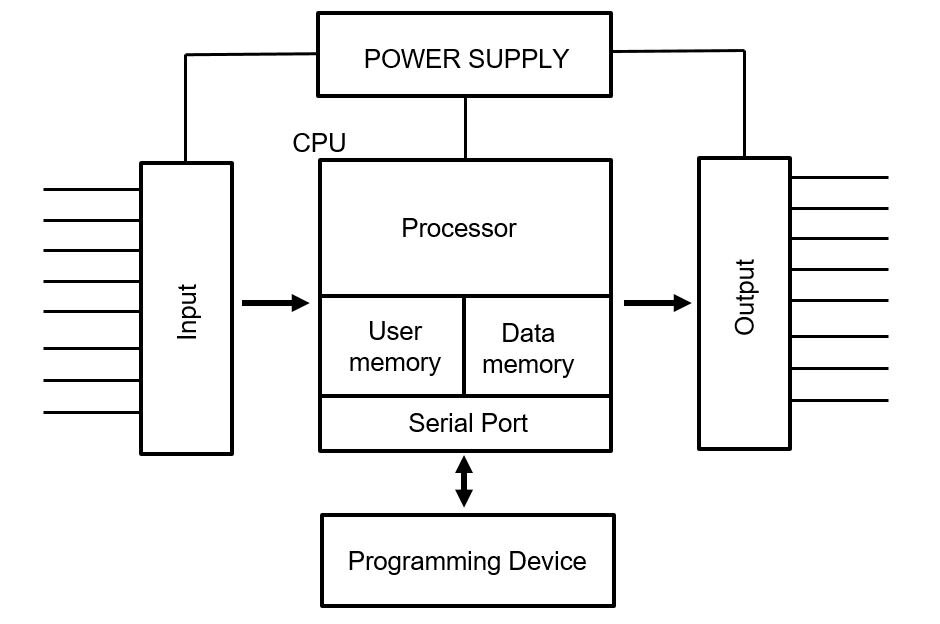
Here's a breakdown of the main parts:
- Processor (CPU): This is the central brain of the PLC. It runs the user-created program, processes input signals, and determines the appropriate output actions.
- Input Modules: These are the PLC's senses. They connect to external devices like push buttons, temperature sensors, and proximity switches. The module converts the electrical signals from these devices into a format the CPU can understand.
- Output Modules: These are the PLC's hands. They take commands from the CPU and send out signals to control devices like motors, solenoids, and indicator lights.
- Power Supply: This component converts the available AC power into the low-voltage DC power that the internal components of the PLC need to operate.
Why Not Just Use Relays?
Before PLCs became common in the 1970s, automation was handled by complex systems of electromechanical relays. These systems were massive cabinets full of wires and clicking mechanical switches. Every logical decision required a physical relay and a specific wiring configuration.
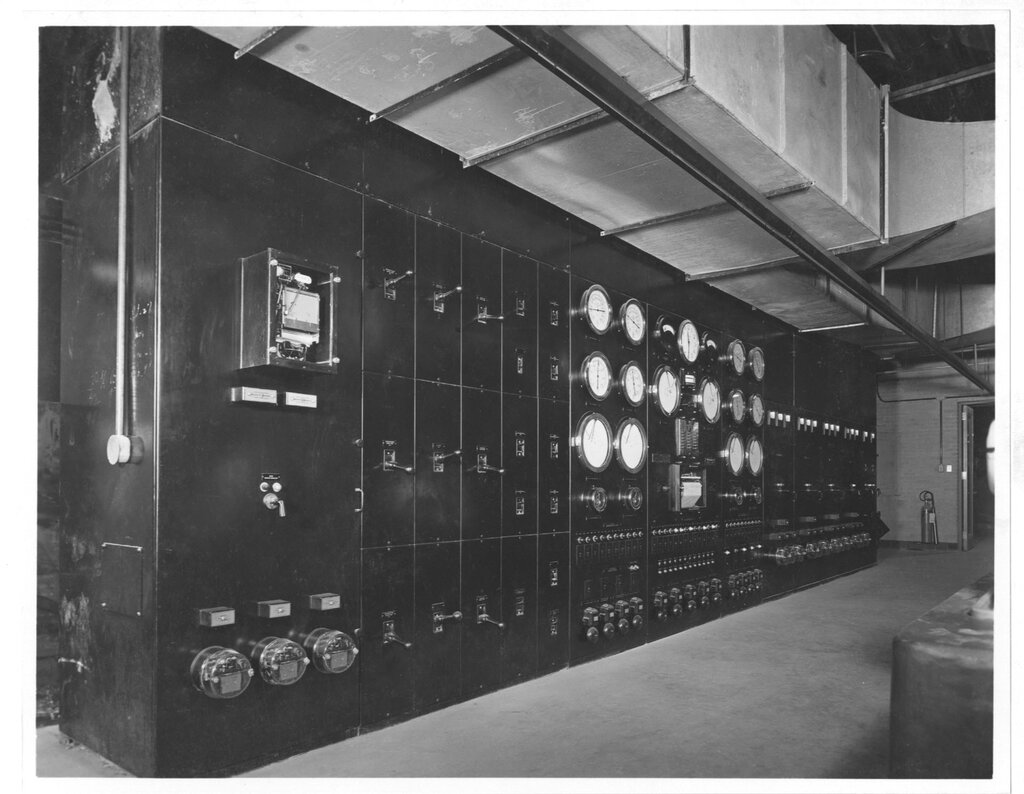
Changing the logic of a relay-based system meant physically rewiring the panel, which was a slow, expensive, and error-prone process. PLCs offered a revolutionary alternative with several key advantages.
| Feature | Relay Logic | PLC |
|---|---|---|
| Flexibility | Low. Requires physical rewiring. | High. Logic changed via software. |
| Reliability | Lower. Mechanical parts wear out. | High. Solid-state components. |
| Size | Large. Requires big cabinets. | Compact and modular. |
| Cost | High initial cost for complex systems. | Lower cost for complex systems. |
| Speed | Slow (milliseconds). | Fast (microseconds). |
PLCs in Action
Because of their flexibility and robustness, PLCs are used in nearly every industry you can imagine. They are the workhorses of modern automation.
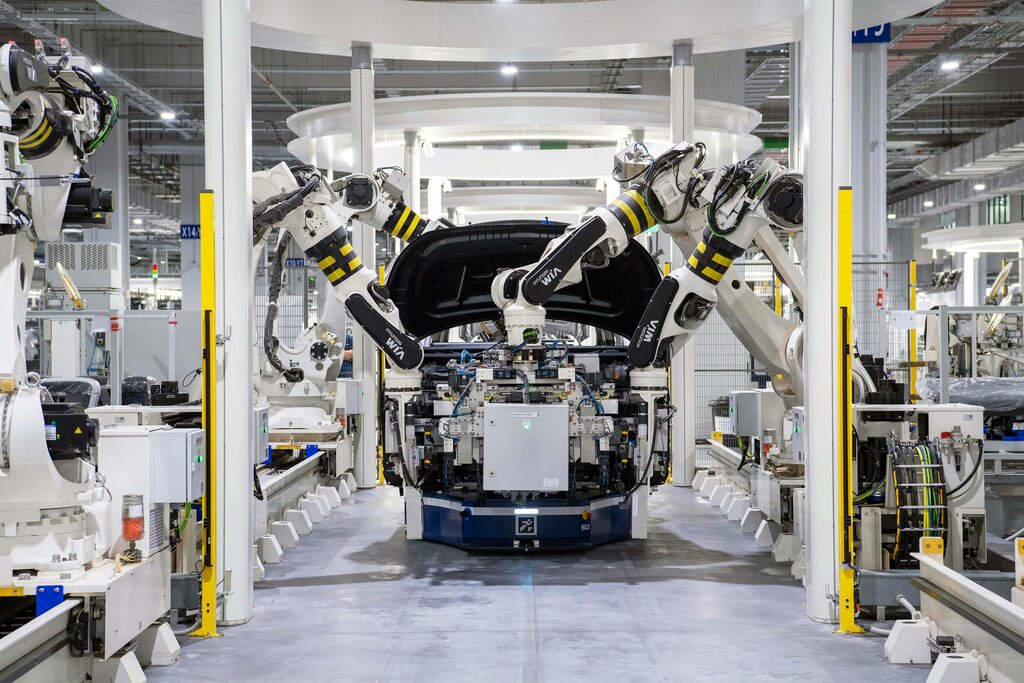
Common applications include:
- Manufacturing: Controlling robotic arms, conveyor belts, and automated machinery in car factories and production plants.
- Process Control: Managing temperatures, pressures, and flow rates in food and beverage production, chemical processing, and pharmaceutical manufacturing.
- Infrastructure: Operating traffic light systems, baggage handling systems at airports, and pumps at water treatment facilities.
- Building Automation: Controlling elevators, HVAC systems, and lighting in large commercial buildings.
Any time a process needs to be reliably and repeatedly controlled, a PLC is likely doing the job.
What is the primary function of a Programmable Logic Controller (PLC)?
Which PLC component is analogous to the system's "hands," sending commands to control devices like motors and lights?