All About Cats
Cat Anatomy
The Predator's Framework
A cat's body is a marvel of evolutionary engineering, perfectly designed for a life of stalking, pouncing, and climbing. At the core of this design is the skeletal system. Unlike humans, who have 206 bones, a cat has around 244. The exact number can vary depending on the length of the tail.
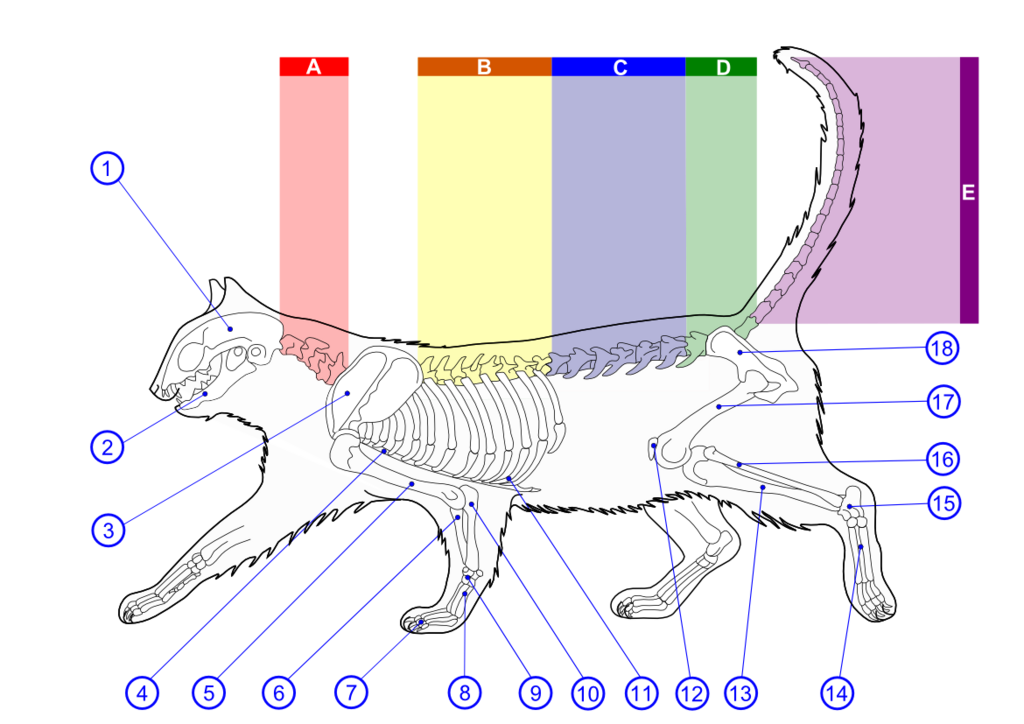
This abundance of bones, particularly in the spine, gives cats their famous flexibility. Their vertebrae are more loosely connected than in many other animals, allowing them to twist and bend with incredible agility. This helps them groom hard-to-reach places and execute the “righting reflex” to land on their feet when falling.
One of the most unique features is the cat's clavicle, or collarbone. It's a tiny, free-floating bone that isn't connected to the shoulder. This adaptation allows the cat to squeeze its body through any opening its head can fit through.
A cat's free-floating collarbone gives its shoulders exceptional flexibility, a key advantage for hunting in tight spaces.
Engineered for Explosive Action
Powering this flexible skeleton is a highly specialized muscular system. Cat muscles are dominated by fast-twitch fibers, which are built for short, explosive bursts of energy rather than endurance. This is why a cat can leap several times its own body length from a standstill or launch a lightning-fast attack on a toy, but will often tire after a short period of intense play.
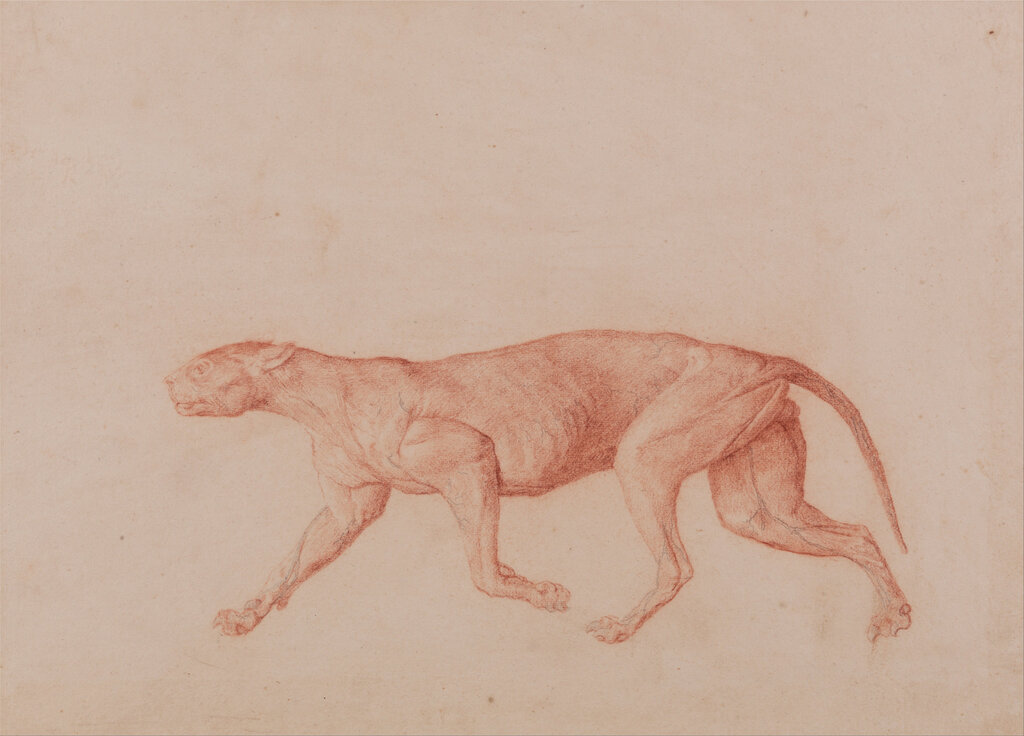
The powerful hind leg muscles act like coiled springs, providing the force for incredible jumps and sprints. Meanwhile, strong muscles in the back, shoulders, and forelimbs allow them to climb, grapple with prey, and deliver precise swipes with their paws. Every aspect of their musculature is fine-tuned for the life of a predator.
A Finely Tuned Sensor Suite
To effectively use their athletic bodies, cats rely on a suite of highly developed sensory organs. Their senses are adapted to detect the slightest movements and sounds, especially in low-light conditions.
Their eyes are a great example. They are large relative to their skull size, and the pupils can expand into wide circles to let in maximum light. Behind the retina lies a special reflective layer of tissue.
tapetum lucidum
noun
A layer of tissue in the eye of many vertebrates that reflects visible light back through the retina, increasing the light available to the photoreceptors. This improves vision in low-light conditions.
This structure is what causes a cat's eyes to seem to glow in the dark when light hits them. It effectively gives their retinal cells a second chance to absorb photons, granting them excellent night vision.
Their hearing is just as impressive. A cat's ears contain over two dozen muscles, allowing them to rotate 180 degrees. They can pinpoint the source of a sound with remarkable accuracy and can hear frequencies far higher than humans, well into the range of rodent squeaks.

Finally, their whiskers, or vibrissae, are much more than just long hairs. They are thick, deeply rooted tactile sensors that provide a constant stream of information about the cat's surroundings. The tips can detect tiny changes in air currents, helping the cat navigate in the dark and sense the presence of nearby objects or prey without even seeing them. They are also roughly as wide as the cat's body, providing a quick way to gauge if they can fit through a small space.
Time to review what you've learned about the amazing anatomy of the cat.
Ready to test your knowledge?
What is the primary function of a cat's free-floating clavicle (collarbone)?
A cat's muscles are dominated by fast-twitch fibers, which are built for endurance rather than short bursts of energy.
From their flexible skeleton to their sensitive whiskers, every part of a cat is a testament to its evolutionary history as a skilled and adaptable predator.