Algorithms Powering Foundation Models
Introduction to Foundation Models
The New Bedrock of AI
Artificial intelligence has undergone a major shift. Instead of building specialized AI models from scratch for every single task, developers now often start with a massive, pre-trained model and adapt it to their specific needs. This new type of model is called a foundation model.
Foundation Model
noun
A large-scale machine learning model trained on a vast quantity of broad data, designed to be adapted or fine-tuned for a wide range of downstream tasks.
Think of a foundation model like a brilliant university graduate. They have spent years learning about a huge range of subjects—history, science, literature, and art. They haven't specialized yet, but they have a solid, general-purpose understanding of the world. With a little extra training, this graduate could become a lawyer, a doctor, or a software engineer. The foundation model is that graduate, and the specialized job is the specific task you want the AI to perform.
Foundation models are characterized by their massive scale and generality. They are not built for one purpose but can be adapted to many.
Architectures and Training
The breakthrough that enabled modern foundation models is an architecture called the Transformer. Introduced in 2017, the Transformer was revolutionary because of a mechanism called "self-attention."
Imagine reading the sentence: "The robot picked up the heavy ball because it was strong." To understand what "it" refers to, your brain instinctively pays more attention to "robot" than to "ball." The self-attention mechanism allows the AI model to do the same thing, weighing the importance of different words in the input to grasp context and relationships.
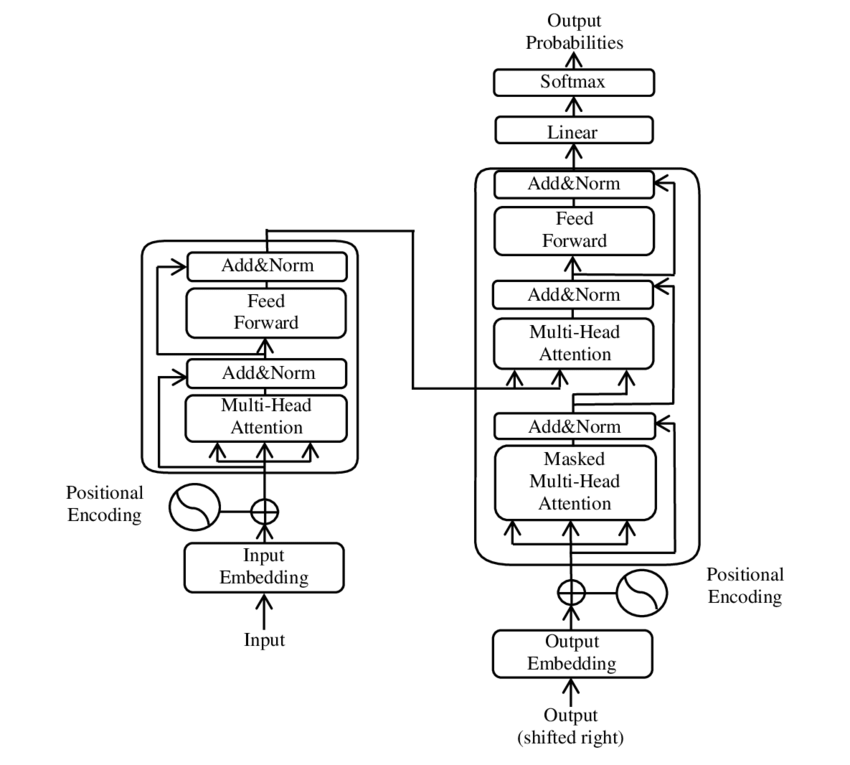
Training these models is a monumental task. It involves a two-stage process:
-
Pre-training: The model is fed enormous amounts of unlabeled data—think a large portion of the public internet, digital books, and code repositories. During this phase, the model learns grammar, facts, reasoning abilities, and patterns on its own. It's not learning to do any specific thing, but rather learning the structure of the data itself.
-
Fine-tuning: After pre-training, the general model can be adapted for a specific task. This is done by training it on a much smaller, curated dataset. For example, to create a chatbot that answers medical questions, the pre-trained foundation model would be fine-tuned on a dataset of medical textbooks and Q&A pairs.
Applications in the Wild
Because they are so adaptable, foundation models are now being used across countless industries. The applications are diverse and growing every day.
| Domain | Application Example |
|---|---|
| Natural Language Processing (NLP) | Powering chatbots, writing assistants, and language translation services. |
| Computer Vision | Generating realistic images from text descriptions or identifying objects in photos. |
| Software Development | Assisting programmers by suggesting code, finding bugs, and even writing entire functions. |
| Scientific Research | Analyzing complex biological data to accelerate drug discovery or modeling climate change. |
| Creative Arts | Composing music, writing scripts, and generating new artistic styles. |
This approach has democratized access to powerful AI. A small startup can now fine-tune a publicly available foundation model to create a sophisticated product without needing the vast resources required to train one from the ground up.
This new paradigm is rapidly changing what's possible with artificial intelligence. By building on these massive, shared models, developers can create more capable and nuanced applications faster than ever before.
Which of the following best describes a foundation model?
What revolutionary mechanism, introduced with the Transformer architecture, allows a model to weigh the importance of different words in an input to understand context?