Algorithmic Trading Strategies with Python
Introduction to Algorithmic Trading
What Is Algorithmic Trading?
At its heart, algorithmic trading is about using computers to place trades automatically. Instead of a human trader watching market movements and making decisions, a pre-programmed set of instructions does the work.
Algorithmic trading refers to the use of computer programs that follow defined sets of instructions (algorithms) to execute trades at speeds and frequencies impossible for human traders.
Think of it like a recipe. You give the computer a detailed list of ingredients (market data) and a step-by-step process to follow. For example, a simple instruction might be: "If stock XYZ's price rises by 2% in one hour, buy 100 shares."
The main benefits are speed, efficiency, and the removal of emotional decision-making. A computer can analyze vast amounts of data and execute a trade in a fraction of a second, far faster than any human. This precision helps traders capture fleeting opportunities and stick to their strategy without fear or greed clouding their judgment.
| Feature | Manual Trading | Algorithmic Trading |
|---|---|---|
| Speed | Slow, limited by human reaction time | Milliseconds or faster |
| Accuracy | Prone to human error | High, follows instructions precisely |
| Emotion | Influenced by fear and greed | Unemotional, purely logical |
| Scalability | Limited to a few markets at a time | Can monitor hundreds of markets simultaneously |
| Endurance | Requires breaks and sleep | Can operate 24/7 |
A Quick Trip Through Time
Algorithmic trading isn't a new phenomenon. Its roots trace back to the 1970s with the introduction of electronic trading systems. The New York Stock Exchange launched its "Designated Order Turnaround" (DOT) system, allowing electronic order routing. This was a game-changer.
By the 1980s and 90s, programmable trading was taking hold, with pioneers like Ed Seykota and the infamous "Turtles" experiment showing that systematic, rules-based trading could be highly successful. The real explosion, however, came with the internet boom and advances in computing power in the late 90s and early 2000s.
This led to the rise of high-frequency trading (HFT), where trades are executed in microseconds to profit from tiny price differences. Today, algorithms dominate the financial markets, accounting for the majority of trades on major exchanges.

The Language of Algos
To understand algorithmic trading, you need to know a few key terms. They form the basic vocabulary for discussing and building automated strategies.
Algorithm
noun
A finite sequence of well-defined, computer-implementable instructions, typically to solve a class of problems or to perform a computation.
In trading, the algorithm is simply the set of rules that tells the computer when to buy, sell, or hold an asset.
Latency
noun
The delay before a transfer of data begins following an instruction for its transfer.
Low latency is crucial. Even a delay of a few milliseconds can be the difference between a profitable trade and a loss, especially in fast-moving markets.
Slippage
noun
The difference between the expected price of a trade and the price at which the trade is actually executed.
Slippage can occur when the market is volatile or when a large order is placed. A good algorithm will account for potential slippage.
Strategies at a Glance
There are countless trading strategies, but most fall into a few broad categories. We won't get into the code, but it's helpful to understand the logic behind them.
-
Trend-Following: This is one of the simplest strategies. The algorithm identifies the direction of the market trend (up or down) and places trades in the same direction. The old adage "the trend is your friend" is the core idea here.
-
Arbitrage: Arbitrage strategies look for price discrepancies for the same asset in different markets. For example, if a stock is trading for $10.00 on one exchange and $10.01 on another, an arbitrage bot would simultaneously buy on the first and sell on the second, pocketing the one-cent difference. These opportunities are tiny and last for fractions of a second, which is why they are perfect for algorithms.
-
Mean Reversion: This strategy is built on the idea that asset prices tend to revert to their historical average or mean. If a stock's price moves significantly away from its average, the algorithm might bet that it will return. It's a strategy of "buy low, sell high" in a systematic way.
Data is the fuel for any trading algorithm. Without high-quality data, even the most sophisticated strategy will fail. Traders use two main types of data:
-
Historical Data: This is a record of past market prices, volume, and other metrics. It's used to test how a strategy would have performed in the past, a process known as backtesting.
-
Real-Time Data: This is a live feed of market information. The algorithm uses this data to make trading decisions in the present moment.
Data analysis helps traders find patterns, test hypotheses, and refine their strategies. It’s the foundation upon which profitable algorithms are built.
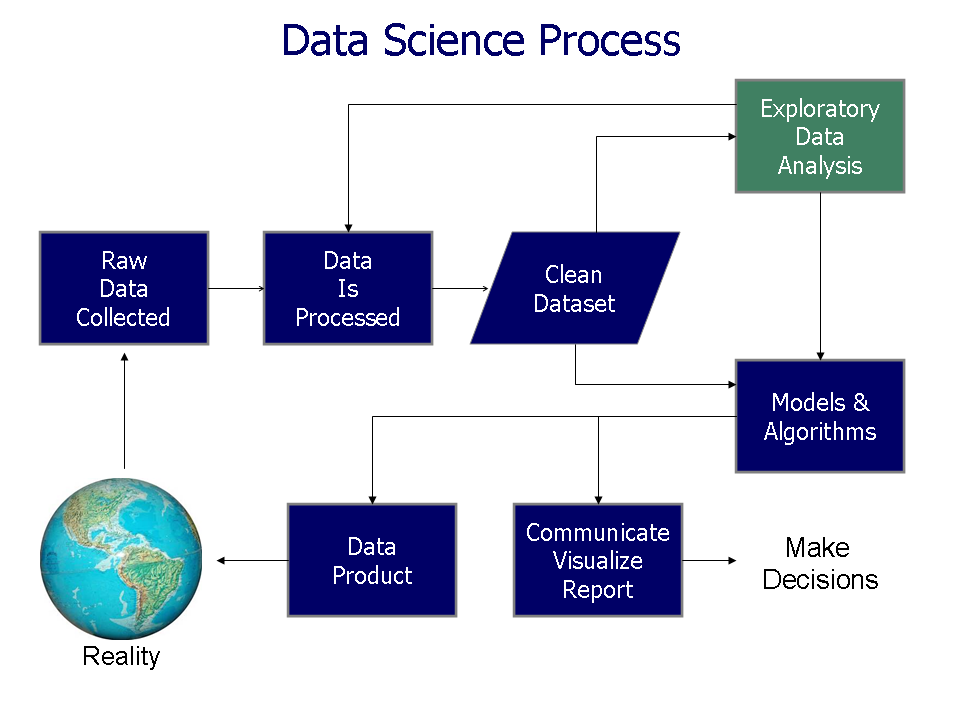
While you can build trading algorithms in many programming languages, Python has become the industry standard for several reasons.
Python's simple syntax, extensive libraries for data analysis (like pandas and NumPy), and a large, active community make it the go-to language for quantitative analysts and retail traders alike.
# A simple example of calculating a moving average in Python
# This is a common task in trend-following strategies

import pandas as pd

# Sample price data for a stock
data = {'price': [100, 102, 101, 103, 105, 104, 106]}
df = pd.DataFrame(data)

# Calculate a 3-day simple moving average (SMA)
df['SMA_3'] = df['price'].rolling(window=3).mean()

# Display the results
print(df)
You don't need to be a software engineer to start with Python for trading, but a solid grasp of the basics is essential. It's the tool that allows you to turn a trading idea into a functioning algorithm.
Ready to test your knowledge? Let's see what you've learned about the fundamentals of algorithmic trading.
What is a primary advantage of using an algorithm for trading instead of a human trader?
An algorithm is programmed to buy a stock if it's trading for 50.01 on the NASDAQ. What type of strategy is this?
This covers the basic concepts of what algorithmic trading is, where it came from, and the core components involved. From here, you can start to explore how these ideas are put into practice.