Algorithmic Trading Strategies
Introduction to Algorithmic Trading
Trading at the Speed of Light
Algorithmic trading, often called algo-trading, uses computer programs to place trades. The program follows a pre-defined set of instructions, or an algorithm, to make decisions about what to buy and sell, when to do it, and at what price.
Think of it like giving a super-fast, emotionless assistant a very specific checklist. If a stock's price drops by 5%, buy 100 shares. If it goes up 10% from the purchase price, sell. The computer executes these instructions automatically, monitoring the market far more efficiently than any human could.
This isn't a new idea. Traders have used simple automated rules since the 1970s. But with the rise of powerful computers and high-speed internet, algo-trading exploded. Today, it dominates financial markets, accounting for the vast majority of trades on major exchanges.
Why Use a Bot?
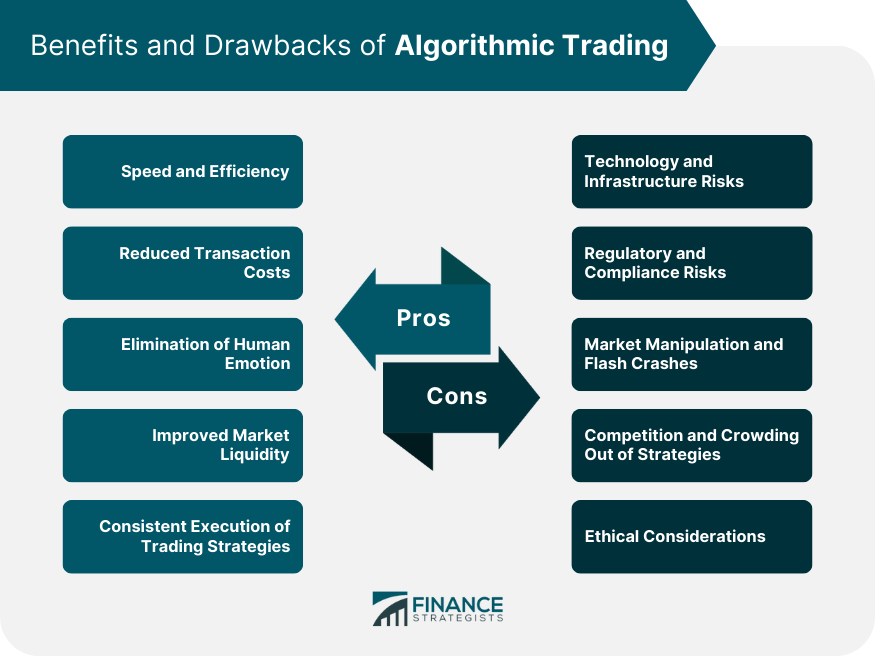
The primary advantage of algorithmic trading is speed. An algorithm can analyze market data and execute a trade in microseconds. This speed allows traders to capitalize on tiny price changes that would be impossible for a human to catch. They also eliminate the risk of manual errors, like typing in the wrong number of shares.
Algorithms are also tireless. They can scan thousands of different markets and securities simultaneously, 24/7, without getting tired or distracted. They stick to the plan without letting fear or greed cloud their judgment, which often leads to more consistent execution.
AI-driven algorithms can execute trades at speeds unimaginable to a human trader.
This efficiency can lead to lower transaction costs and helps make markets more liquid, meaning it's easier for everyone to buy and sell assets quickly.
Common Strategies
There isn't just one type of trading algorithm. Different strategies are designed for different market conditions and goals. Let's look at a few of the most common approaches.
Arbitrage
noun
The practice of simultaneously buying and selling an asset in different markets to profit from a tiny difference in its price.
Imagine a stock is trading for $100.00 on the New York Stock Exchange but for $100.01 on the NASDAQ. An arbitrage algorithm would instantly buy the stock on the NYSE and sell it on NASDAQ, locking in a profit of one cent per share. While that seems small, doing this thousands of times per second with millions of shares adds up quickly.
Another common strategy is market-making. Market-makers are like merchants for financial assets. They place simultaneous buy and sell orders for the same stock, hoping to profit from the difference, which is known as the bid-ask spread.
For example, a market-making bot might offer to buy a stock for $49.99 (the bid) and offer to sell it for $50.01 (the ask). By doing this continuously for many traders, it provides liquidity to the market and earns a small profit on each pair of trades. These algorithms need to manage their inventory of the stock very carefully to avoid losses if the price moves suddenly.
Finally, there are trend-following strategies. These are simpler in concept. The algorithm is programmed to identify the direction of the market trend and trade accordingly. If a stock's price is consistently moving up, the algorithm will buy. If it's trending down, it will sell.
These strategies often use technical indicators, like moving averages, to determine when a trend is starting or ending. The goal is to ride the trend for as long as it lasts and get out before it reverses.
These are just a few examples. In reality, firms develop highly complex and secretive algorithms to gain an edge. They combine different strategies, use machine learning to adapt to new market conditions, and constantly refine their code.
Ready to test your knowledge?
What is the primary function of an algorithm in algorithmic trading?
An algorithm that buys a stock on one exchange and simultaneously sells it for a slightly higher price on another exchange is using which strategy?
Understanding these core concepts is the first step into the world of automated trading, a field that has fundamentally reshaped modern finance.