Algebraic Expression Simplification
Understanding Variables
The Mystery Number
In arithmetic, we work with numbers we know, like $2 + 2 = 4$. Algebra introduces a twist: we start working with numbers we don't know yet.
Think of a variable as a box that holds a mystery number. You might not know what number is in the box, but you can still talk about it. You can say things like, "Whatever is in the box, add 5 to it," or "I have three of those boxes."
This idea of using a symbol to stand in for an unknown value is the core of algebra.
Variable
noun
A symbol, usually a letter, that represents a number. The value of the number can change or be unknown.
The most common letters for variables are and , but any letter will do. You might see , , , or even Greek letters like (theta). The letter itself doesn't matter; it's just a placeholder.
Expressions vs Equations
Variables show up in two main ways: in expressions and in equations. It's important to know the difference.
An algebraic expression is a mathematical phrase that combines numbers, variables, and operation signs. For example, is an expression. It means "seven more than some number ." It doesn't state a complete fact; it's just a value that depends on . If were 3, the expression's value would be 10. If were 20, its value would be 27.
Other examples of expressions include: , , and .
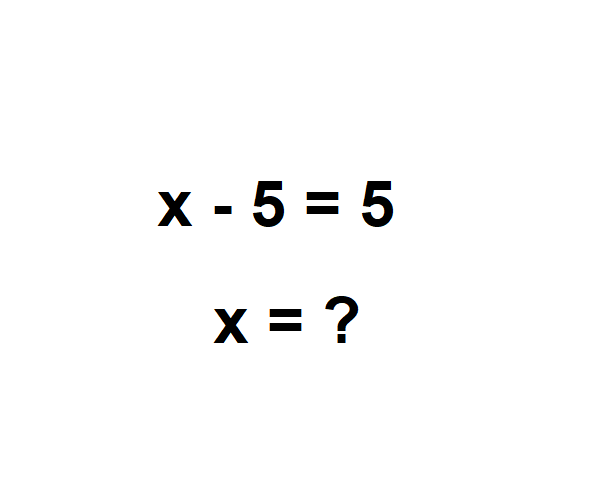
An equation, on the other hand, uses an equals sign to state that two expressions are equal. It's a complete mathematical sentence. For example, is an equation. It makes a claim: "Seven more than some number is equal to 12."
Unlike an expression, an equation can be solved. There's often a specific value for the variable that makes the equation true. In this case, must be 5.
Rules of the Road
Even though variables represent unknown numbers, they follow the same rules as regular numbers. This is a key idea. All the properties of arithmetic you already know still apply.
Let's review the most important ones.
This property might seem obvious, but it's powerful. It lets us rearrange parts of an expression without changing its value.
Understanding these properties is the first step toward simplifying more complex algebraic expressions. They are the basic rules that allow us to manipulate and rearrange our variables and numbers to make sense of them.
What is the primary role of a variable in algebra?
Which of the following is an equation?
Now that you've got the basics of variables down, you're ready to start putting them to work.