Alexander the Great's Empire
Early Life and Education
The Prince of Pella
Alexander was born in 356 BC in Pella, the capital of Macedonia. His father was King Philip II, a brilliant and ruthless military commander who was busy transforming Macedonia from a backwater kingdom into a dominant Greek power. His mother was Olympias, a princess from the nearby kingdom of Epirus, known for her fierce ambition and devotion to mystic religious cults.
From the beginning, Alexander was raised in a high-stakes environment. Philip saw in his son an heir to his military ambitions, while Olympias reportedly told Alexander that his true father was Zeus, planting the seed of a divine destiny. He grew up hearing tales of heroic ancestors like Achilles, the legendary warrior of the Trojan War, whom he idolized.
A Royal Tutor
King Philip wanted the best education for his son, so he hired the most famous intellectual of the time: the philosopher Aristotle. At a secluded temple, Aristotle taught a teenage Alexander and the sons of other Macedonian nobles a wide range of subjects. They studied politics, philosophy, medicine, and biology, grounding the young prince in logic and scientific inquiry.
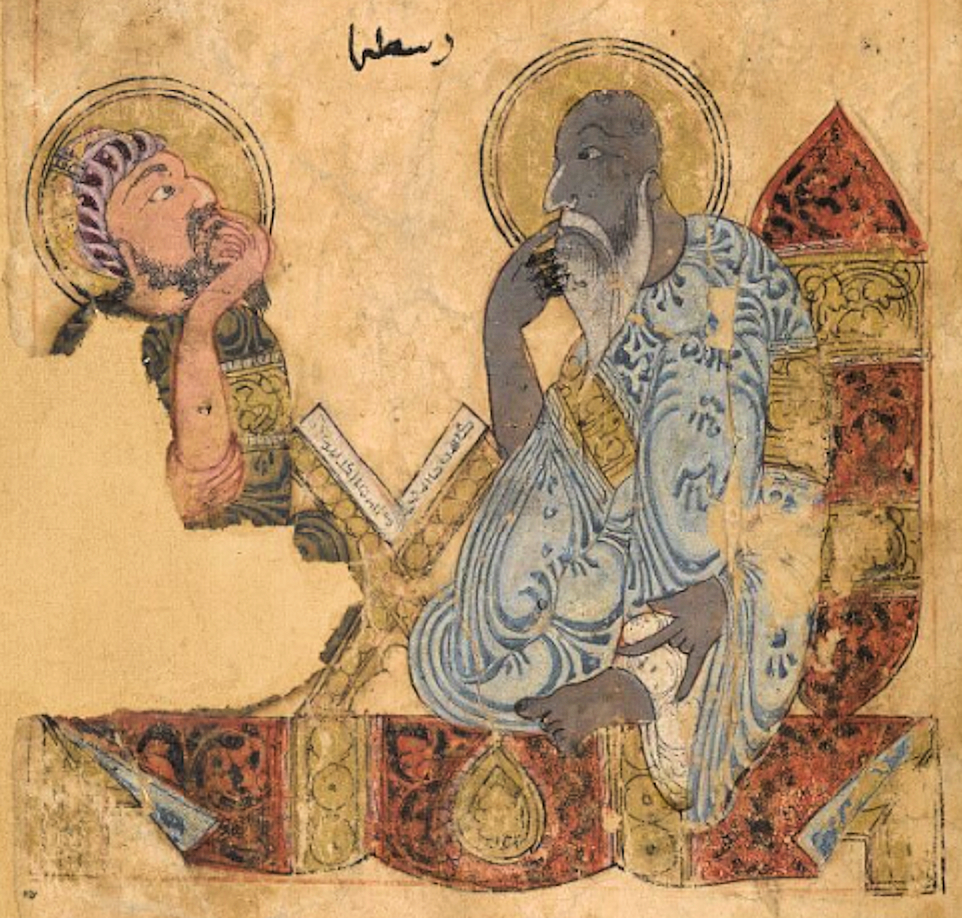
Aristotle fueled Alexander's curiosity about the world and instilled in him a lifelong love of learning. He also nurtured Alexander's fascination with Homer's epic poem, the Iliad. Alexander carried a copy of the book with him on all his campaigns, inspired by the hero Achilles's quest for glory.
This education was a unique blend of practical statecraft and deep intellectual thought, preparing Alexander not just to rule, but to analyze and understand the world he intended to conquer.
The Shadow of a King
While Aristotle shaped his mind, his father Philip molded him into a commander. Philip II was a master of warfare and diplomacy. He had reorganized the Macedonian army, creating the formidable Macedonian phalanx—a tightly packed infantry formation armed with long pikes called the sarissa. He also perfected the use of cavalry and siege engines.
Alexander learned by watching. He saw how his father trained troops, managed supply lines, and used diplomacy and force to unite the fractured city-states of Greece under Macedonian control. Philip wasn't just a distant king; he was Alexander's first and most important teacher in the art of war and power.
But this relationship was also competitive. Alexander was eager to prove himself and step out of his powerful father's shadow.
His first chance came at age 16. While Philip was away on a campaign, Alexander was left in charge as regent. He wasted no time, leading the army to crush a Thracian revolt and founding a new city he named Alexandropolis.
Two years later, at the decisive Battle of Chaeronea in 338 BC, Alexander commanded the Macedonian cavalry. At a critical moment, he led a charge that shattered the enemy lines, securing a victory that cemented Macedonian control over all of Greece. He had proven himself not just a prince, but a capable and fearless commander in his own right.
Who were Alexander the Great's parents?
Which famous philosopher was hired by Philip II to educate the young Alexander?