Alexander the Great
Macedonian Background
The Land of Macedon
To understand Alexander the Great, you first need to understand where he came from. Macedonia wasn't like Athens or Sparta. It was a rugged, mountainous kingdom on the northern edge of the Greek world. Think of it as the frontier. The plains provided land for farming and raising horses, while the mountains offered timber and minerals. This geography made Macedonians tough and self-reliant.
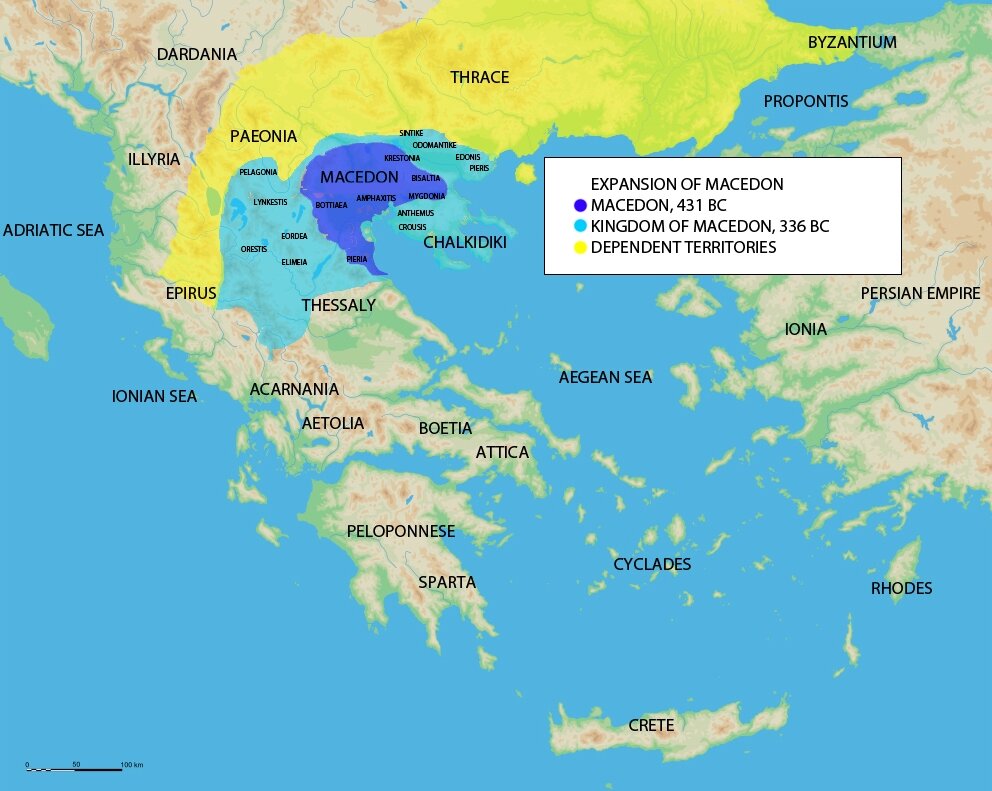
For a long time, the more 'civilized' Greeks to the south looked down on the Macedonians. They saw them as semi-barbaric, speaking a dialect of Greek they found coarse. While city-states like Athens were experimenting with democracy, Macedonia was a kingdom ruled by a monarch whose power was often challenged by ambitious nobles. The king was a warrior first, leading his army from the front.
Macedonia's position made it a buffer state between the Greek world and the tribal peoples to the north and west. This constant threat kept its military sharp.
Philip II, the Game Changer
The story of Macedonia's rise begins not with Alexander, but with his father, Philip II. When Philip took the throne in 359 BCE, Macedonia was weak and on the verge of collapse. Through brilliant diplomacy and ruthless military genius, he transformed it into the dominant power in Greece.
Philip's greatest contribution was his overhaul of the army. He took the traditional Greek phalanx, a formation of spearmen, and perfected it.
Phalanx
noun
A rectangular mass military formation, usually composed entirely of heavy infantry armed with spears, pikes, or similar pole weapons.
He equipped his soldiers with the sarissa, an incredibly long pike, sometimes up to 18 feet long. This allowed the Macedonian phalanx to engage the enemy from a greater distance, creating a deadly wall of spear points. But Philip didn't just rely on infantry. He created a true combined-arms military, integrating his elite Companion Cavalry, skilled archers, and powerful siege engines. This flexible and lethal force was unlike anything the Greek world had ever seen.
Philip's new army was a professional force, constantly training and loyal to him personally, not to their local lords.
With this army, Philip II conquered neighboring territories and subdued the fractious Greek city-states one by one. After his decisive victory at the Battle of Chaeronea in 338 BCE, he established the League of Corinth, a federation of Greek states. He was its elected leader, or hegemon. For the first time, Greece was united, albeit by force. Philip's next goal was to lead this unified Greek army against the vast Persian Empire, but he was assassinated before he could launch his invasion. The stage was set for his son.
Macedonian Society and Culture
Macedonian society was centered on the king and a warrior aristocracy. While they considered themselves Greek, their culture had distinct features. They were a monarchy, not a democracy or oligarchy. The king was expected to lead in battle, feast with his nobles, and act as the chief judge and priest.
This created a unique relationship between the ruler and his top commanders, the Companions. They were his advisors, his generals, and his drinking partners. Their loyalty was essential, but they also felt they had the right to speak their minds, sometimes fiercely. This blend of absolute monarchy and aristocratic freedom was a hallmark of Macedonian life.
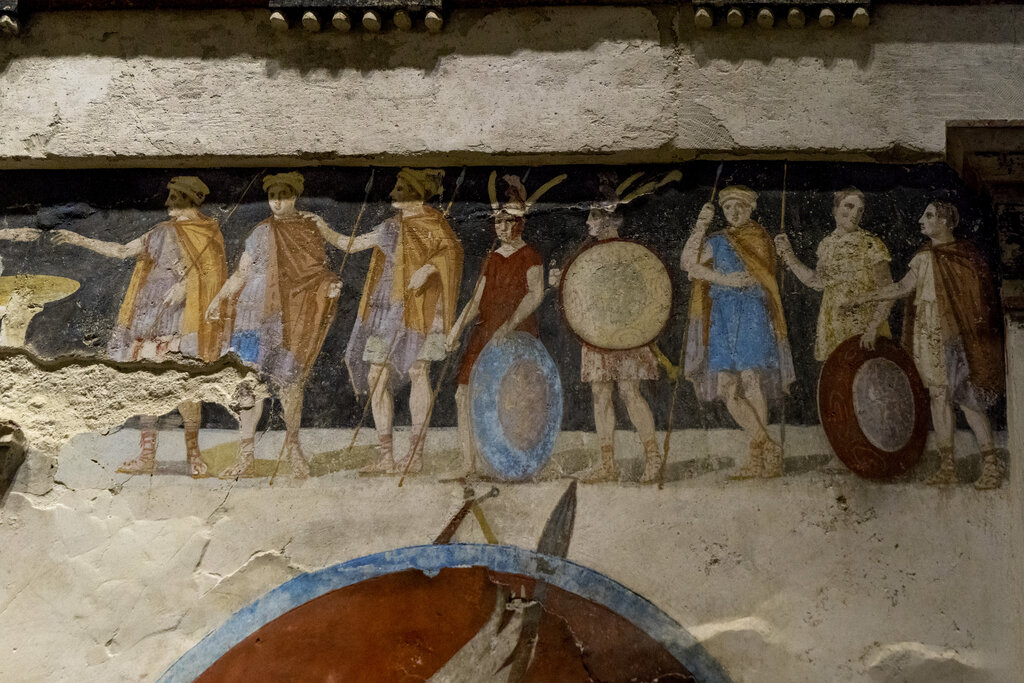
Despite being seen as outsiders, the Macedonian elite admired Greek culture. They invited famous philosophers, like Aristotle, to tutor their children, and they participated in the Olympic Games. They were a people with one foot in the traditional, tribal world of kings and warriors, and the other in the sophisticated, intellectual world of classical Greece. This combination of raw military power and appreciation for Greek culture would fuel Alexander's incredible journey.
Now let's review the key terms we've covered.
Time to test your knowledge.
Before Philip II's rise to power, how did many Greeks from city-states like Athens and Sparta view Macedonians?
What was Philip II's most significant innovation for the traditional Greek phalanx?
With this foundation, we can now begin to explore the life and conquests of Philip's son, Alexander.