Airbag Safety Impact
Airbag Origins
An Idea Born from Experience
The story of the airbag begins not in a corporate lab, but on a Sunday drive. In 1952, a retired industrial engineer named John W. Hetrick was out for a ride with his wife and young daughter. He had to swerve his car into a ditch to avoid hitting a deer. As he did, he and his wife instinctively threw their arms up to shield their daughter from hitting the dashboard.
That frightening moment sparked an idea. What if a car could have a built-in cushion that automatically protected occupants in a collision? Hetrick, who had experience with compressed air from his time working with naval torpedoes, envisioned a system that could do just that.
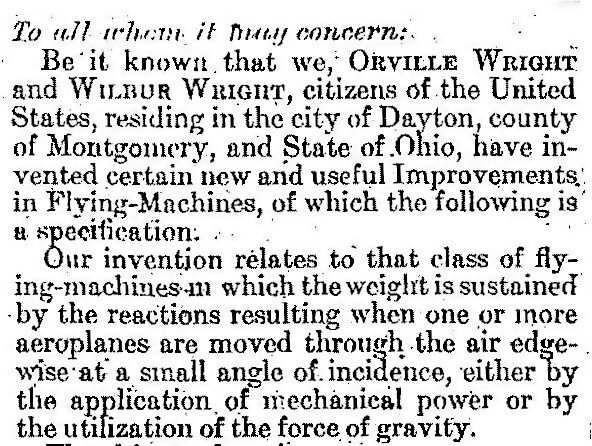
He sketched out a design and filed for a patent, which was granted in 1953. His concept was simple in principle. A tank of compressed air would be stored under the dashboard. When the driver slammed on the brakes, the sudden deceleration would cause a weight to slide forward, opening a valve. The air would then rush into a fabric bag, inflating it to cushion the passenger.
A similar patent was filed in Germany by Walter Linderer in the same year. Both inventors had independently arrived at the same basic idea, but both would run into the same fundamental problems.
From Concept to Reality
Having a patent is one thing; building a working device is another. The early concepts from Hetrick and Linderer were clever, but they faced two massive technical hurdles that the technology of the 1950s couldn't overcome.
The first was speed. A car crash happens in the blink of an eye. For an airbag to be effective, it needs to inflate in a fraction of a second, faster than a person can be thrown forward. Compressed air, while simple, just wasn't fast enough. The bags in these early designs would inflate too slowly to provide any real protection.
The second problem was detection. How could the system reliably tell the difference between a genuine crash and a simple panic stop or a bumpy road? Hetrick's design relied on the car's momentum. But a mechanical trigger sensitive enough to deploy in a real crash would likely be too sensitive for everyday driving, leading to accidental deployments.
The core challenge was twofold: the cushion needed to inflate almost instantly, and it needed a foolproof way to know when to inflate.
Automakers at the time, including Ford and General Motors, experimented with these early concepts in the late 1950s but quickly discovered these limitations. The systems were simply too slow and unreliable to be practical. The airbag was a brilliant idea, but it was ahead of its time. The key technologies needed to make it work hadn't been invented yet.
The Chemical Breakthrough
The solution to the inflation speed problem didn't come from mechanics, but from chemistry. Researchers realized that a small, controlled explosion could produce a large volume of gas much faster than any compressed air tank could release it.
The breakthrough came with the use of a chemical compound called sodium azide (). When ignited by an electrical signal, sodium azide decomposes almost instantly into harmless nitrogen gas, the same gas that makes up about 78% of the air we breathe. This chemical reaction could inflate a fabric bag in about 30 milliseconds, fast enough to cushion an occupant before they hit the steering wheel or dashboard.
The trigger mechanism also needed to evolve. Instead of a simple sliding weight, engineers developed electromechanical sensors. A common early design involved a ball held in place by a magnet inside a smooth cylinder. In a crash, the force of the impact would overcome the magnetic force, allowing the ball to move and complete an electrical circuit. This sent the signal that ignited the sodium azide, deploying the bag.
These two developments, chemical inflation and reliable crash sensors, finally made the airbag a viable safety device, paving the way for its eventual adoption decades after John Hetrick's drive in the country.