Air Operations Joint Planning
Introduction to Joint Air Operations
The Conductor of the Skies
Modern military operations are rarely a one-service show. Instead, they are "joint" operations, where the Army, Navy, Air Force, Marines, and Space Force work together. When you have so many moving parts, coordination is everything, especially in the air.
Imagine an orchestra with no conductor. Each musician might be a world-class talent, but without someone to guide the tempo and ensure everyone plays in harmony, the result would be chaos. In joint military operations, the air is a crowded space with assets from different services all trying to achieve their goals. To prevent chaos and maximize effectiveness, a single individual is put in charge of all air assets in a given area.
JFACC
noun
The Joint Force Air Component Commander is the single commander responsible for planning, coordinating, and controlling all air operations within a joint force.
The JFACC, typically an Air Force general, doesn't personally fly every plane. Instead, their job is to see the big picture. They are responsible for taking the overall commander's objectives and translating them into a coherent air campaign. This involves allocating resources, deconflicting missions so aircraft don't interfere with each other, and ensuring that air power is supporting the ground and sea forces effectively.
The Nerve Center
A conductor needs a podium and sheet music, and the JFACC needs a command center. This is the Air Operations Center, or AOC. The AOC is the nerve center of the entire air campaign, where strategy is born, plans are made, and operations are executed in real-time.
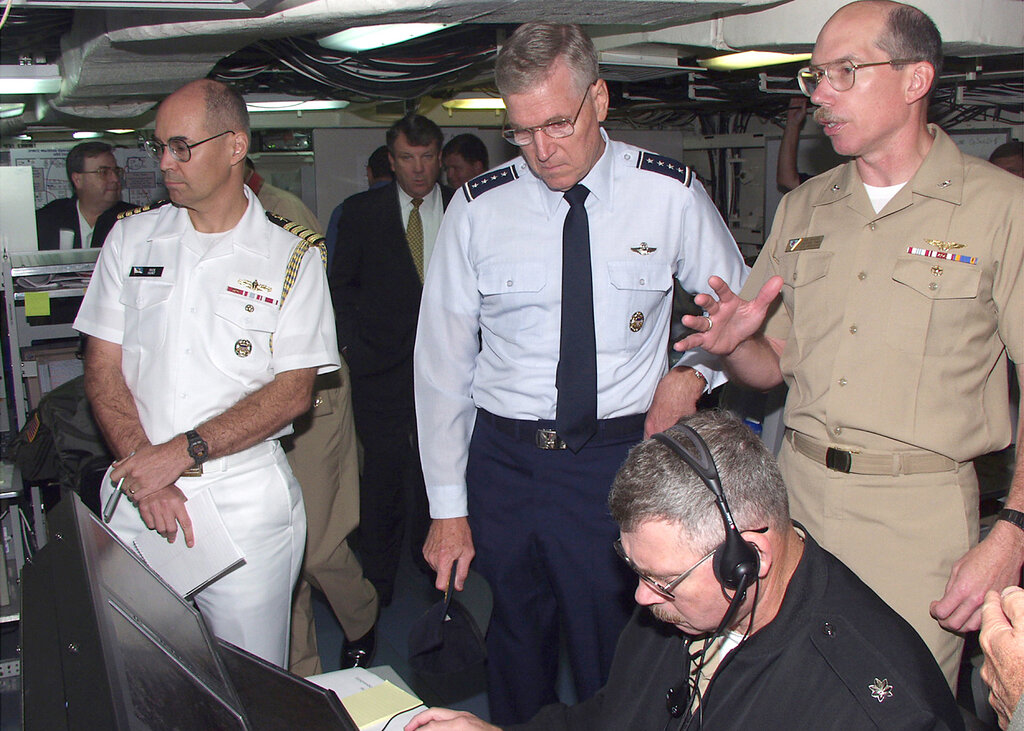
An AOC isn't just one big room with a giant map (though it often has one of those). It’s a highly organized structure, typically broken down into five main divisions, each with a specific role in the lifecycle of an air mission.
Here's how it works:
- Strategy Division (SRD): This team looks at the long-term goals. They ask, "What are we trying to achieve with air power over the next week or month?" They develop the overall air strategy.
- Combat Plans Division (CPD): These planners take the strategy and turn it into a detailed daily plan called the Air Tasking Order (ATO). The ATO is like a massive, intricate spreadsheet that lists every single planned flight, its mission, timing, callsign, and targets.
- Combat Operations Division (COD): This is the execution arm. They run the current day's ATO, monitoring the battlefield in real-time and making adjustments as needed. If a ground unit needs immediate help, the COD redirects aircraft to provide it.
- Intelligence, Surveillance, and Reconnaissance Division (ISRD): The ISRD is the eyes and ears. They process intelligence from drones, satellites, and other sources to build a picture of the battlespace, identify targets, and assess the effects of strikes.
- Air Mobility Division (AMD): This division handles all the logistics. They coordinate the fleet of tanker aircraft for refueling, cargo planes for supplies and troops, and medical evacuation flights.
Weaving Air Power Together
The ultimate goal of the JFACC and the AOC is to integrate air capabilities seamlessly into the joint operation. This is about more than just dropping bombs. Air power is a versatile tool that supports forces on the ground, at sea, and in cyberspace.
Effective integration means the right asset is in the right place at the right time to create an effect that helps the overall mission succeed.
Consider a ground unit advancing on an enemy position. They are supported by a web of integrated air capabilities. A JSTARS aircraft might be watching for enemy vehicle movements from high above. A drone could be providing a live video feed of the immediate area. A fighter jet might be on call to provide close air support if the unit runs into heavy resistance. Meanwhile, a C-17 cargo plane, coordinated by the Air Mobility Division, might be flying in ammunition and supplies to a nearby airfield.
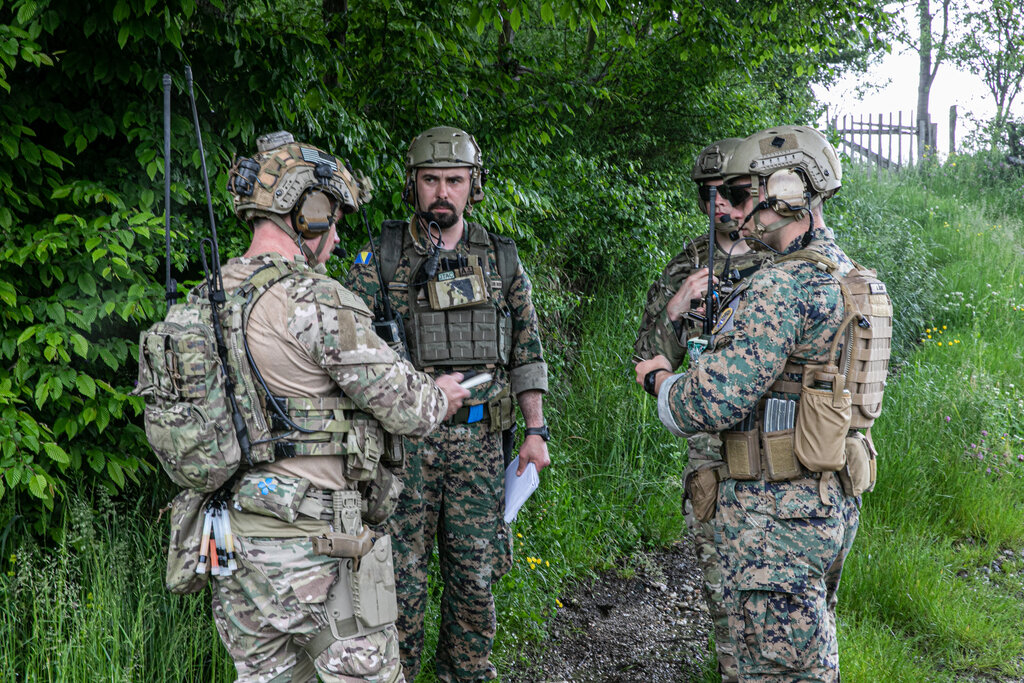
This synergy is what makes joint air operations so powerful. Each component of the force is made stronger by the support of the others. The JFACC's role, through the command and control provided by the AOC, is to weave these disparate capabilities together into a single, cohesive effort.
Time to check your understanding of these foundational concepts.
What is the primary role of the Joint Force Air Component Commander (JFACC)?
The Air Operations Center (AOC) acts as the ______ of the air campaign, where strategy is planned and operations are executed in real-time.
Understanding the roles of the JFACC and the AOC is the first step in grasping how complex air campaigns are planned and executed.