Air Cargo Logistics Explained
Introduction to Air Cargo Logistics
The Express Lane in the Sky
Think of air cargo logistics as the process of sending a very large, very important package by plane. It’s the system that manages the flow of goods from a starting point to a final destination using aircraft. While most cargo in the world travels by ship, air freight is the express lane. It's essential for items that are time-sensitive, high-value, or perishable.
Fresh flowers from the Netherlands can be in a New York flower shop overnight. A critical machine part made in Germany can get a factory in Mexico back up and running in a day. This speed is what makes air cargo a vital artery in the global economy, connecting businesses and satisfying consumer demand for fast delivery.
Air cargo is all about speed and reliability for goods that can't wait.
The Journey of a Shipment
The path of an air shipment involves several coordinated steps. It’s more complex than just dropping a box at the airport. The entire process is designed to be secure, efficient, and fast.
First, the sender books space for their cargo on a flight. This is usually done weeks or days in advance. Once booked, the goods are transported to the airport. At the airport's cargo terminal, they are carefully handled, screened for security, and loaded into special containers called Unit Load Devices (ULDs). These ULDs are designed to fit perfectly inside the belly of an aircraft.
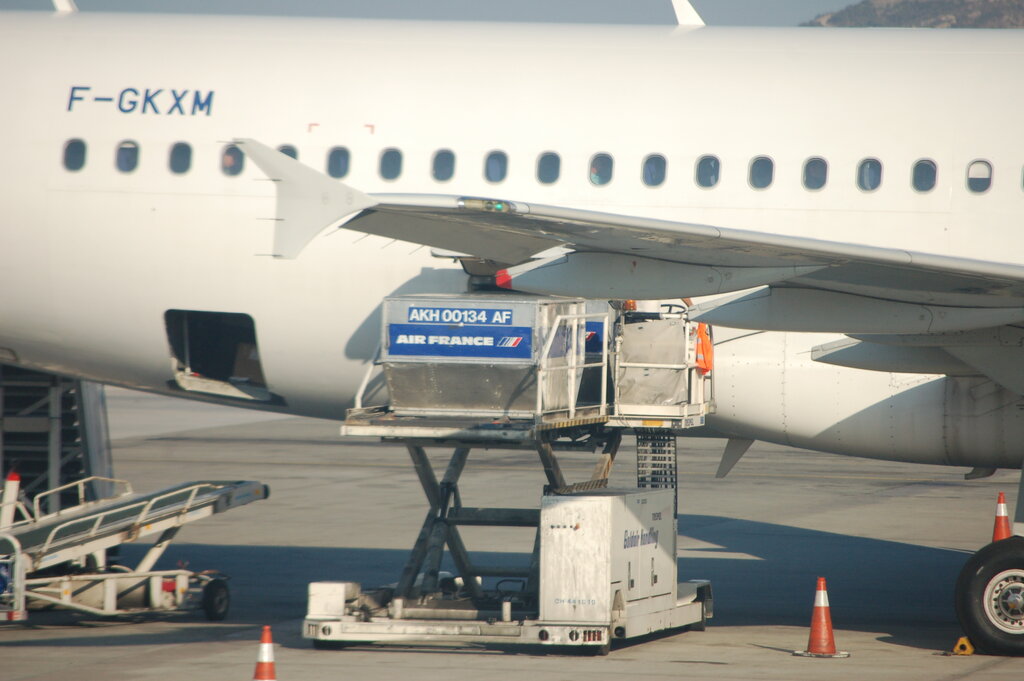
The airline then flies the cargo to the destination airport. After landing, the process happens in reverse. The ULDs are unloaded, the goods are taken to another warehouse, and they must be cleared by customs officials. Once cleared, the cargo is picked up and trucked to its final destination, whether that’s a warehouse, a factory, or a retail store.
The Key Players
A successful air cargo shipment relies on a team of specialists, each with a distinct role. Four main groups work together to move goods through the sky.
Shippers are the owners of the goods. They can be a small business sending products to a new market or a large corporation moving components between factories. They initiate the entire process because they have something that needs to be moved.
Freight Forwarders act as the travel agents for cargo. Shippers hire them to manage the entire journey. Forwarders don't own the planes; instead, they use their expertise and network to find the best routes and rates, handle the paperwork, and coordinate with all the other players. For the shipper, the forwarder is their single point of contact.
Airlines are the carriers. They own and operate the aircraft that physically transport the cargo from one airport to another. Some airlines have dedicated cargo planes, while others carry freight in the belly of passenger planes.
Customs Authorities are the government agencies in each country responsible for controlling the flow of goods across their borders. They ensure that all shipments comply with local laws and that any required taxes or duties are paid. No international cargo can enter a country without their approval.
What is the main reason a company would choose air freight over sea freight?
In the air cargo process, which party is the owner of the goods being transported?
Together, these players form a complex, fast-paced network that keeps global supply chains moving. Each step and every stakeholder is crucial to getting a package from one side of the world to the other safely and on time.