AI World Models Explained
Introduction to AI and LLMs
What Is Artificial Intelligence?
Artificial Intelligence, or AI, is the science of making machines that can think, learn, and solve problems like humans do. The idea isn't new. For decades, scientists and storytellers have dreamed of creating intelligent machines. The goal has always been to build systems that can perform tasks that normally require human intelligence, like understanding language, recognizing images, and making decisions.
Early AI research focused on creating systems that followed a set of rules. Think of a chess program that knows all the rules and evaluates moves based on a predefined strategy. This is a form of AI, but it's limited. It can't learn or adapt beyond its programming.
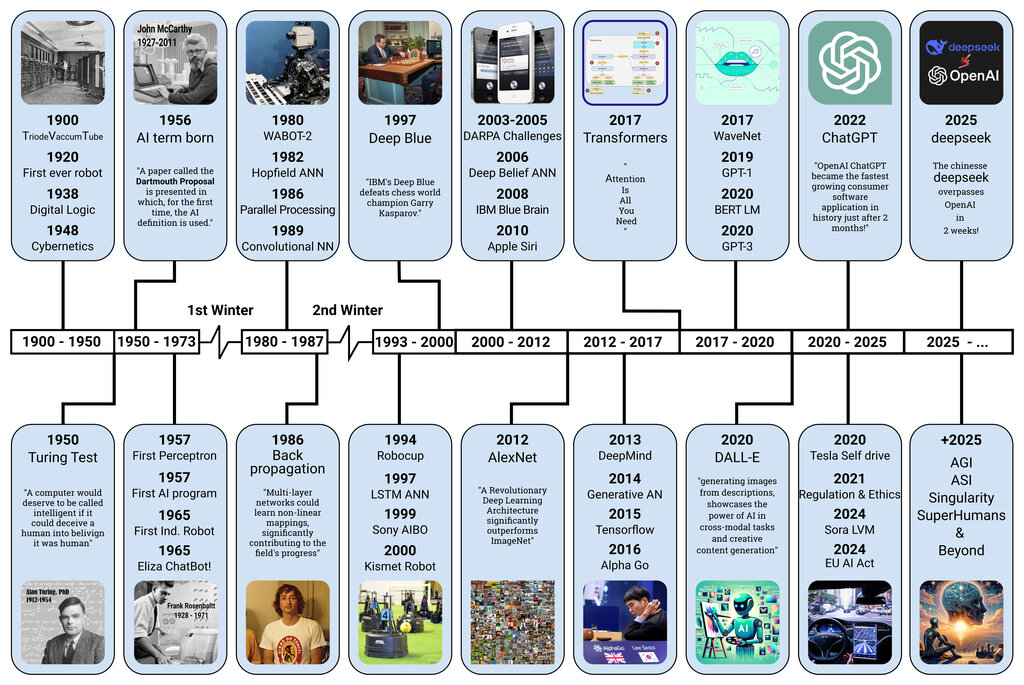
The field has made huge leaps since its early days. Instead of just following rules, modern AI systems can learn from experience. This ability to learn from data is what makes today's AI so powerful.
Learning from Data
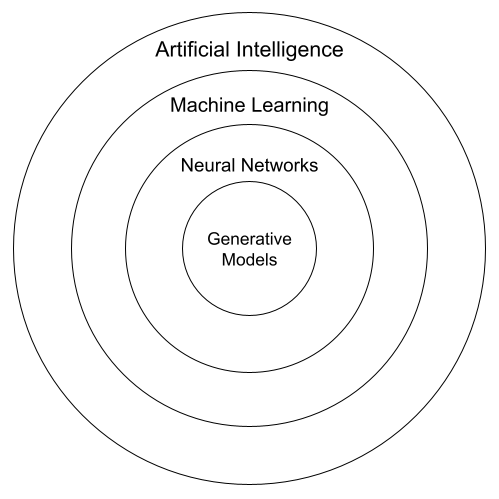
A major breakthrough in AI was the development of machine learning. This is a subfield of AI where computers learn patterns from large amounts of data without being explicitly programmed for every single task. For example, instead of writing complex rules to identify a cat in a photo, you can show a machine learning model thousands of cat photos. It learns the features of a cat on its own.
Within machine learning, there's a technique called deep learning, which uses structures called neural networks. These are inspired by the human brain's web of interconnected neurons. Deep learning models can process vast amounts of information and recognize incredibly complex patterns, making them ideal for tasks like understanding human speech or generating realistic images.
Enter Large Language Models
Large Language Models, or LLMs, are a product of deep learning. They are massive neural networks trained on enormous quantities of text data from the internet, books, and other sources.
Large language models (LLMs) are AI systems that understand and create human language, doing tasks like summarizing articles, answering questions, writing code, and more.
The core function of an LLM is simple: predict the next word in a sequence. If you give it the phrase "The cat sat on the...", it uses its training to calculate the most probable next word, like "mat" or "couch." By repeating this process over and over, LLMs can generate coherent sentences, paragraphs, and even entire articles.
The real magic behind modern LLMs is an architecture called the Transformer. Introduced in 2017, the Transformer allows the model to weigh the importance of different words in the input text. This is called an "attention mechanism." It helps the model understand context, nuance, and the complex relationships between words, even if they are far apart in a sentence. This ability is what makes their responses sound so natural and human-like.
What Can LLMs Do?
Because they are trained on such diverse text, LLMs are incredibly versatile. Their ability to understand and generate language opens up a wide range of applications.
| Application | Description |
|---|---|
| Content Creation | Writing emails, articles, marketing copy, or even poetry. |
| Summarization | Condensing long documents or articles into key points. |
| Translation | Translating text between different languages. |
| Chatbots | Powering conversational agents for customer service or assistance. |
| Code Generation | Writing computer code based on a description in plain English. |
These models are constantly evolving, becoming more capable and integrated into the tools we use every day. They represent a significant step forward in making AI more useful and accessible.
Ready to test what you've learned about AI and LLMs?
What is the primary characteristic that distinguishes modern AI from early, rule-based AI?
Which of the following correctly orders the concepts from the broadest category to the most specific?
From early rule-based systems to modern learning models, AI has come a long way. LLMs, powered by the Transformer architecture, are at the forefront of this evolution, changing how we interact with information and technology.