AI World Models Explained
Introduction to World Models
The AI's Inner World
When you walk into a dark room you know well, you can probably find the light switch without bumping into furniture. You're not using your eyes; you're using a mental map of the room you've built from past experience. You have an internal model of your environment.
Artificial intelligence systems, especially those that interact with the world, need something similar. This internal simulation is called a world model. It's the AI's understanding of how its environment works and how its actions will affect that environment.
World Model
noun
An internal, learned representation of an environment that an AI agent uses to simulate events and predict the outcomes of actions.
A world model isn't a perfect copy of reality. Instead, it's a simplified, useful abstraction. It focuses on the rules and dynamics that matter for the AI's goals. For a self-driving car, the world model needs to understand traffic laws, the physics of acceleration, and how other cars are likely to behave. It doesn't need to know the color of every building it passes.
World models, which encapsulate the dynamics of how actions affect environments, are foundational to the functioning of intelligent agents.
At its core, a world model is built to answer the question: "If I do this, what will happen next?"
Predicting the Future
An AI agent learns and refines its world model by interacting with its environment. It takes an action, observes the result, and updates its internal understanding. This cycle of action and observation is fundamental to learning.
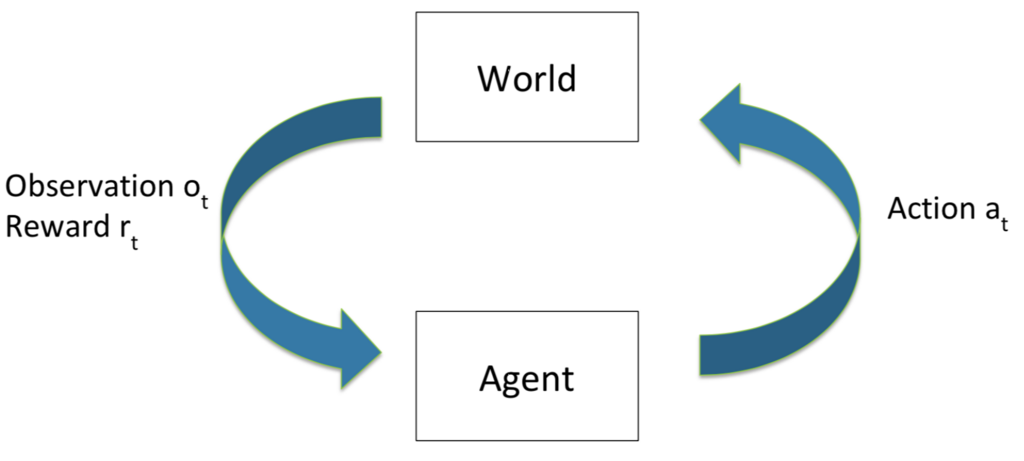
This learning process allows the AI to perform a kind of virtual trial-and-error. Instead of having to perform every action in the real world, which could be slow, costly, or dangerous, it can simulate potential actions within its world model. This ability to "imagine" different futures is what makes world models so powerful. It's the basis for predictive reasoning and effective decision-making.
By simulating cause-and-effect, an AI with a world model can plan multiple steps ahead, choosing the sequence of actions most likely to achieve its goal.
Why World Models Matter
The benefits of a good world model are significant, especially in robotics and reinforcement learning. A robot navigating a warehouse needs a strong sense of spatial understanding to plan efficient routes and avoid obstacles. Its world model provides this internal map.
In reinforcement learning, an agent learns by receiving rewards or penalties for its actions. A world model supercharges this process. The agent can use its model to practice internally, learning much faster than if it relied solely on real-world feedback. It can simulate thousands of attempts at a task in the time it would take to perform one attempt physically.
Essentially, world models give AI a form of imagination. They allow an agent to move beyond simple reflexes and develop a deeper, more flexible understanding of its environment, paving the way for more intelligent and adaptable systems.
What is the primary function of a world model in an AI system?
How does an AI agent typically learn and refine its world model?
By building and refining these internal simulations, AI agents can plan, adapt, and act more intelligently in complex and dynamic settings.