AI with Java
Introduction to Artificial Intelligence
What Is AI Anyway?
Artificial Intelligence, or AI, is about creating machines that can think, learn, and solve problems like humans. It's a broad field in computer science that aims to build systems that can perform tasks that would normally require human intelligence. This includes things like understanding language, recognizing patterns, making decisions, and even creating art.
At its core, AI is the science of making things smart. A system is considered intelligent if it can interpret data, learn from it, and use those learnings to achieve specific goals.
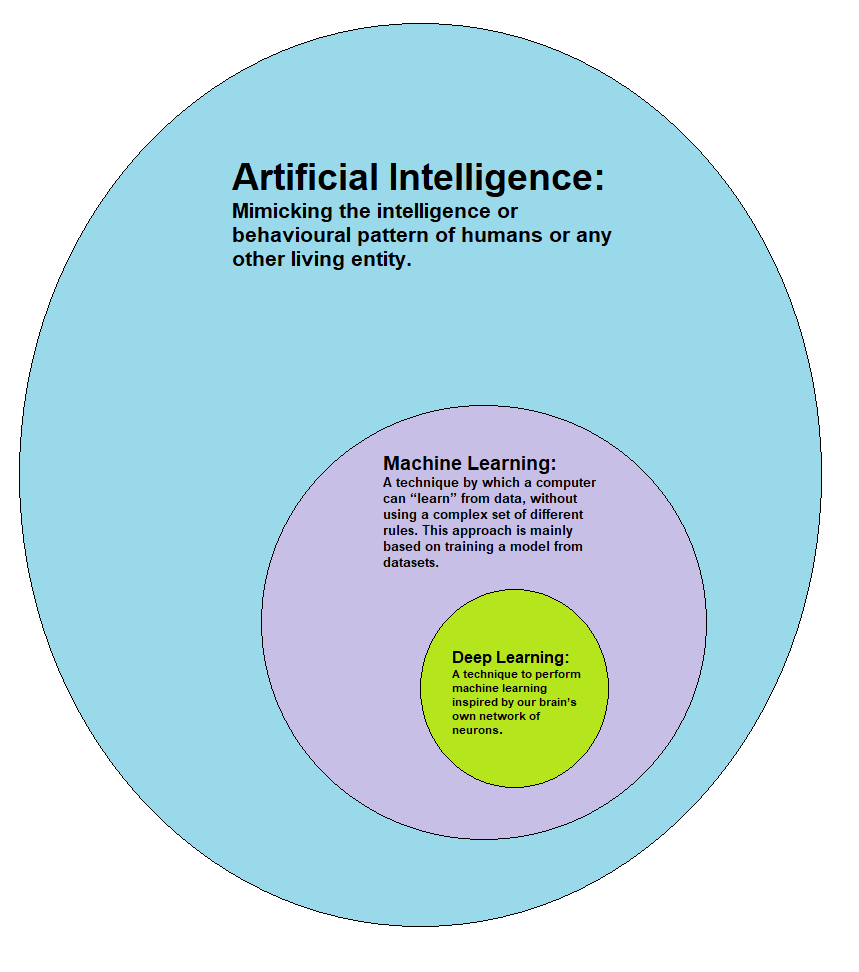
Often, you'll hear terms like Machine Learning (ML) and Deep Learning (DL) used alongside AI. They aren't the same thing, but they are related. Machine learning is a subset of AI where systems learn from data to improve their performance on a task. Deep learning is a specialized type of machine learning that uses complex structures called neural networks, inspired by the human brain, to handle more abstract and large-scale problems.
A Quick Trip Through Time
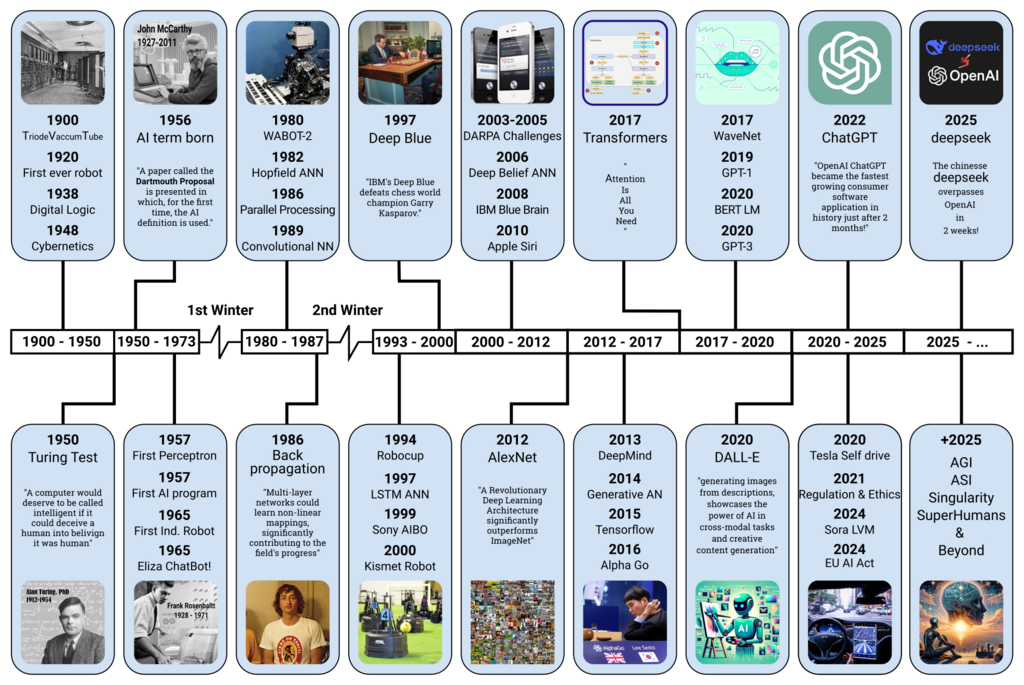
The idea of artificial beings with intelligence has been around for centuries, but the scientific field of AI is much younger. The journey began in the mid-20th century with pioneers who asked a fundamental question: Can a machine think? Alan Turing's 1950 paper, "Computing Machinery and Intelligence," proposed what we now call the Turing Test, a way to gauge a machine's ability to exhibit intelligent behavior indistinguishable from that of a human.
The field was officially born at a 1956 workshop at Dartmouth College, where the term "artificial intelligence" was coined. This sparked an era of excitement and optimism. Early researchers developed programs that could solve algebra problems, prove logical theorems, and speak simple English.
However, progress was slower than expected. The initial hype led to periods known as "AI winters," when funding and interest dwindled due to frustratingly slow progress and limitations in computing power. But the field didn't die. It quietly evolved.
The 1990s and 2000s saw a resurgence. Computing power exploded, vast amounts of data became available thanks to the internet, and new machine learning algorithms were developed. Milestones like IBM's Deep Blue defeating chess champion Garry Kasparov in 1997 showed the world that AI was becoming a powerful force. This set the stage for the AI revolution we see today.
Classifying AI Systems
Not all AI is created equal. We can classify AI systems in a couple of useful ways. One way is by their capability, which describes how they compare to human intelligence. Another is by their functionality, which looks at how they operate and what they can do.
Classification by Capability
-
Artificial Narrow Intelligence (ANI): This is the only type of AI we have successfully built so far. ANI is designed to perform a single, specific task, like playing chess, recognizing faces, or driving a car. While it can be incredibly powerful at its one job, it can't operate outside of that narrow domain.
-
Artificial General Intelligence (AGI): This is the stuff of science fiction, for now. AGI refers to a machine with the ability to understand, learn, and apply its intelligence to solve any problem, much like a human being.
-
Artificial Superintelligence (ASI): This hypothetical AI would surpass human intelligence in every way, from creativity and problem-solving to social skills. It's a concept that raises as much excitement as it does concern.
Classification by Functionality
This classification, proposed by researcher Arend Hintze, focuses on how an AI system perceives and uses information.
-
Reactive Machines: The most basic type. They can't form memories or use past experiences to inform current decisions. They simply perceive the world and act on what they see. IBM's Deep Blue is a perfect example.
-
Limited Memory: These systems can look into the past. Self-driving cars use this type of AI. They observe the speed and direction of other cars, which they use to make decisions. This information isn't stored permanently, but it's used to navigate the immediate future.
-
Theory of Mind: This is a more advanced, future concept. These AIs would be able to understand human thoughts, emotions, and beliefs. This would allow for much more sophisticated social interaction between humans and machines.
-
Self-Awareness: The final stage. These AI systems would have a form of consciousness and self-awareness, understanding their own internal states. This type of AI does not yet exist.
Which statement best describes the relationship between Artificial Intelligence (AI), Machine Learning (ML), and Deep Learning (DL)?
The term 'artificial intelligence' was officially coined at a 1956 workshop held at which institution?
Understanding these core concepts—what AI is, where it came from, and how it's categorized—provides a solid foundation for exploring how this technology is built and applied.