AI Visual Effects for Content Creators
Introduction to AI in Visual Effects
AI and the Magic of Movies
Visual effects (VFX) have always been a blend of art and cutting-edge technology. From the first stop-motion creatures to sprawling digital cities, filmmakers have constantly pushed the limits of what's possible on screen. The latest revolution in this long history is artificial intelligence.
At first, AI's role was subtle. It began as sophisticated automation, algorithms designed to handle specific, repetitive tasks that consumed countless hours of artists' time. Think of it as an evolution. Early software could track a point in a video, but an AI-powered tool can now understand the entire object, predicting its movement even when it's partially hidden. This shift from simple automation to intelligent assistance is changing the entire VFX pipeline.
What AI Does in VFX Today
AI isn't just one thing; it's a collection of technologies being applied to solve specific problems in VFX production. One of the most time-consuming tasks has always been rotoscoping, the process of tracing an object frame by frame to separate it from its background. For a single minute of film, that's 1,440 individual frames to trace. AI can now do this in a fraction of the time by recognizing objects and creating masks automatically.
Another key area is matchmoving, which involves tracking the movement of the real-world camera so that digital elements can be seamlessly added to a scene. AI analyzes the footage, identifies tracking points, and calculates the camera's path with incredible precision. This allows a computer-generated dragon to fly believably through a real landscape.
During filmmaking, AI plays a crucial role in visual effects (VFX).
Beyond these foundational tasks, AI is enabling new creative possibilities. Digital de-aging, for example, once required painstakingly re-sculpting an actor's face in 3D. Now, AI models trained on thousands of faces can make an actor look younger or older more realistically. The same techniques apply to digital makeup and character creation, where an actor's performance can be mapped onto a completely digital character.
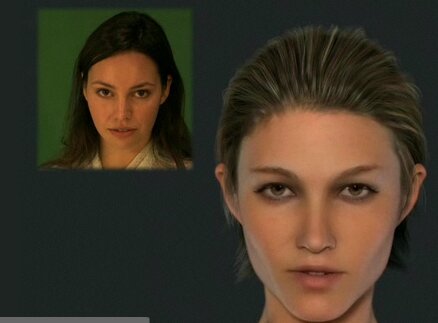
AI is also becoming a creator. Generative AI can produce entire digital environments, extend existing sets, or fill in backgrounds. Need to remove a modern building from a historical drama? AI can intelligently fill the space with period-appropriate scenery. Need to create a vast, realistic army for a battle scene? AI-driven crowd simulators can generate thousands of digital extras, each behaving in a unique and believable way.
The AI-Powered Toolkit
Artists aren't logging into a single program called "AI." Instead, these intelligent features are being integrated directly into the software they already use. Major VFX platforms like Foundry's Nuke, Adobe After Effects, and Autodesk Maya now include AI-accelerated tools for tasks like denoising footage, upscaling resolution, and object removal.
There are also standalone AI platforms that specialize in specific areas. Some focus on generating textures and materials, while others create 3D models from text descriptions or 2D images. The goal of these tools is not to replace artists, but to augment their skills. By automating the technical grunt work, AI allows VFX professionals to spend more time on what truly matters: the creative vision.
| VFX Task | Traditional Method | AI-Powered Method |
|---|---|---|
| Rotoscoping | Manual frame-by-frame tracing | Automated object detection & masking |
| Camera Tracking | Manual point tracking | Automatic scene analysis & motion solving |
| Set Extension | 3D modeling & matte painting | Generative fill & scene creation |
| De-aging | Digital sculpting & texture work | Facial analysis & texture synthesis |
This integration is still in its early days. As AI technology continues to evolve, its impact on visual effects will only grow, leading to more spectacular and imaginative worlds on screen.
According to the text, what is the primary goal of integrating AI into the VFX pipeline?
A VFX artist needs to place a computer-generated dragon into a scene shot with a moving handheld camera. Which AI-accelerated process is essential for making the dragon appear to be believably part of the real-world environment?