AI Video Generation Explained
Introduction to AI Video Generation
The Idea Behind AI Video
At its core, AI video generation is the process of using artificial intelligence to create new video content from a simple text description, often called a prompt. You write what you want to see, and the AI builds a moving scene to match your words. This technology is a part of a broader field called generative AI, which focuses on creating new, original content rather than just analyzing existing data.
Generative AI is a branch of artificial intelligence that focuses on creating new content such as text, images, code, music and video using models like transformers, GANs and diffusion models.
The significance of this is huge. Traditionally, video production is expensive, time-consuming, and requires specialized skills and equipment. AI changes that equation. It opens up video creation to anyone with an idea, from small business owners making advertisements to artists exploring new forms of storytelling. It allows for rapid prototyping of visual concepts, making it easier to test ideas before committing to a full-scale production.
A Quick Trip Through Time
AI-generated video didn't appear overnight. It’s the result of a long journey, building on decades of progress in computer vision and image generation. The evolution of AI-generated still images provides a clear parallel for what's happening with video.
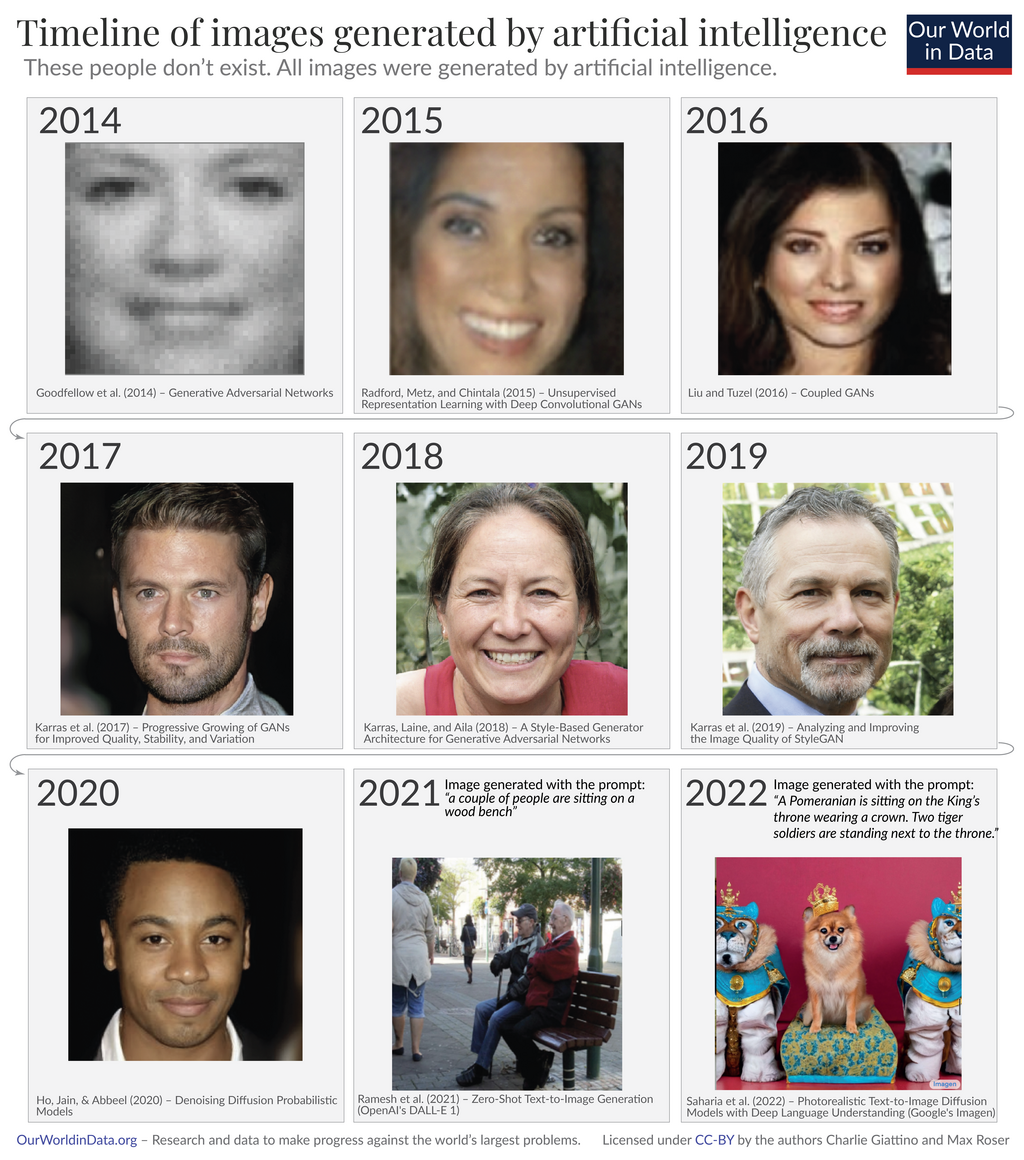
Early experiments in the 2010s produced blurry, short, and often surreal clips. These early models struggled with basic concepts like object permanence—where an object disappears and reappears randomly—and maintaining consistent motion. But with each year, the technology improved exponentially.
The key milestones were often tied to breakthroughs in the underlying AI models. Better algorithms for understanding text and more powerful models for generating pixels led to huge leaps in quality. The progression went from grainy, abstract blobs to short, coherent clips, and now to more detailed and longer scenes that can follow a narrative.
How It Works, Simply
So, what's happening under the hood when you type a prompt and get a video? While the deep technical details are complex, the basic concepts are straightforward. The process usually involves a few key AI technologies working together.
First, a language model interprets your text prompt. It figures out the objects, the setting, and the actions you've described. It essentially translates your creative vision into a set of instructions the machine can understand.
Next, a diffusion model or a similar generative technique takes over. These models are trained on vast datasets of videos and images. They learn the patterns of how pixels form objects and how those objects move over time. Starting with what looks like random noise, the model gradually refines it, frame by frame, until it matches the instructions from the language model. This process is like a sculptor carving away at a block of marble, slowly revealing the final form.
Maintaining consistency—ensuring a person looks like the same person from one second to the next—is one of the biggest challenges, but the technology is rapidly getting better at it. By understanding both language and visual data, these systems are beginning to bridge the gap between imagination and a finished video.
What is the primary input a user provides to an AI video generation tool to create a video?
AI video generation is part of a broader field of artificial intelligence focused on creating new, original content. What is this field called?
This is just the beginning for AI video generation. As the technology evolves, it will undoubtedly change how we create and consume visual media.