AI Utilities and Resource Optimization
Understanding FLOPS
What Are FLOPS?
When we talk about how powerful a computer is, we often need a simple yardstick. For the kind of heavy-duty math used in scientific research, artificial intelligence, and graphics, that yardstick is FLOPS.
A "floating-point operation" is just a fancy term for arithmetic involving numbers with decimal points, like 3.14 or -0.0027. Think of the complex calculations needed to simulate weather patterns or render a 3D movie scene. These all rely on floating-point math.
flop
noun
A single floating-point operation, such as an addition, subtraction, multiplication, or division.
FLOPS stands for Floating-point Operations Per Second. It's a direct measure of how many of these calculations a processor can perform in one second.
Think of FLOPS like horsepower for a car's engine. It doesn't tell you everything about the car, but it gives you a solid idea of its raw power.
A Measure of Scale
A single FLOP is not very useful today, as modern computers perform calculations at incredible speeds. We use metric prefixes to describe these large numbers. You've seen these with data storage (kilobytes, megabytes, gigabytes), and the same idea applies to processing speed.
| Prefix | Symbol | Operations per Second |
|---|---|---|
| Kilo | kFLOPS | One Thousand (10³) |
| Mega | MFLOPS | One Million (10⁶) |
| Giga | GFLOPS | One Billion (10⁹) |
| Tera | TFLOPS | One Trillion (10¹²) |
| Peta | PFLOPS | One Quadrillion (10¹⁵) |
| Exa | EFLOPS | One Quintillion (10¹⁸) |
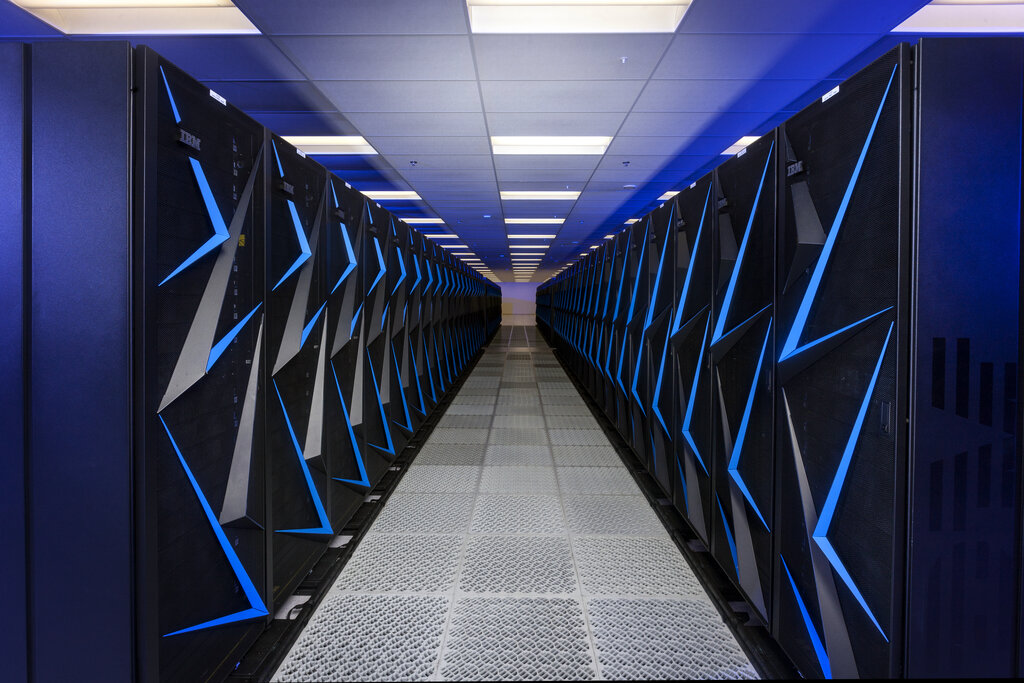
To put this in perspective, a modern smartphone can perform hundreds of billions of operations per second (gigaflops), while a high-end gaming console or graphics card is in the trillions (teraflops). The world's most powerful supercomputers now operate at the exaflop scale.
Benchmarking and Design
So why does this number matter so much? FLOPS is a key metric for benchmarking, which is the process of comparing the performance of different pieces of hardware. If you're building a data center for AI research, you need to know which chips, like CPUs, GPUs (Graphics Processing Units), or TPUs (Tensor Processing Units), give you the most computational power for your money and energy consumption.
While FLOPS measures raw theoretical performance, real-world results can vary based on other factors like memory speed and software optimization. Still, it provides a crucial baseline. A chip with 100 TFLOPS of power is fundamentally more capable at parallel processing than one with 10 TFLOPS.
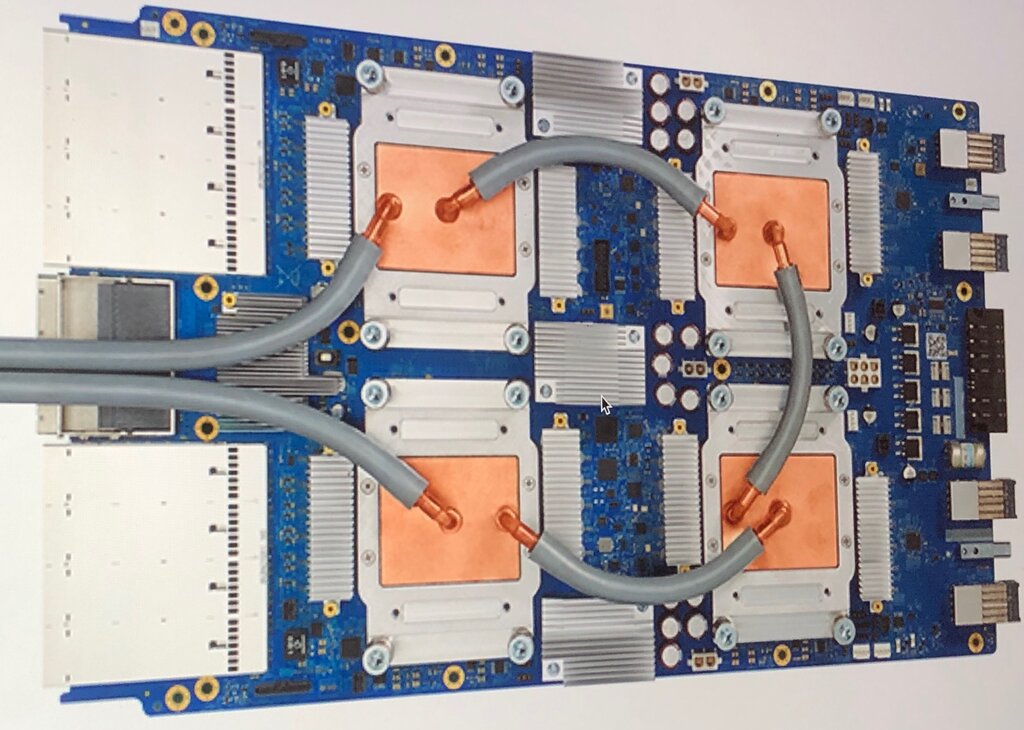
Each Cloud TPU, which consists of four chips, delivers 180 teraflops (that's a trillion floating point operations per second) of performance, Google said.
This constant demand for more FLOPS directly influences the design of computer chips and data centers. Chip designers are always looking for ways to pack more processing cores onto a single piece of silicon. At the data center level, architects must figure out how to power and cool thousands of these high-performance chips, which generate immense amounts of heat. The quest for more FLOPS drives innovation in everything from processor architecture to cooling systems.
Now let's check your understanding of these concepts.
What does the acronym FLOPS stand for?
A modern, high-end gaming console is most likely to have its performance measured in which of the following units?
From the smallest chip to the largest data center, the drive for more computational power continues, and FLOPS remains the simplest way to measure our progress.