AI Transformation in 2025
AI Transformation Overview
What is AI Transformation?
Think back to when businesses first started going online. It wasn't just about launching a website; it was a total reinvention of how they reached customers, managed operations, and even thought about their products. AI transformation is a similar, fundamental shift, but instead of just connecting to the internet, it's about embedding intelligence into the core of an organization.
AI transformation is the process of integrating artificial intelligence into every facet of a business. This goes far beyond simply adopting a few new software tools. It involves rethinking strategies, redesigning workflows, and empowering people to work alongside intelligent systems. The goal is to make the entire organization smarter, faster, and more responsive by using data to drive decisions at every level.
successful AI adoption is predominantly an organizational and behavioural change challenge and less of a technological one.
Essentially, it’s about moving from a company that uses AI to an organization that is AI-driven. This means data isn't just a byproduct of business activities; it becomes the primary fuel for innovation and efficiency. Every department, from marketing to human resources, can leverage AI to automate routine tasks, uncover hidden insights, and create better experiences for customers and employees alike.
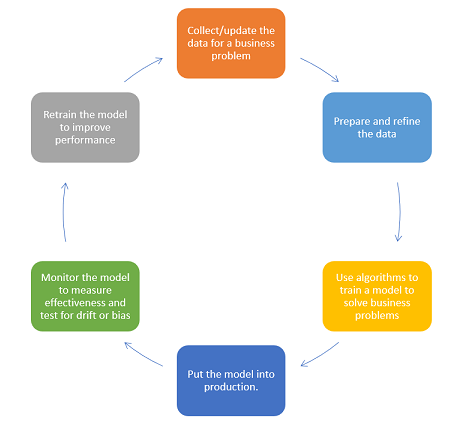
A Ripple Effect Across Industries
The impact of AI isn't confined to tech companies. It's a wave that is reshaping every industry, from manufacturing and healthcare to finance and retail. Each sector finds unique ways to harness its power.
In manufacturing, AI optimizes supply chains by predicting demand with incredible accuracy, preventing costly stockouts or overages. On the factory floor, AI-powered robots handle repetitive tasks with precision, while predictive maintenance algorithms analyze sensor data from machinery to forecast failures before they happen, saving millions in downtime.
Healthcare is another area undergoing massive change. AI helps doctors analyze medical images like X-rays and MRIs, often spotting signs of disease that the human eye might miss. It also accelerates drug discovery by sifting through vast amounts of research data to identify promising compounds. In finance, algorithms analyze market trends, detect fraudulent transactions in real-time, and provide personalized financial advice to customers.
This isn't just about automation. It's about augmentation, where AI acts as a powerful partner, enhancing human expertise and enabling people to focus on more creative and strategic work.
Trends and Hurdles
The push for AI adoption is accelerating. A major trend is the rise of generative AI, like the technology behind chatbots and image creators, which is making AI more accessible and useful for a wider range of business tasks, from writing marketing copy to generating code. Companies are no longer just experimenting with AI in isolated pilot projects; they are integrating it into enterprise-wide applications that manage critical operations.
However, the path to AI transformation is not always smooth. Many organizations encounter significant challenges along the way. One of the biggest hurdles is data. AI models are only as good as the data they are trained on. If an organization's data is messy, incomplete, or siloed in different departments, its AI initiatives will struggle to deliver meaningful results.
| Challenge | Description |
|---|---|
| Data Quality | AI models require clean, well-organized data to function effectively. |
| Lack of Strategy | Adopting AI without a clear goal often leads to wasted resources. |
| Talent Gap | Finding and retaining employees with AI and data science skills is difficult. |
| Governance | Clear rules are needed for how AI is used ethically and responsibly. |
| Change Management | Getting employees to trust and adopt new AI-driven processes can be tough. |
Another key challenge is the need for strong governance. Without clear policies for how AI is developed and deployed, organizations risk running into ethical issues, biased outcomes, or security vulnerabilities. Successfully navigating these obstacles is what separates companies that merely dabble in AI from those that achieve a true transformation.
What is the primary goal of AI transformation within a business?
In the manufacturing industry, how is AI used to prevent costly equipment failures?
Building a business that is truly powered by AI is a journey that requires careful planning, strategic investment, and a willingness to embrace change across the entire organization.