AI Tools for Educators
Introduction to AI in Education
What is Artificial Intelligence?
At its core, artificial intelligence is the science of teaching computers to perform tasks that normally require human intelligence. Think of it less like a sci-fi robot and more like a very powerful assistant. AI systems learn from vast amounts of data to recognize patterns, make predictions, and adapt their responses.
Imagine teaching a child to recognize a cat. You don't give them a long list of rules like "must have pointy ears, whiskers, and a tail." Instead, you show them lots of pictures of different cats. Eventually, they learn the general pattern of "cat-ness" and can identify a cat they've never seen before. AI, particularly a branch called machine learning, works in a very similar way.
The goal isn't to replicate the human mind, but to create tools that can solve specific problems by processing information and learning from it.
A Brief History
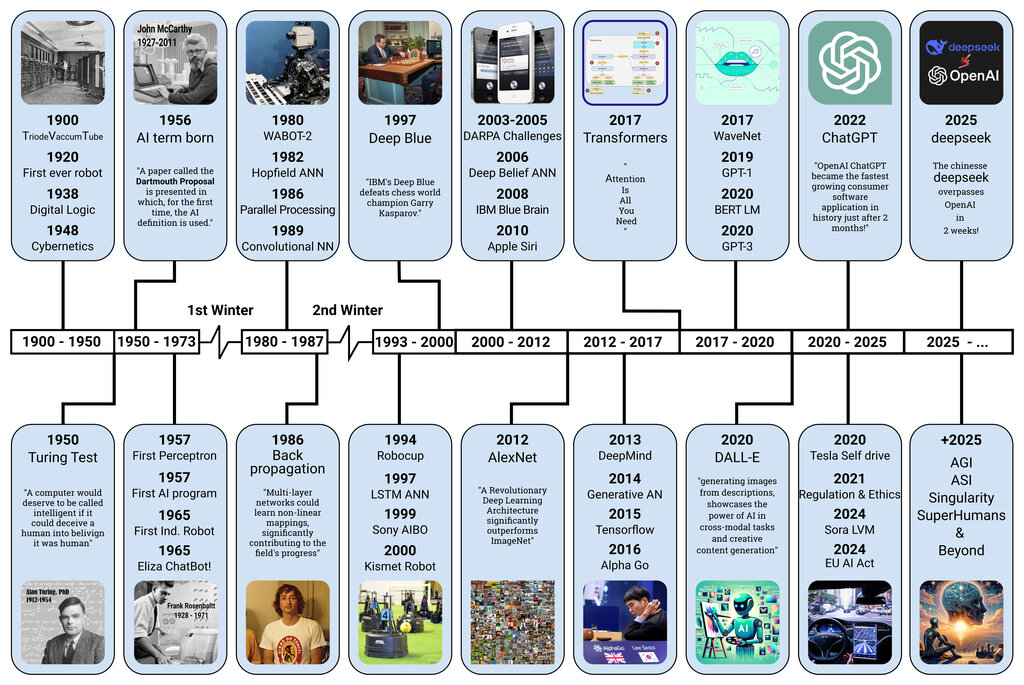
The idea of AI has been around for centuries, but it truly took root in the 1950s when computer scientists began exploring how machines could learn and reason. Early AI was based on complex sets of rules. Programmers had to manually write instructions for every possible situation, which was incredibly limiting.
A major shift happened with the rise of machine learning. Instead of being explicitly programmed, systems could now learn from data. This led to breakthroughs in areas like image recognition and natural language processing. More recently, deep learning, which uses structures inspired by the human brain called neural networks, has enabled even more sophisticated capabilities, like the generative AI we see today.
The Different Flavors of AI
Not all AI is the same. It's helpful to understand the different levels of AI, from what we have today to what we might see in the future.
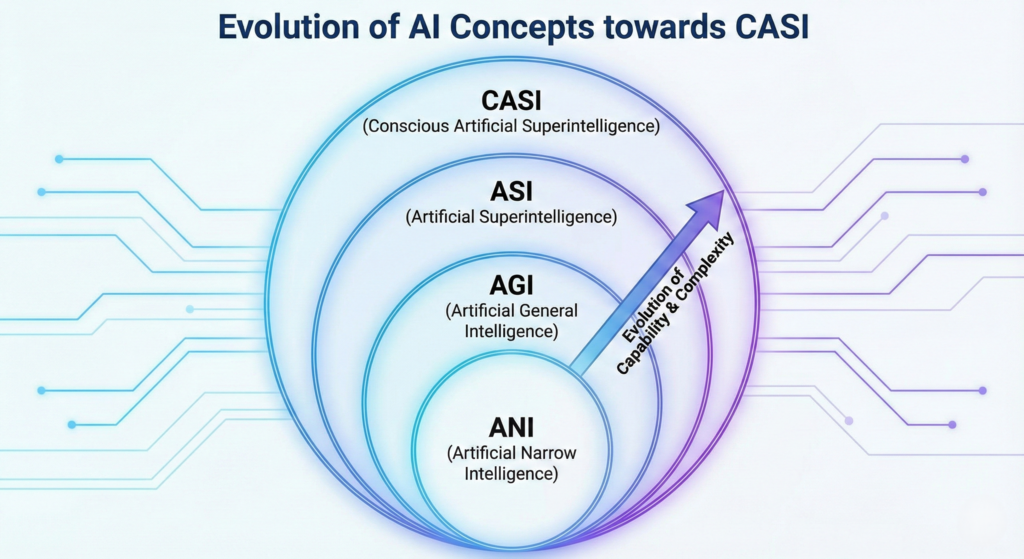
The AI we interact with daily is Artificial Narrow Intelligence (ANI). This type of AI is designed to perform a single, specific task very well. A spam filter in your email, a navigation app, or a program that recommends movies are all examples of ANI. It's an expert in its one area and nothing else.
The next conceptual stage is Artificial General Intelligence (AGI), an AI with the ability to understand, learn, and apply knowledge across a wide range of tasks at a human level. This is the type of AI often depicted in movies, but it remains a theoretical goal.
Beyond that is Artificial Superintelligence (ASI), a hypothetical AI that would surpass human intelligence and cognitive ability in virtually every field. Most of today's educational tools operate squarely in the realm of ANI, using its focused power to assist with specific tasks.
AI's Role in Education
So, how does this technology fit into the classroom? AI's potential in education is about augmenting the teacher's role and personalizing the student's journey. It's not about replacing the human connection that is so vital to learning.
At a high level, AI can help in three main areas:
-
Personalizing Learning: AI can analyze a student's performance and adapt learning materials to their individual pace and style. It can provide extra support in areas where a student is struggling or offer more advanced challenges to those who are ahead.
-
Streamlining Administrative Work: Teachers spend a significant amount of time on tasks like grading, lesson planning, and managing communications. AI tools can help automate some of this work, freeing up educators to focus more on direct instruction and student interaction.
-
Enhancing Teaching and Content: AI can assist in creating dynamic and engaging lesson plans, generating new examples, or even acting as a 24/7 tutor for students who have questions outside of class hours.
AI isn’t replacing educators—it’s empowering them.
Understanding these fundamentals provides a solid foundation for thinking about how to effectively and ethically use AI in your own teaching practice. It is a powerful tool with the potential to make education more accessible, efficient, and tailored to the needs of every learner.
What is the primary goal of artificial intelligence?
The text compares AI learning to teaching a child to recognize a cat. In this analogy, the AI learns by __________.