AI Tool Evaluation for Product and Engineering Leaders
Introduction to AI Fundamentals
What Is Artificial Intelligence?
At its core, artificial intelligence is the science of making computers do things that require human intelligence. This includes learning from experience, solving problems, understanding language, and recognizing objects in an image. Think of it as teaching a machine to think and adapt, rather than just follow a rigid set of pre-programmed instructions.
AI isn't about creating a perfect replica of a human mind. It's about building systems that can perform specific tasks intelligently.
Artificial Intelligence
noun
A field of computer science dedicated to creating systems capable of performing tasks that typically require human intelligence, such as visual perception, speech recognition, decision-making, and translation between languages.
The idea of intelligent machines has been around for centuries, but the actual field of AI research is relatively new. It officially began in the mid-20th century with pioneers who dreamed of creating thinking machines. The journey since then has been a mix of incredible breakthroughs and periods of slow progress known as "AI winters," where funding and interest dried up.
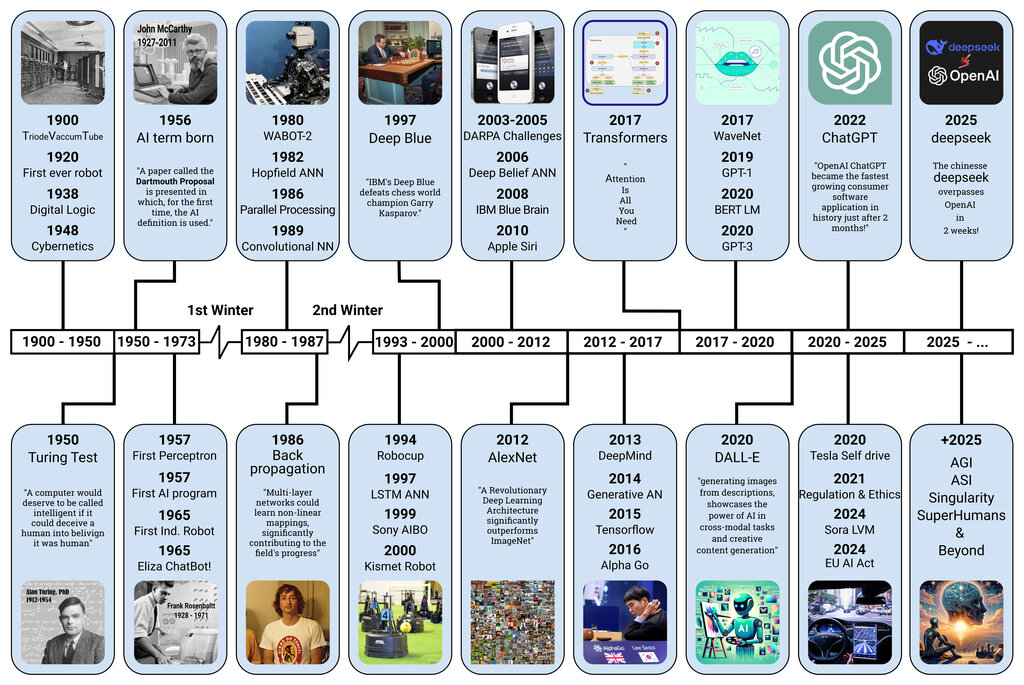
Today, we're in a period of rapid advancement, largely thanks to increases in computing power and the availability of massive amounts of data.
Two Kinds of AI
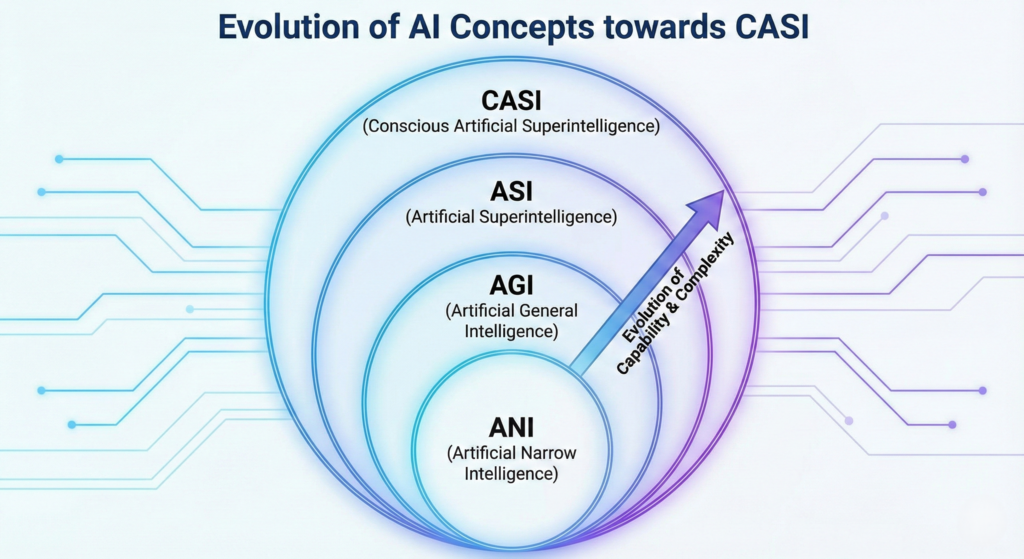
When people talk about AI, they are usually referring to one of two very different concepts: narrow AI and general AI.
Almost all AI you interact with today is Artificial Narrow Intelligence (ANI). This type of AI is designed to perform a single, specific task very well. A chess program that can beat a grandmaster, a voice assistant that sets your alarm, or a system that recommends movies are all examples of narrow AI. They are incredibly powerful within their limited domains but can't operate outside of them.
The other concept is Artificial General Intelligence (AGI). This is the more futuristic, science-fiction idea of an AI with the ability to understand, learn, and apply its intelligence to solve any problem, much like a human being. AGI doesn't exist yet; it remains a theoretical goal for researchers.
How AI Learns
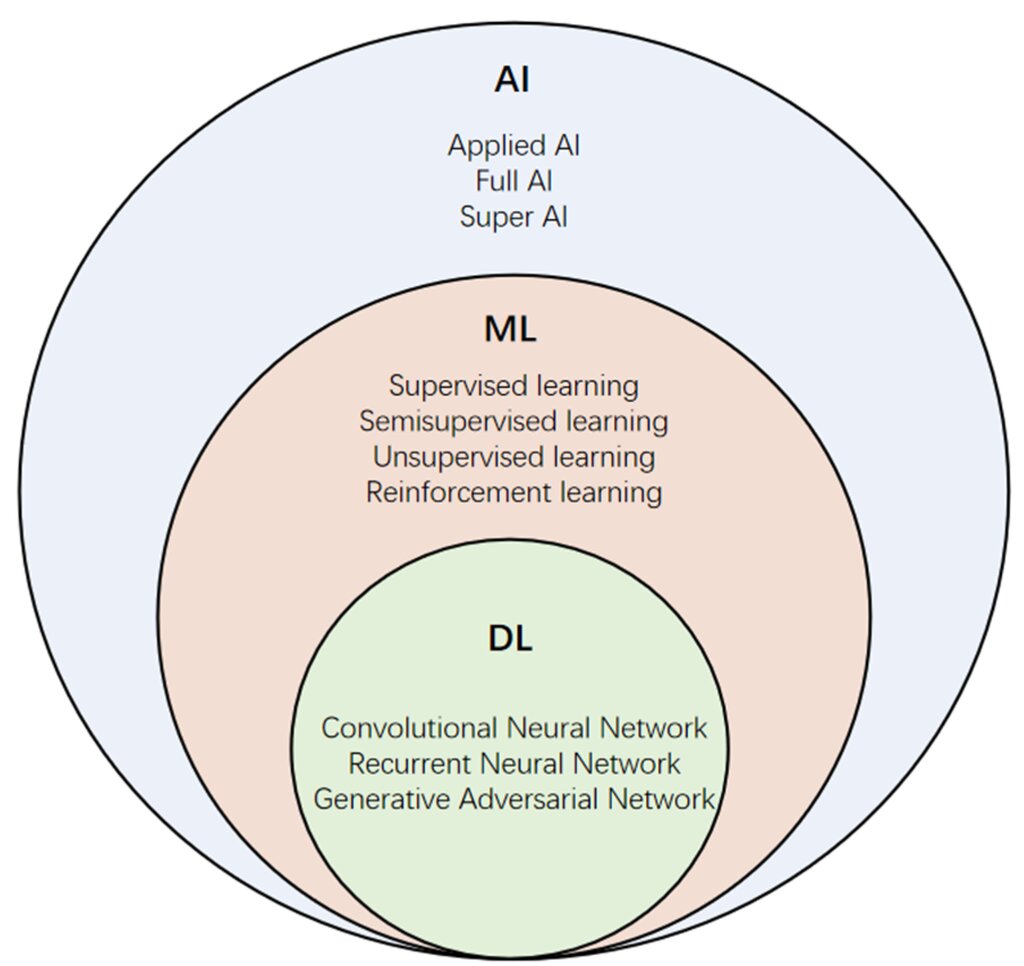
So how do we get a machine to perform intelligent tasks? The most common approach today is through machine learning (ML), which is a subfield of AI. Instead of writing explicit rules for a computer to follow, machine learning allows the computer to learn patterns directly from data.
Imagine teaching a child to recognize a cat. You wouldn't list rules like "has pointy ears, whiskers, and a tail." Instead, you'd show them many pictures of cats. Eventually, they learn the underlying pattern. Machine learning works in a similar way, by feeding an algorithm vast amounts of data until it can make accurate predictions or decisions.
A powerful type of machine learning is deep learning. It's inspired by the structure of the human brain and uses complex, multi-layered structures called neural networks. These networks allow the system to learn from data in a more sophisticated, hierarchical way.
The Brain of Deep Learning
A neural network is at the heart of deep learning. It's a computational model made up of interconnected nodes, or "neurons," organized in layers. Each neuron receives input, processes it, and passes its output to other neurons in the next layer.
When you train a neural network, you're essentially adjusting the connections between these neurons. The first layer might learn to recognize simple features, like edges or colors. The next layer combines those features to recognize more complex patterns, like shapes or textures. By the final layer, the network can identify high-level concepts, such as a face or a specific object.
Deep learning models can have hundreds of these layers, allowing them to learn incredibly subtle and complex patterns from data. This is what powers many of today's most advanced AI applications, from image recognition to natural language understanding.
Now, let's test your understanding of these core AI concepts.
What is the core idea behind artificial intelligence?
Which of the following best describes the relationship between AI, Machine Learning (ML), and Deep Learning?