AI Today and Tomorrow
Introduction to Artificial Intelligence
What Is Artificial Intelligence?
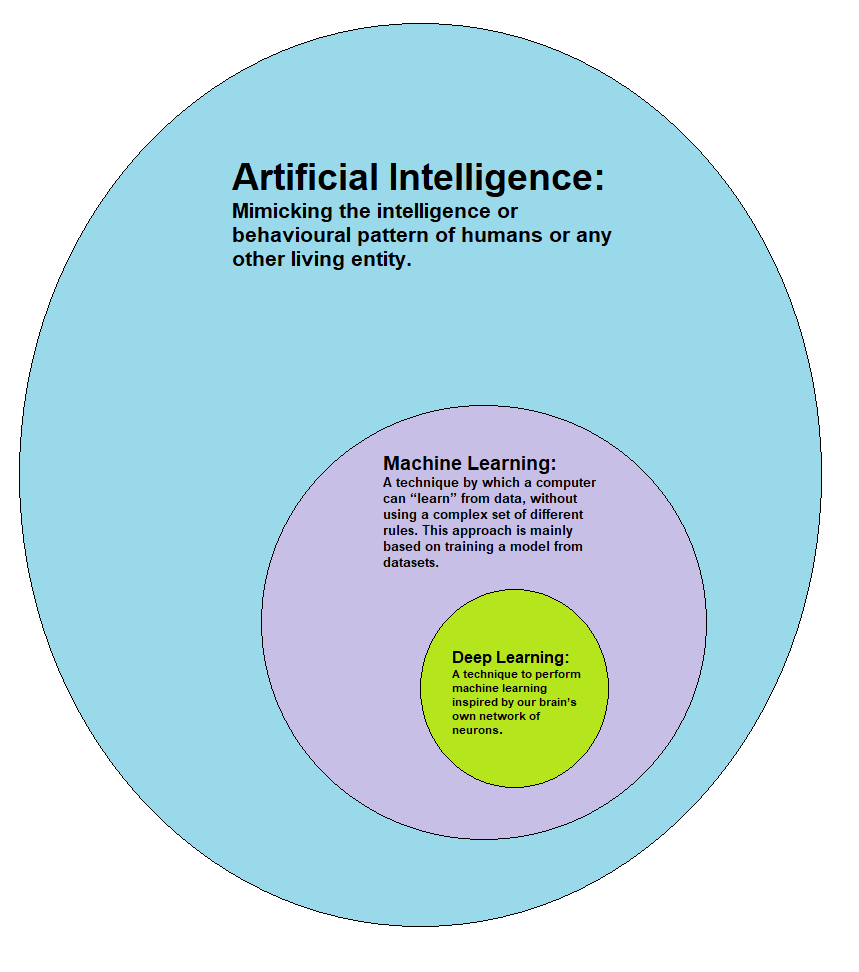
Artificial Intelligence, or AI, is the science of making machines that can think like humans. It's a broad field in computer science focused on creating systems that can perform tasks that normally require human intelligence. This includes things like learning from experience, solving problems, understanding language, and recognizing objects in images.
At its core, AI is about building smart machines that can reason, learn, and adapt.
Think of it this way: when you learn to ride a bike, you don't calculate the physics of balance. You just try, fall, adjust, and eventually, you get it. AI systems, particularly in a field called machine learning, do something similar. They process vast amounts of information, identify patterns, and learn from them to make decisions or predictions, often without being explicitly programmed for every single step.
A Brief History of AI
The dream of creating intelligent machines isn't new; it has roots in ancient myths and philosophy. But the scientific pursuit of AI began in the 1950s. A pivotal moment was the Dartmouth Workshop in 1956, where the term "artificial intelligence" was first coined by computer scientist John McCarthy. This event brought together the founding fathers of AI and officially launched it as a research field.
The early years were filled with optimism. Researchers developed programs that could solve algebra problems and prove theorems in logic. But the initial excitement hit a wall. The complexity of creating true intelligence was far greater than anticipated, leading to periods of reduced funding and interest known as "AI winters."
Things started heating up again in the 1980s and have accelerated dramatically since the late 1990s. This resurgence was driven by two key factors: the availability of massive amounts of data and huge increases in computing power. Milestones like IBM's Deep Blue defeating chess champion Garry Kasparov in 1997 showed that machines could excel at complex, strategic tasks. Since then, breakthroughs have come at a dizzying pace.

The Branches of AI
AI isn't just one single thing. It's an umbrella term that covers several specialized subfields. Understanding these branches helps clarify what AI can do. Let's look at three of the most significant ones.
Machine Learning
noun
A subset of AI that gives computers the ability to learn from data without being explicitly programmed. Instead of writing code to solve a problem, developers build algorithms that allow the machine to learn from examples.
Machine Learning (ML) is the engine behind many of the AI applications we use today. It's how your streaming service recommends shows you might like and how your phone's camera can recognize faces in photos.
Natural Language Processing
noun
A field of AI that focuses on enabling computers to understand, interpret, and generate human language. It bridges the gap between human communication and computer understanding.
Natural Language Processing, or NLP, is all about language. It's the technology that powers translation apps, chatbot customer service, and tools that can summarize long articles for you.
Computer Vision
noun
An area of AI that trains computers to interpret and understand the visual world. Using digital images and deep learning models, machines can accurately identify and classify objects.
These fields, along with others like robotics and expert systems, are what make up the diverse and powerful world of artificial intelligence.
What was the key significance of the 1956 Dartmouth Workshop in the history of AI?
According to the text, which technology is primarily responsible for powering applications like translation apps and customer service chatbots?