AI Today
Introduction to Artificial Intelligence
What Is Artificial Intelligence?
At its core, artificial intelligence is the science of making machines that can think and learn like humans. Instead of following a rigid set of pre-programmed instructions, an AI system learns from experience, adjusts to new information, and performs tasks that typically require human intelligence, like recognizing speech or playing a game of chess.
Think of it this way: you don't teach a child to recognize a cat by describing its features in code. You show them pictures of cats. AI, particularly a subfield called machine learning, works in a similar way by learning patterns from vast amounts of data.
A Quick Trip Through Time
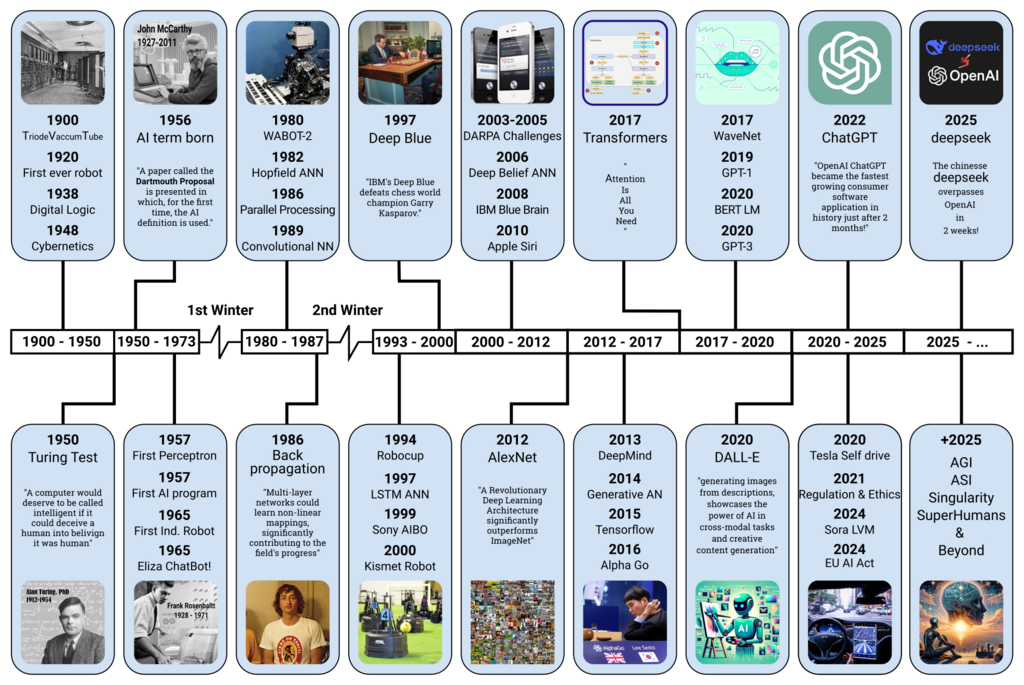
The idea of intelligent machines has been around for centuries, but the formal field of AI research began in the summer of 1956. A group of scientists gathered at Dartmouth College for a workshop where they coined the term "artificial intelligence." They imagined a future where machines could use language, form concepts, and solve problems reserved for humans.
The journey since then has been a series of breakthroughs and setbacks. Periods of intense optimism and funding, known as "AI summers," were often followed by "AI winters," when progress stalled and interest waned. Despite these ups and downs, the foundational work laid over decades paved the way for the powerful AI we see today.
The Three Types of AI
Not all AI is created equal. We can categorize AI based on its capabilities. Right now, every AI system in existence falls into one specific category.
Artificial Narrow Intelligence
noun
Often called Weak AI, this is a type of artificial intelligence that is trained to perform a specific, narrow task. It operates within a predefined range and cannot perform tasks beyond its designated field.
ANI is incredibly powerful for its specific purpose, whether that's recommending a movie, translating languages, or identifying faces in photos. However, the AI that suggests songs for you has no idea how to drive a car.
The next two types are still in the realm of science fiction, but they are the theoretical next steps in AI's evolution.
| Type | Description | Status |
|---|---|---|
| Artificial General Intelligence (AGI) | Also known as Strong AI, this is a machine with the ability to understand, learn, and apply knowledge across a wide range of tasks, at a level comparable to a human being. | Theoretical |
| Artificial Superintelligence (ASI) | An intellect that is much smarter than the best human brains in practically every field, including scientific creativity, general wisdom, and social skills. | Theoretical |
The Building Blocks of AI
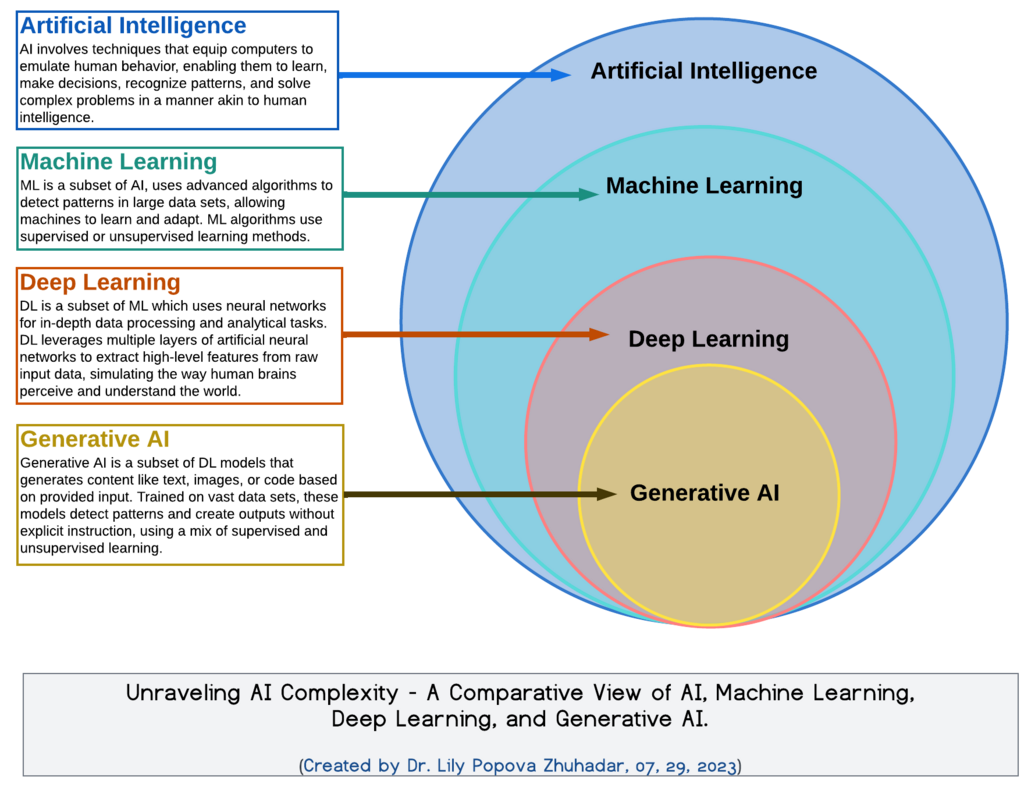
Artificial intelligence is a broad field with many specialized subfields. Think of AI as the main subject, and these subfields as the different topics you'd study within it. Let's look at three of the most important ones.
Machine Learning
noun
An application of AI that provides systems the ability to automatically learn and improve from experience without being explicitly programmed. It focuses on the development of computer programs that can access data and use it to learn for themselves.
Machine learning is the engine that powers many of the AI applications we use daily. It's how your streaming service knows what you want to watch next and how your bank detects fraudulent transactions.
Another key subfield deals with how we communicate with machines.
Natural Language Processing (NLP) gives machines the ability to read, understand, and derive meaning from human languages. It's the bridge between human communication and computer understanding. When you ask your smart speaker for the weather, NLP is what allows it to understand your request and respond.
Finally, there's the subfield dedicated to sight.
Computer Vision aims to replicate the powerful capabilities of human vision. This field trains machines to interpret and understand the visual world. Using digital images from cameras and videos, models can accurately identify and classify objects—and then react to what they "see."
Together, these subfields and others form the foundation of artificial intelligence, turning the abstract concept of a "thinking machine" into a practical reality that's changing our world.
What is the core concept of artificial intelligence?
The term "artificial intelligence" was coined at a 1956 workshop held at which institution?