AI to Agentic AI Evolution
Introduction to Artificial Intelligence
What Is Artificial Intelligence?
Artificial intelligence is the science of making machines that can think and act like humans. It's about creating systems that can learn from experience, understand language, recognize objects, solve problems, and even be creative.
This introduction to this special issue discusses artificial intelligence (AI), commonly defined as “a system’s ability to interpret external data correctly, to learn from such data, and to use those learnings to achieve specific goals and tasks through flexible adaptation.”
Think about how you learn. You observe the world, make connections, and get better at tasks over time. The goal of AI is to enable computers to do the same. This doesn't necessarily mean creating conscious robots like in the movies. Often, AI is working quietly in the background, powering the recommendation engine that suggests your next favorite song or helping your email app filter out spam.
A Brief History of AI
The dream of creating intelligent machines has been around for centuries, but the modern field of AI officially began in the summer of 1956. A group of pioneering computer scientists gathered for a workshop at Dartmouth College. It was here that the term "artificial intelligence" was coined, and the quest to build thinking machines began in earnest.
The early years were filled with excitement and bold predictions. Researchers developed programs that could solve algebra problems and prove theorems in logic. But the initial optimism soon hit a wall. The complexity of creating true intelligence was far greater than anyone imagined, and progress slowed. This led to periods known as "AI winters," when funding dried up and interest waned.
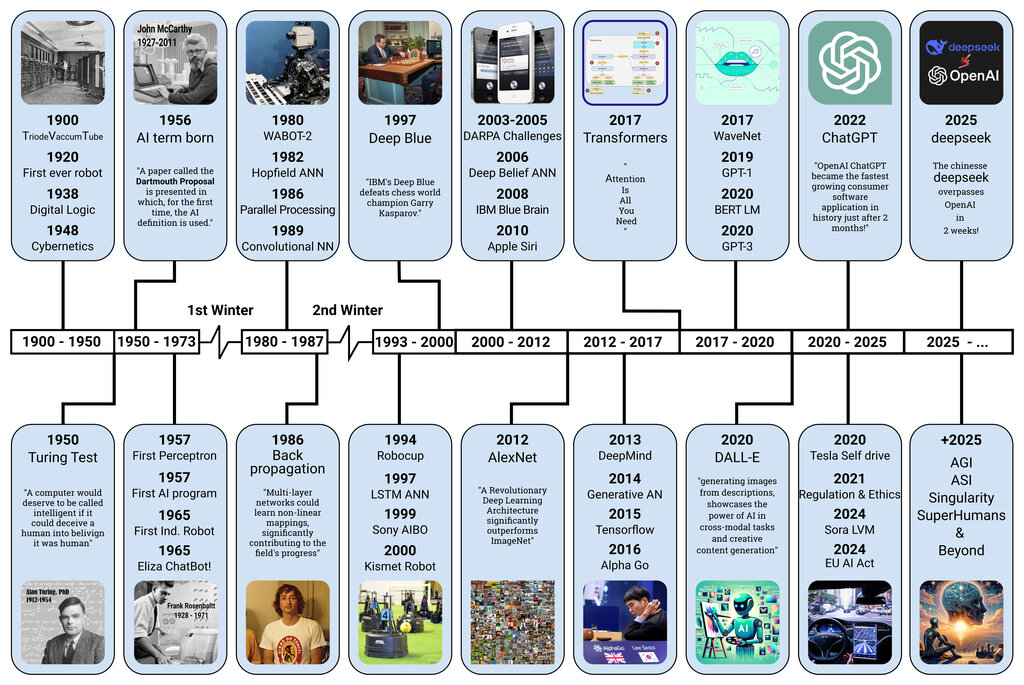
The field re-emerged in the 1990s and 2000s, thanks to two key ingredients: massive increases in computing power and the availability of vast amounts of data from the internet. These developments paved the way for the AI boom we see today.
One of the most famous milestones was in 1997, when IBM's Deep Blue supercomputer defeated world chess champion Garry Kasparov. It was a clear sign that machines could achieve superhuman performance in complex, strategic tasks.
The Branches of AI
Artificial intelligence isn't a single technology; it's a broad field with many specialized branches. You can think of AI as the parent category, with various subfields nested within it.
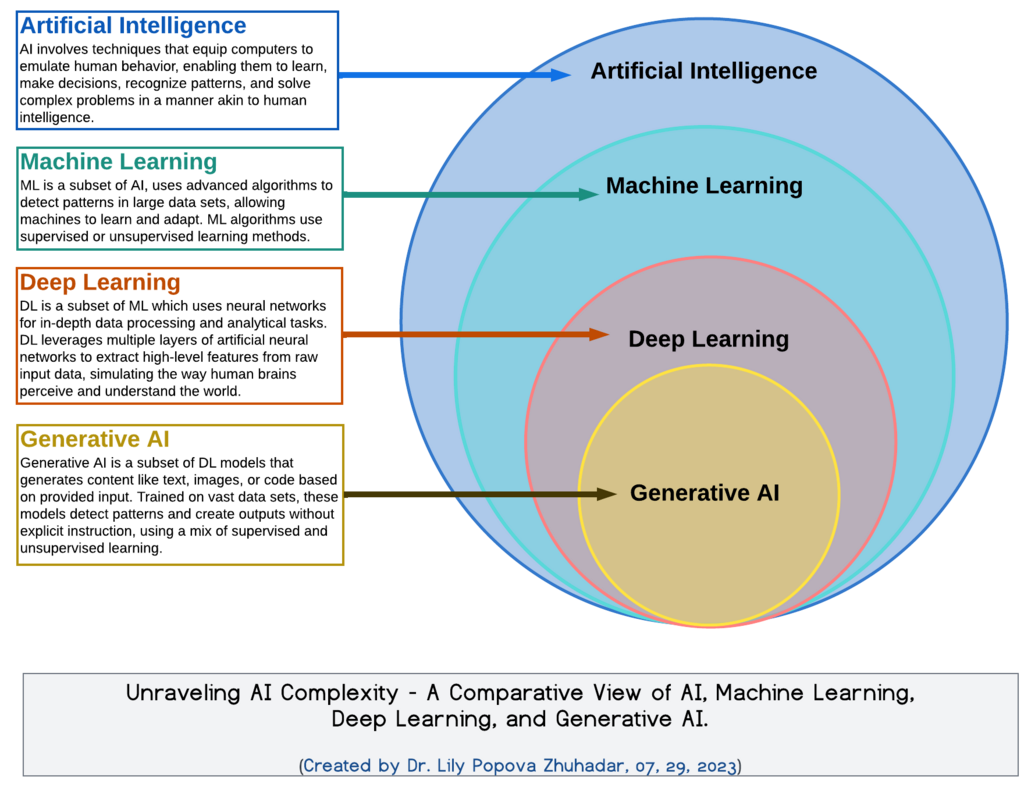
Let's explore a few of the most important subfields.
Machine Learning
noun
A subfield of AI where systems are trained to learn patterns from data without being explicitly programmed for every task.
Instead of writing step-by-step instructions, developers feed an algorithm huge amounts of data and let it figure out the rules for itself. For example, to build an AI that recognizes cats, you would show it millions of pictures of cats until it learns to identify the features that make something a cat.
Natural Language Processing
noun
The branch of AI that gives computers the ability to understand, interpret, and generate human language.
Natural Language Processing, or NLP, is what allows you to talk to your phone, translate text from one language to another instantly, and get summaries of long articles. It's the bridge between human communication and computer understanding.
Robotics
noun
An interdisciplinary field that involves the design, construction, operation, and use of robots.
When AI is given a physical body, you get robotics. This field combines computer science, engineering, and more to create machines that can interact with the physical world. Robots assemble cars in factories, assist in complex surgeries, and explore distant planets where humans can't yet go.
These are just a few branches of the vast and growing tree of artificial intelligence. Together, they are transforming our world by making machines more capable and helpful partners in our lives.
Ready to test your knowledge? Let's see what you've learned about the fundamentals of AI.
What is the primary goal of artificial intelligence as described in the text?
The modern field of AI, and the term "artificial intelligence" itself, originated at a 1956 workshop held at which institution?