AI Technology Fundamentals
Introduction to AI
What is Artificial Intelligence?
At its core, Artificial Intelligence is the science of making machines that can think and act like humans. It's about creating computer systems that can perform tasks that normally require human intelligence, like understanding language, recognizing images, and making decisions.
Artificial Intelligence
noun
A field of computer science dedicated to creating systems that can perform tasks that typically require human intelligence.
Think about how a child learns to identify a cat. You don't give them a long list of rules like "if it has fur, pointy ears, and whiskers, it's a cat." Instead, you show them pictures and point out real cats. They see many examples, and eventually, their brain learns to recognize the pattern. AI learns in a similar way, but it uses vast amounts of data instead of a few family pets.
The goal isn't just to make a machine follow instructions, but to enable it to learn, reason, and perceive the world on its own.
A Quick Trip Through Time
The idea of intelligent machines isn't new; it has roots in ancient myths. But the modern field of AI began to take shape in the mid-20th century. In 1950, computer scientist Alan Turing proposed a test, now called the Turing Test, to see if a machine could exhibit intelligent behavior indistinguishable from that of a human.
A few years later, in 1956, the term "artificial intelligence" was officially coined at the Dartmouth Workshop. This event brought together researchers who were optimistic about creating thinking machines. The following decades saw periods of excitement and funding, known as "AI summers," followed by periods of disillusionment and reduced investment, called "AI winters."
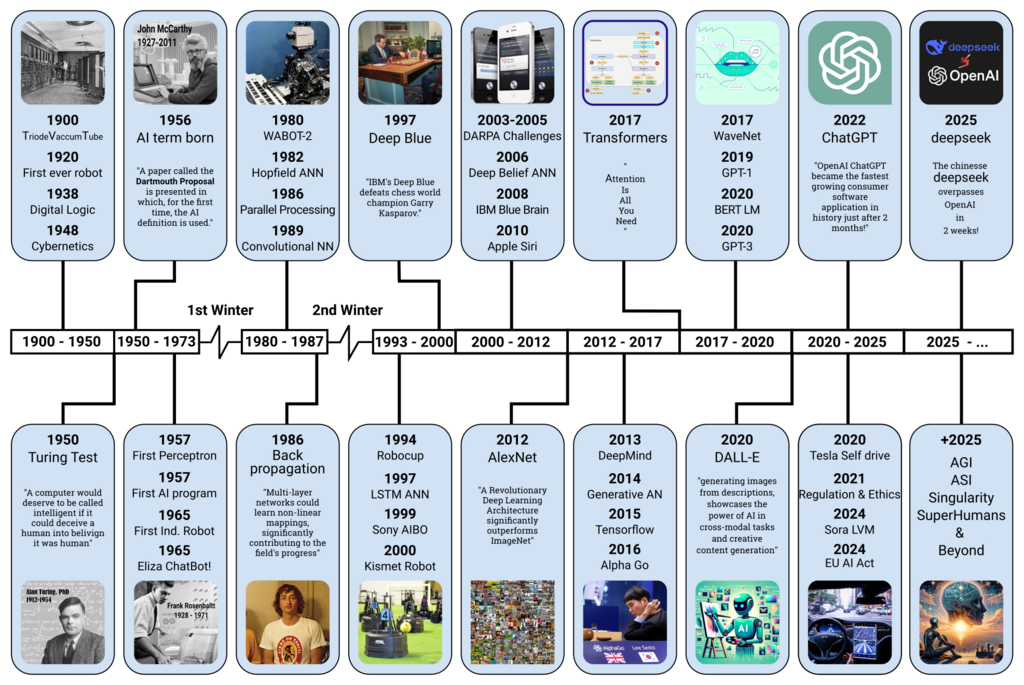
Major milestones pushed the field forward. In 1997, IBM's Deep Blue chess computer defeated world champion Garry Kasparov, a landmark moment showing a machine could strategize better than the best human player. More recently, the development of powerful computers and the availability of massive datasets have fueled rapid progress, leading to the advanced AI we see today.
How Does It Work?
So how do we get a machine to "think"? It boils down to a few basic principles. AI systems are built on algorithms, which are sets of rules or instructions. But instead of just following a rigid script, many AI systems can learn and adapt.
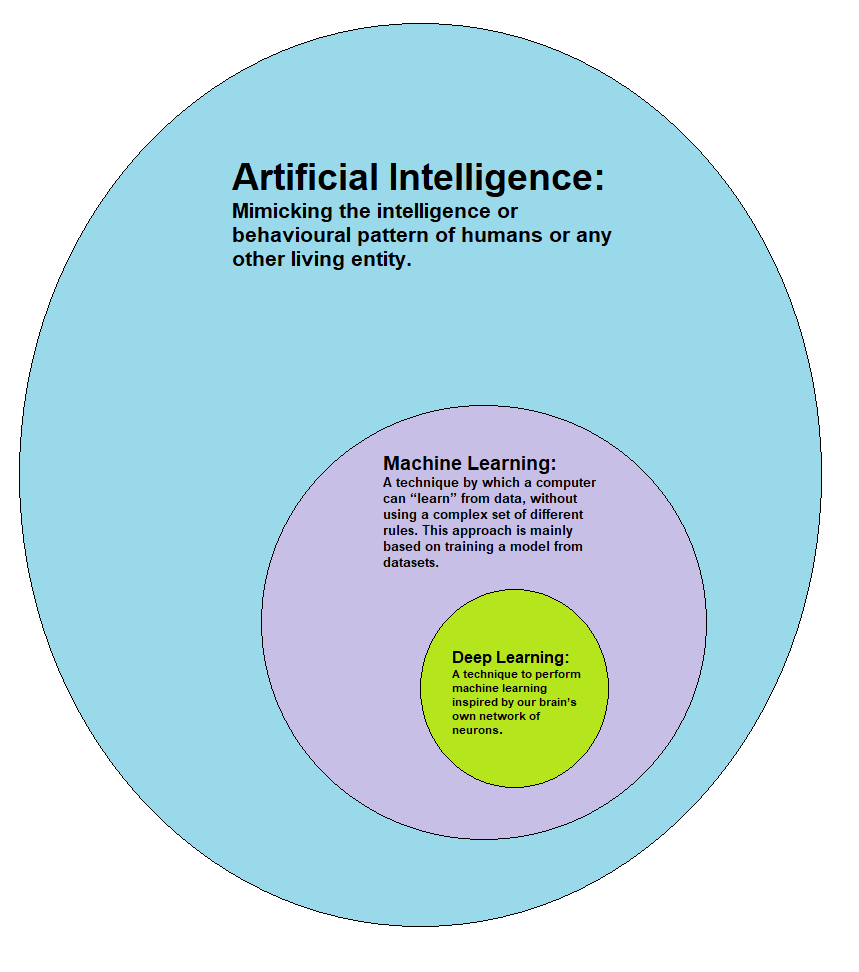
This is where Machine Learning comes in. It's a subset of AI where systems learn directly from data. By analyzing thousands of examples, the machine identifies patterns and learns to make predictions or decisions without being explicitly programmed for every scenario. Deep Learning, a further subset of machine learning, uses complex, multi-layered networks inspired by the human brain to learn from even larger amounts of data.
Beyond learning from data, AI also involves other key abilities:
- Reasoning: Using logic to solve problems and draw conclusions. This is like a detective piecing together clues to solve a case.
- Perception: Interpreting the world through data from sensors, such as recognizing objects in an image or understanding spoken words.
These principles work together to create intelligent systems that can perform a wide range of tasks.
Let's check your understanding of these foundational concepts.
What is the primary goal of Artificial Intelligence as described in the text?
According to the text, how does Machine Learning relate to AI?
Understanding these core ideas—what AI is, where it came from, and its basic principles—provides a solid foundation for exploring this exciting technology further.