AI Systems Deep Dive
Introduction to Artificial Intelligence
What Is Artificial Intelligence?
Artificial Intelligence (AI) is the science of making machines that can think and act like humans. It’s about creating computer systems that can perform tasks that normally require human intelligence, such as learning from experience, solving problems, understanding language, and recognizing objects in images.
Think of it this way: when you learn to ride a bike, you don't calculate the physics of balance for every pedal stroke. You learn through trial and error, adjusting your movements until you get it right. AI works in a similar way. Instead of being programmed with a rigid set of rules for every possible situation, an AI system is often designed to learn and adapt on its own.
Artificial Intelligence (AI) is a branch of computer science focused on creating systems capable of performing tasks that typically require human intelligence.
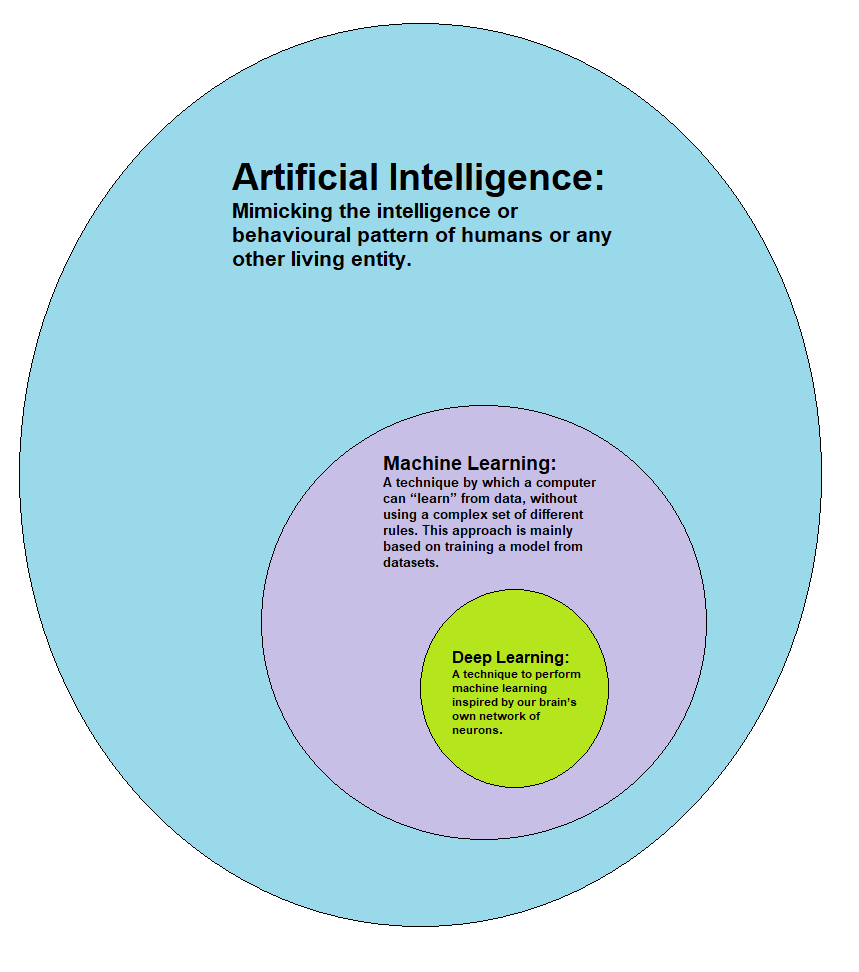
The ultimate goal is to build systems that can reason, perceive, and make decisions to achieve specific goals. This broad field contains many specialized areas within it.
A Brief History
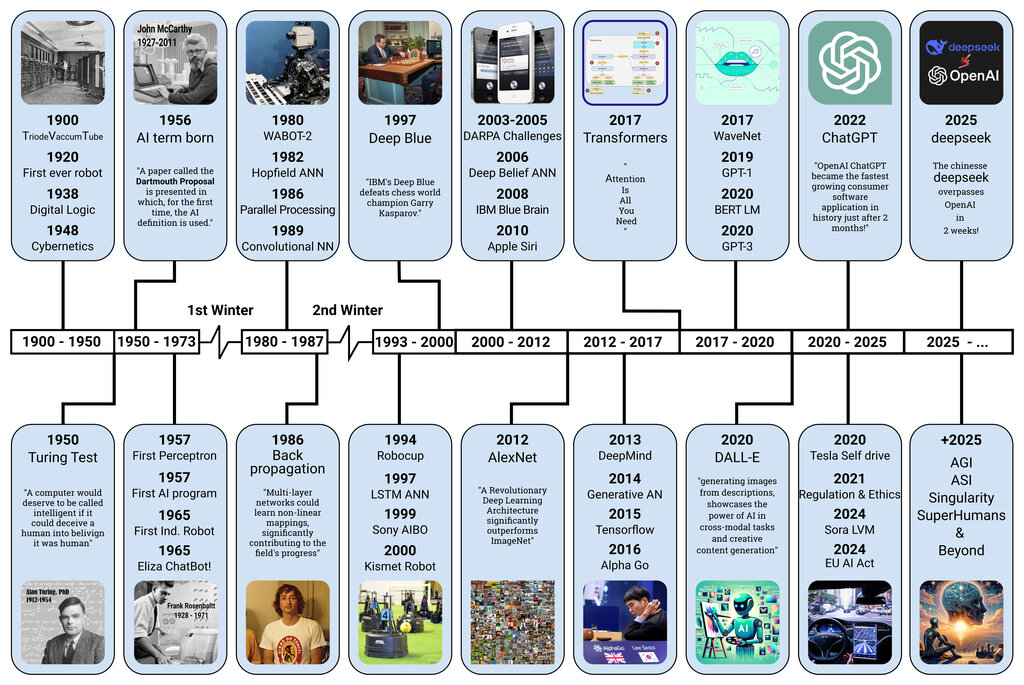
The idea of intelligent machines has been around for centuries, but the modern field of AI officially began in the summer of 1956 at a workshop at Dartmouth College. There, a group of scientists coined the term "artificial intelligence" and laid out the field's core vision.
The early years were full of optimism, with researchers predicting that machines with human-level intelligence were just a few decades away. But progress was slower than expected. The complexity of the problem led to periods known as "AI winters," when funding and interest dried up.
Everything changed in the 21st century. The explosion of big data from the internet and massive increases in computing power allowed old ideas, like neural networks, to finally work as intended. This sparked the AI revolution we see today, moving it from science fiction to a part of our daily lives.
The Flavors of AI
AI isn't just one thing; it's a collection of different subfields, each focused on a specific aspect of intelligence. Let's look at three of the most important ones.
Machine Learning
noun
A subset of AI that gives computers the ability to learn from data without being explicitly programmed. Instead of writing rules by hand, developers feed an algorithm vast amounts of data and let it find patterns on its own.
Next, there's the part of AI that deals with language.
Natural Language Processing
noun
Commonly known as NLP, this subfield focuses on enabling computers to understand, interpret, and generate human language. It's the bridge between human communication and computer understanding.
Finally, we have the subfield dedicated to sight.
Computer Vision
noun
This area of AI trains computers to interpret and understand information from images and videos. It aims to duplicate the powerful capabilities of human vision.
These subfields often overlap. An advanced AI system might use computer vision to see an object, NLP to describe it, and machine learning to improve its accuracy over time.
AI in the Real World
AI is no longer confined to research labs. It's a powerful tool that's transforming nearly every industry by automating tasks, providing insights, and creating new possibilities.
| Industry | Application of AI |
|---|---|
| Healthcare | Analyzing medical images like X-rays to detect diseases earlier. |
| Finance | Detecting fraudulent credit card transactions in real-time. |
| Entertainment | Powering recommendation engines on services like Netflix and Spotify. |
| Transportation | Enabling navigation apps to find the fastest route based on traffic. |
| Retail | Personalizing online shopping experiences and managing inventory. |
From the simple spam filter in your email to complex systems that help doctors diagnose illnesses, AI is already an integral part of modern technology.
Now, let's test your understanding of these core concepts.
What is the primary goal of Artificial Intelligence as described in the text?
The periods in AI history when funding and interest declined due to slower-than-expected progress are known as what?
Understanding these foundational ideas is the first step into the larger world of artificial intelligence. It's a field that's constantly evolving, built on the core principles of learning, reasoning, and problem-solving.