AI Strategy Ethics and Future
Introduction to AI
What Is Artificial Intelligence?
At its heart, artificial intelligence is the science of making machines smart. It's a field of computer science dedicated to creating systems that can perform tasks that typically require human intelligence. This includes things like learning from experience, understanding language, recognizing objects in photos, and making decisions.
Think of it this way: AI gives a computer the ability to learn and reason, much like a human does. Instead of just following explicit instructions, it can analyze data, identify patterns, and adapt its behavior to achieve specific goals.
The idea of intelligent machines has been around for centuries, but the formal field of AI research began in the mid-20th century. Early pioneers believed that a thinking machine was just around the corner, but the challenge proved to be far more complex than anticipated.
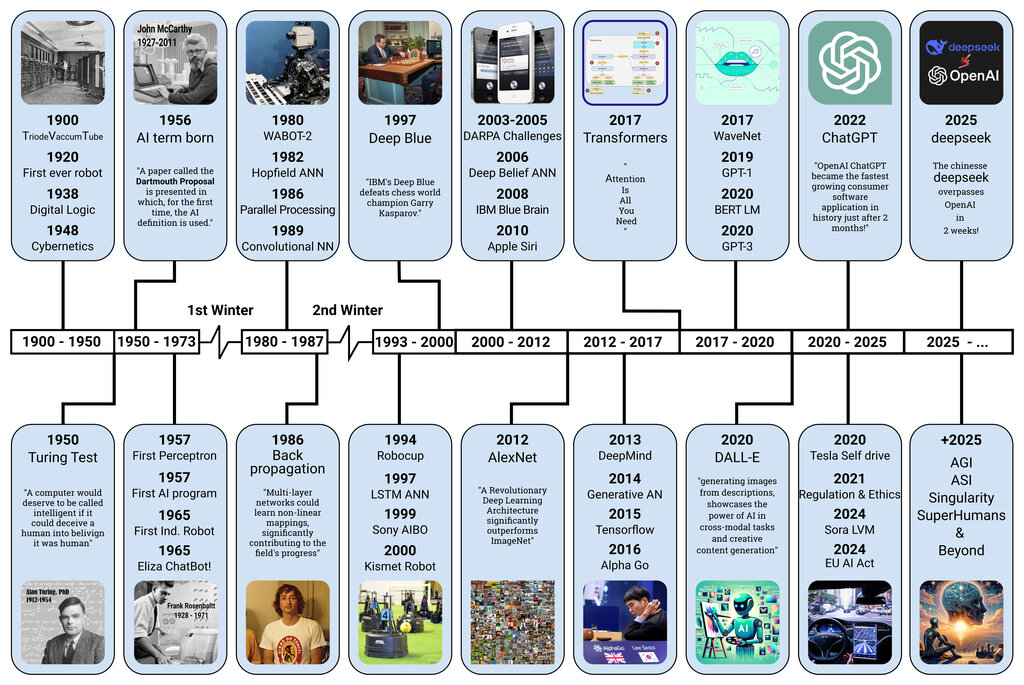
Over the decades, AI has gone through periods of rapid advancement and quieter phases known as "AI winters." Breakthroughs in computing power and the availability of massive amounts of data have fueled the incredible progress we see today.
Two Kinds of AI
When people talk about AI, they are usually referring to one of two broad categories: Artificial Narrow Intelligence (ANI) or Artificial General Intelligence (AGI).
Almost all the AI we use today is ANI, sometimes called "Weak AI." This type of AI is designed to perform a single, specific task very well. A great example is the AI that powers facial recognition on your phone, a chess-playing computer, or a language translation app. It can excel at its designated job, but it can't operate outside of that narrow domain. The chess program can't translate Spanish, and the translation app can't play chess.
ANI is specialized. It’s like a world-class chef who can cook amazing meals but doesn't know how to build a house.
The other category, Artificial General Intelligence (AGI), is what we often see in science fiction. This is a type of AI that possesses the ability to understand, learn, and apply its intelligence to solve any problem, much like a human being. An AGI could switch seamlessly between writing a poem, analyzing scientific data, and having a meaningful conversation.
Building an AGI is the ultimate goal for many AI researchers, but it remains a theoretical concept. We are not there yet. All current AI systems are forms of narrow AI.
How AI Learns
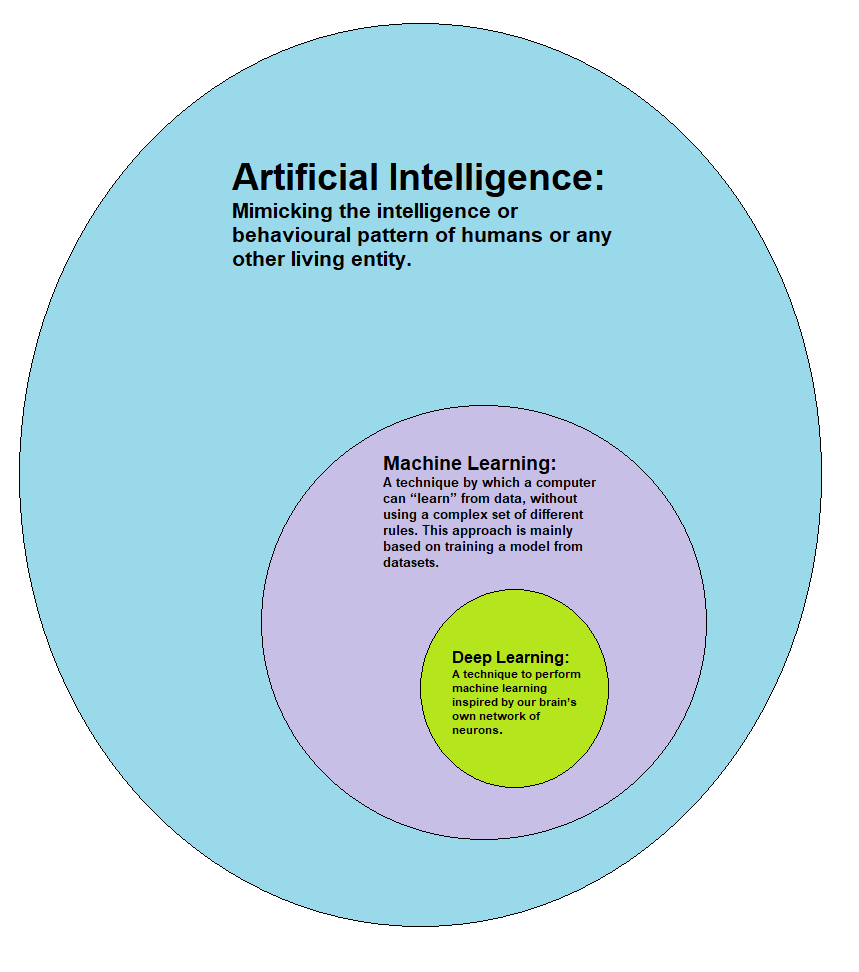
So, how do we make a machine intelligent? Two fundamental techniques are machine learning and neural networks.
Machine Learning
noun
A subfield of AI where algorithms are trained on data to find patterns and make predictions without being explicitly programmed for the task.
Instead of writing step-by-step rules for a computer, with machine learning, you give it a large dataset and let it figure out the rules for itself. For example, to build an AI that can identify cats in photos, you would feed it thousands of images labeled "cat." The machine learning algorithm analyzes these images and learns the common features—like pointy ears, whiskers, and furry textures—that define a cat. Over time, it gets better and better at recognizing cats in new, unlabeled photos.
This process of learning from data is what powers everything from spam filters in your email to the systems that predict stock market trends.
Neural networks are a key part of machine learning, especially for more complex tasks. They are inspired by the structure of the human brain.
Neural Network
noun
A computational model inspired by the brain's network of neurons, used to recognize patterns in data. It consists of interconnected layers of nodes, or 'neurons'.
A neural network is made up of layers of interconnected nodes, similar to the neurons in our brains. Each node receives input, processes it, and passes an output to the next layer. The first layer might recognize simple features like edges or colors in an image. The next layer might combine those to recognize shapes, and a subsequent layer might combine shapes to identify objects like eyes or ears. By the final layer, the network can recognize a complete face.
When a neural network has many layers, it's called a "deep learning" model. This depth allows it to learn incredibly complex patterns, making it the engine behind today's most advanced AI, from self-driving cars to AI assistants that can understand and respond to your voice.
Ready to test your knowledge on these foundational concepts?
What is the primary goal of the field of artificial intelligence?
An AI system that is an expert at playing chess but cannot translate a sentence from Spanish to English is an example of __________.
Understanding these core ideas—what AI is, the difference between narrow and general AI, and the basics of machine learning—provides a solid foundation for exploring the world of artificial intelligence.