AI Sector Impacts
Introduction to Artificial Intelligence
What Is Artificial Intelligence?
Artificial intelligence, or AI, is the science of making computers do things that normally require human intelligence. This includes tasks like learning from experience, solving problems, understanding language, and recognizing objects in an image.
Think of it this way: a traditional computer program follows instructions rigidly. If you tell it to add 2 and 2, it will always give you 4. An AI system, on the other hand, can learn. You could show it thousands of cat photos, and it would eventually learn to recognize a cat in a new photo it has never seen before. It's not just following explicit commands; it's identifying patterns and making its own judgments.
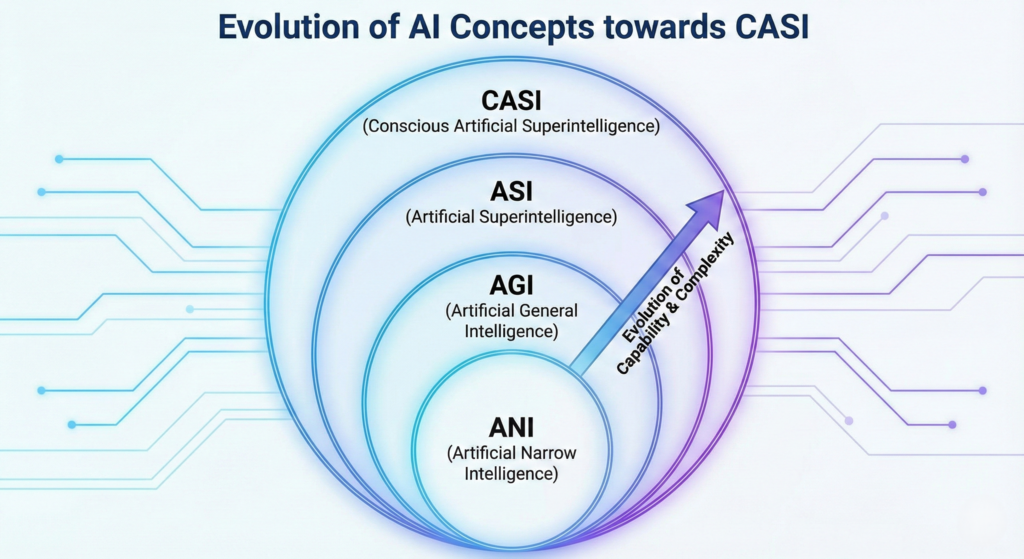
The broadest delineation of AI is between narrow (all current AI systems) and general (all potential future AI systems).
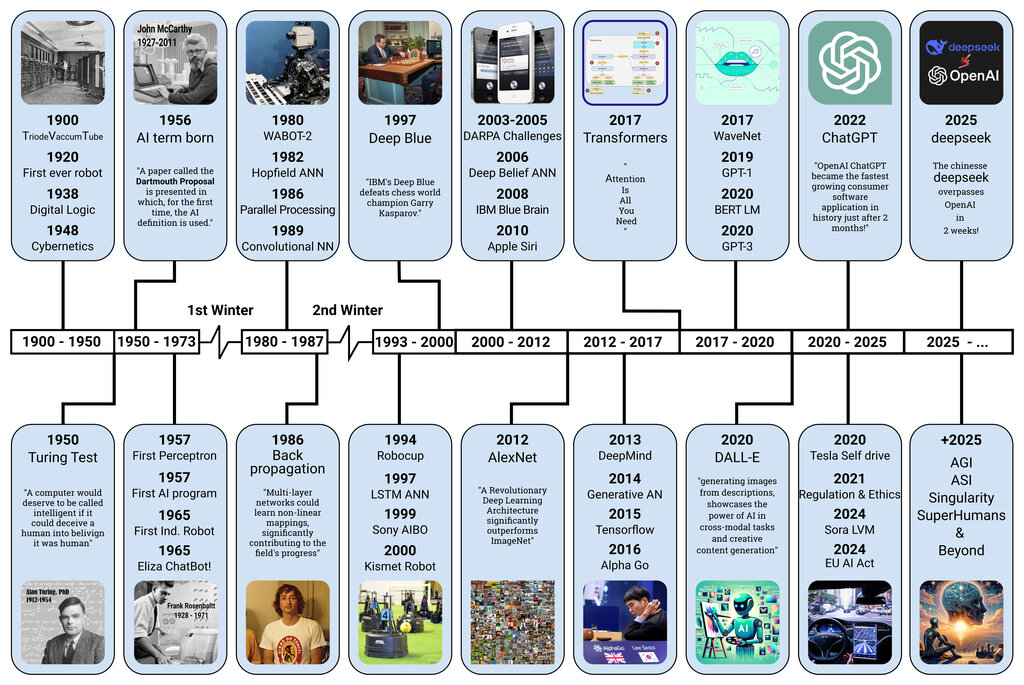
The idea of AI isn't new. Philosophers have wondered about intelligent machines for centuries. But the field really took off in the mid-20th century with the invention of modern computers. The term "artificial intelligence" was first used at a conference at Dartmouth College in 1956. Since then, the field has gone through periods of rapid progress and quiet lulls, leading to the powerful AI we see today.
Two Main Types of AI
When people talk about AI, they're usually referring to one of two categories: Artificial Narrow Intelligence or Artificial General Intelligence.
Artificial Narrow Intelligence (ANI), sometimes called "Weak AI," is designed to perform a single, specific task. It operates within a limited context and can't do much beyond what it was programmed or trained for.
All the AI we use today is ANI. Your phone's voice assistant, the recommendation engine on a streaming service, and even self-driving cars are all examples of narrow AI. They can be incredibly sophisticated at their one job, but you can't ask your smart speaker to write a novel or your car to diagnose a medical condition.
Artificial General Intelligence (AGI), or "Strong AI," is the kind of intelligence you see in science fiction. It's a machine with the ability to understand, learn, and apply knowledge across a wide range of tasks at a human level.
An AGI would be able to switch contexts, reason abstractly, and solve new problems it wasn't specifically trained for, much like a person. It's the ultimate goal for many AI researchers, but it doesn't exist yet. Building an AGI is one of the most complex scientific challenges we face.
The Building Blocks of AI
AI isn't a single technology; it's a broad field with many subfields. Three of the most important concepts that power modern AI are Machine Learning, Deep Learning, and Natural Language Processing.
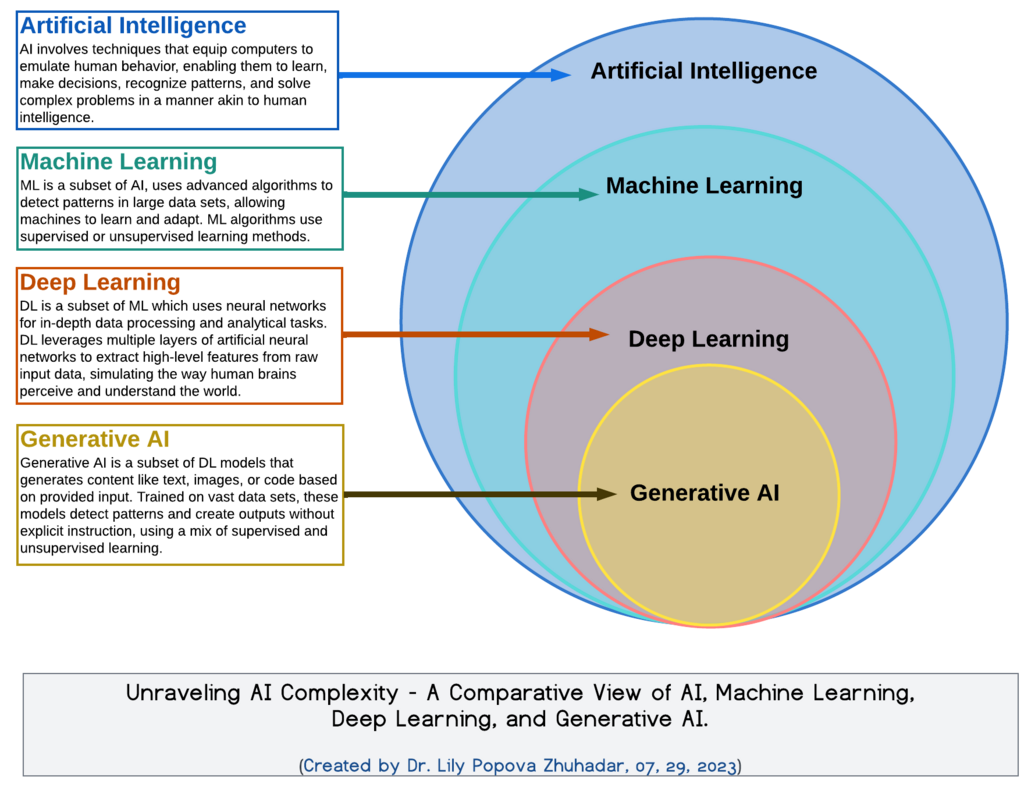
Machine Learning (ML) is a subset of AI. Instead of being explicitly programmed with rules, an ML system learns directly from data. It identifies patterns and creates a model to make predictions. For example, an email service uses ML to learn what kinds_of emails are spam by analyzing millions of examples.
Deep Learning (DL) is a more advanced type of machine learning. It uses complex structures called neural networks, which are inspired by the human brain. These networks have many layers that allow them to learn very intricate patterns from enormous amounts of data. Deep learning is behind many recent breakthroughs, like highly accurate image recognition and sophisticated language translation.
Natural Language Processing (NLP) is a field of AI focused on enabling computers to understand, interpret, and generate human language. When you talk to a voice assistant or use a translation app, you're using NLP. It combines machine learning and other techniques to bridge the gap between human communication and computer understanding.
| Technique | Main Goal | Common Example |
|---|---|---|
| Machine Learning (ML) | Learn from data to make predictions or decisions. | Email spam filtering |
| Deep Learning (DL) | Find complex patterns in large datasets using neural networks. | Facial recognition in photos |
| Natural Language Processing (NLP) | Understand and process human language. | Language translation apps |
Let's check your understanding of these core AI concepts.
What is the primary goal of artificial intelligence?
The AI used in your phone's voice assistant, which can understand your commands but can't write a novel, is an example of:
Understanding these basic terms and distinctions is the first step in seeing how AI is changing our world. By knowing what AI is, its different forms, and the core techniques that drive it, you're ready to explore its more specific applications.