AI Prompt Engineering Essentials
Introduction to AI Models
What is an AI Model?
Think of a detailed blueprint for a skyscraper. It isn't the skyscraper itself, but it captures the essential structure, rules, and relationships that define the building. An AI model is similar. It's not a thinking brain, but a complex mathematical representation of patterns found in data.
Specifically, the models you'll interact with are often Large Language Models, or LLMs. These are a type of AI designed to understand and generate human-like text. They are built on a concept called a neural network, which is loosely inspired by the structure of the human brain.
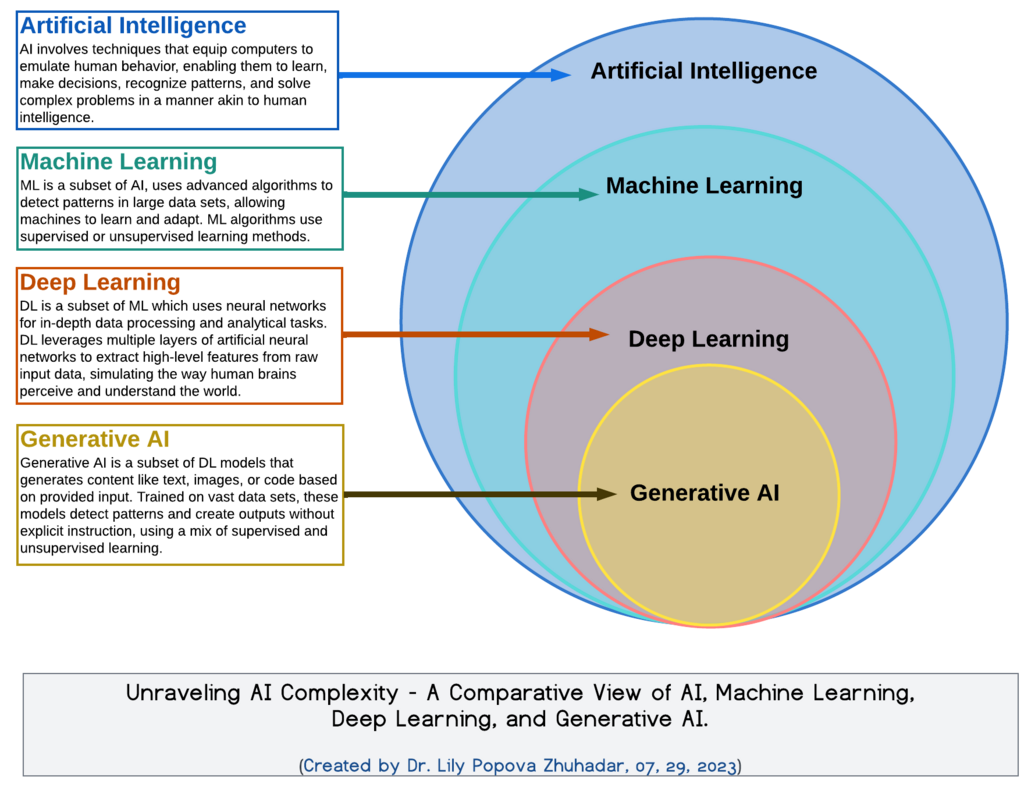
Just as a blueprint helps an architect predict how a building will stand, an AI model helps a computer make predictions based on new input. For an LLM, that prediction is often “what is the most likely next word?”
Inside the Model's 'Brain'
The core architecture of an LLM is an artificial neural network. Imagine a vast web of interconnected points, or 'neurons,' organized into layers. When you give the model a prompt, the input travels through this web. Each connection has a 'weight'—a number that determines how much influence one neuron has on the next. The model's final output is the result of these signals passing through countless weighted connections.
The 'Large' in Large Language Model refers to the sheer scale of this web. Modern models have billions or even trillions of these connections, which are called parameters. It's this immense complexity that allows them to capture the subtle nuances of language.
How Models Learn
An AI model doesn't start out knowing anything. It learns by being trained on a massive amount of data, like a huge library of books, articles, and websites. The training process is essentially a form of sophisticated pattern matching.
The model is given a piece of text with a word missing and is asked to predict that word. At first, its guesses are random and almost always wrong. But each time it guesses, it compares its answer to the correct one and adjusts those billions of internal weights slightly to improve its next prediction. This process is repeated trillions of times.
Over time, the model gets incredibly good at predicting the next word in a sequence. This simple task, when performed at a massive scale, enables the model to learn grammar, facts, reasoning styles, and even how to write code. It's not memorizing the data; it's learning the underlying patterns of how words fit together to create meaning.
Training isn't about memorization. It's about adjusting billions of tiny knobs (parameters) until the network gets good at predicting what comes next.
What Are AI Models Used For?
Because they are so good at processing and generating language, LLMs have a wide range of applications. You've likely encountered them already.
They power conversational chatbots that answer customer service questions, act as creative writing partners, or help you brainstorm ideas. They can summarize long documents, translate languages with impressive accuracy, and write computer code based on a simple description of the desired function.
Models can also analyze the sentiment of text, like figuring out if a product review is positive or negative. They can classify text into categories, making it easier to organize large amounts of information. Each of these applications stems from the model's core ability to understand the patterns in your prompt and predict a relevant, coherent sequence of words as a response.
| Application | Description |
|---|---|
| Text Generation | Creating original text like emails, poems, or articles. |
| Summarization | Condensing long documents into key points. |
| Translation | Converting text from one language to another. |
| Code Generation | Writing functional code in various programming languages. |
| Sentiment Analysis | Identifying the emotional tone behind a piece of text. |
| Chatbots | Powering conversational agents for support or information. |
Understanding this foundation—that models are pattern-matchers trained on vast datasets—is the first step to communicating with them effectively. Your prompt is the spark that guides their predictive process.
What is the primary, most fundamental task a Large Language Model (LLM) is trained to perform?
The 'Large' in Large Language Model refers to the immense scale of what?