AI Prompt Engineering Essentials
Introduction to AI Models
What is an AI Model?
At its heart, artificial intelligence (AI) is about creating systems that can perform tasks that typically require human intelligence. A huge part of modern AI is machine learning, which is a way of teaching computers to find patterns in data. Instead of writing explicit, step-by-step instructions for a task, developers feed a machine learning model vast amounts of examples. The model learns to recognize patterns from this data and then uses that knowledge to make predictions or decisions on its own.
Think of it like learning to identify cats. You wouldn't tell a child to look for pointy ears, whiskers, and a tail every time. Instead, you'd just show them lots of pictures of cats. Eventually, they learn the general "cattiness" and can spot a cat they've never seen before. AI models learn in a similar way, but with data instead of pictures.
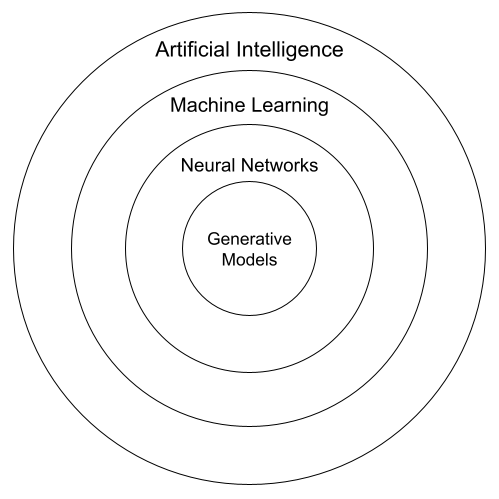
Many of these models are built using structures called neural networks, which are inspired by the human brain. When these networks become very large and complex, they're often called deep learning models. This is the foundation for some of the most powerful AI tools we see today, including those that can understand and generate human language.
Enter Large Language Models
A Large Language Model (LLM) is a type of AI that has been trained on an enormous amount of text data—we're talking about a significant portion of the internet, including websites, books, and articles. The main goal of this training is simple but powerful: to learn how to predict the next word in a sequence.
If you give an LLM the phrase "The cat sat on the...", its training helps it calculate that "mat" is a very probable next word, while "skyscraper" is not.
By repeating this next-word prediction process over and over, LLMs can generate entire sentences, paragraphs, and even essays that are coherent and contextually relevant. This core ability allows them to understand prompts, answer questions, and create new text. Models like OpenAI's GPT-3 and GPT-4 are prominent examples of LLMs that have pushed the boundaries of what's possible with text-based AI.

Capabilities and Limitations
LLMs have a wide range of impressive capabilities. They can write emails, draft articles, generate computer code, summarize long documents, translate languages, and carry on conversations. This makes them useful for everything from creative brainstorming to technical problem-solving.
However, it's crucial to understand their limitations. LLMs don't "think" or "understand" in the human sense. They are pattern-matching machines. This can lead to a few common issues:
| Limitation | Description |
|---|---|
| Hallucinations | An LLM might confidently state incorrect or completely fabricated information. It's generating text that is statistically plausible, not fact-checking. |
| Bias | Since LLMs learn from human-written text, they can inherit and amplify biases present in the training data related to gender, race, and culture. |
| Lack of Real-Time Info | Most LLMs have a knowledge "cut-off" date. They don't know about events that happened after their training data was collected. |
| No Common Sense | An LLM might lack the basic, real-world understanding that humans take for granted, leading to nonsensical or impractical suggestions. |
Understanding these limitations is the first step toward using these tools effectively and responsibly.
Common Applications
The versatility of LLMs means they're being integrated into countless applications across many industries. You're likely already interacting with them without realizing it.
Customer service chatbots that provide instant support, content creation tools that help marketers draft copy, and coding assistants that suggest lines of code to developers are all powered by LLMs.
In education, they can act as tutoring aids. In healthcare, they can help summarize patient notes and medical research. The core strength of LLMs lies in their ability to process and generate natural language, making them a powerful partner for any task involving text.
Ready to check your understanding? This quiz will cover the fundamental concepts of AI models and LLMs we've just discussed.
What is the fundamental difference between machine learning and traditional programming?
What is the primary, most fundamental task a Large Language Model (LLM) is trained to perform?
Now that you have a foundational understanding of what AI models are and how LLMs work, you're ready to learn how to communicate with them effectively.