AI Prompt Engineering Essentials
Introduction to Prompt Engineering
Talking to AI
Interacting with an AI is a lot like ordering a coffee. If you walk up to the counter and just say, “I want coffee,” you'll get something, but it might not be what you wanted. Maybe it's black coffee when you wanted a latte, or a large when you needed a small. But if you say, “I’d like a medium iced vanilla latte with oat milk,” you'll get exactly what you pictured.
Communicating with artificial intelligence works the same way. The instructions you give it are called prompts. The art and science of crafting these instructions is called prompt engineering.
Prompt engineering is the practice of crafting inputs—called prompts—to get the best possible results from large language models.
AI models don't think like humans. They don't have intentions, desires, or a deep understanding of the world. They are powerful pattern-matching machines that work with the data they've been trained on. A well-crafted prompt provides the necessary context and constraints to guide the AI toward the specific pattern you need, making the output more accurate, relevant, and useful. The quality of your input directly determines the quality of the output.
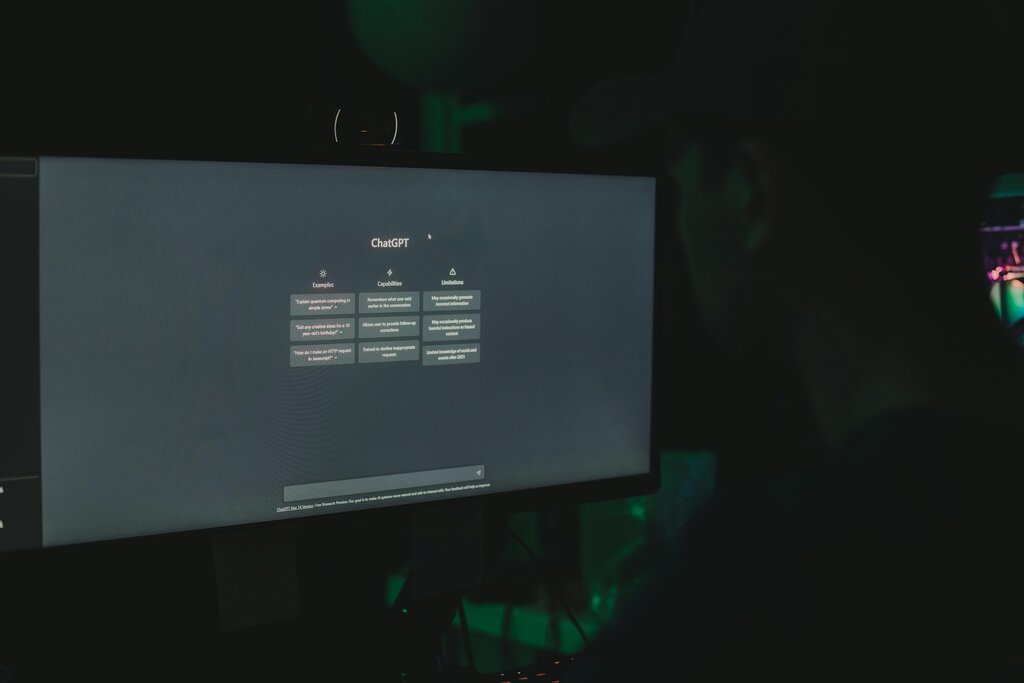
From Vague to Valuable
Let's look at the difference a good prompt can make. Imagine you want to use an AI to help write a story.
A vague prompt: Write about dogs.
This might produce a generic encyclopedia entry, a list of breeds, or a random paragraph. It's a gamble.
A specific prompt: Write a short, playful story for a five-year-old about a mischievous beagle puppy named Barnaby who learns to share his favorite squeaky toy with a shy kitten.
This prompt gives the AI clear instructions on the topic, tone, audience, characters, and plot. The result will be much closer to what you actually want.
Effective prompts often include several key pieces of information to guide the AI.
| Element | Vague Prompt | Specific Prompt |
|---|---|---|
| Task | Tell me about AI | Explain the concept of machine learning in simple terms |
| Context | Write an email | Draft a professional email to a client updating them on project status |
| Persona | Respond to this | Act as a friendly customer service representative and answer this question |
| Format | List some ideas | Generate five bullet points for a presentation slide about renewable energy |
| Audience | Explain this topic | Describe the water cycle to a 10-year-old using a simple analogy |
Why It Matters
Prompt engineering isn't just a technical skill for developers. It's becoming a fundamental skill for anyone who uses AI, with applications in countless fields. It's about communicating your intent clearly to a powerful tool.
-
In Education: Students can prompt an AI to explain complex topics in different ways, create study guides from lecture notes, or practice language skills with a conversational partner.
-
In Business: Marketers can generate creative ad copy, social media posts, and campaign ideas. Analysts can ask an AI to summarize reports, identify trends in data, or draft emails.
-
In Software Development: Programmers use prompts to generate boilerplate code, explain what a block of code does, debug errors, and write documentation.
-
In Creative Arts: Artists and designers can generate unique images for inspiration, writers can brainstorm plot points, and musicians can compose melodies.
Learning to craft good prompts turns AI from a novelty into a reliable and powerful assistant. It ensures the technology works for you, helping you achieve your specific goals more efficiently and creatively.
The provided text uses the analogy of ordering coffee to explain interacting with AI. What is the main point of this analogy?
What is the primary reason a well-crafted prompt is important when interacting with an AI?
By mastering the basics of prompt engineering, you can unlock more precise and useful responses from any AI model you interact with.