AI Proficiency for PK-12 Educators
Introduction to AI in Education
What Is AI?
Artificial Intelligence, or AI, is about creating computer systems that can perform tasks that typically require human intelligence. This includes things like learning from experience, understanding language, recognizing images, and solving problems.
Think of it less like a sci-fi robot and more like a very smart assistant. Instead of following a rigid set of pre-programmed instructions, an AI system can analyze new information and adapt its behavior. It's not about replacing teachers, but about providing powerful new tools to support them.
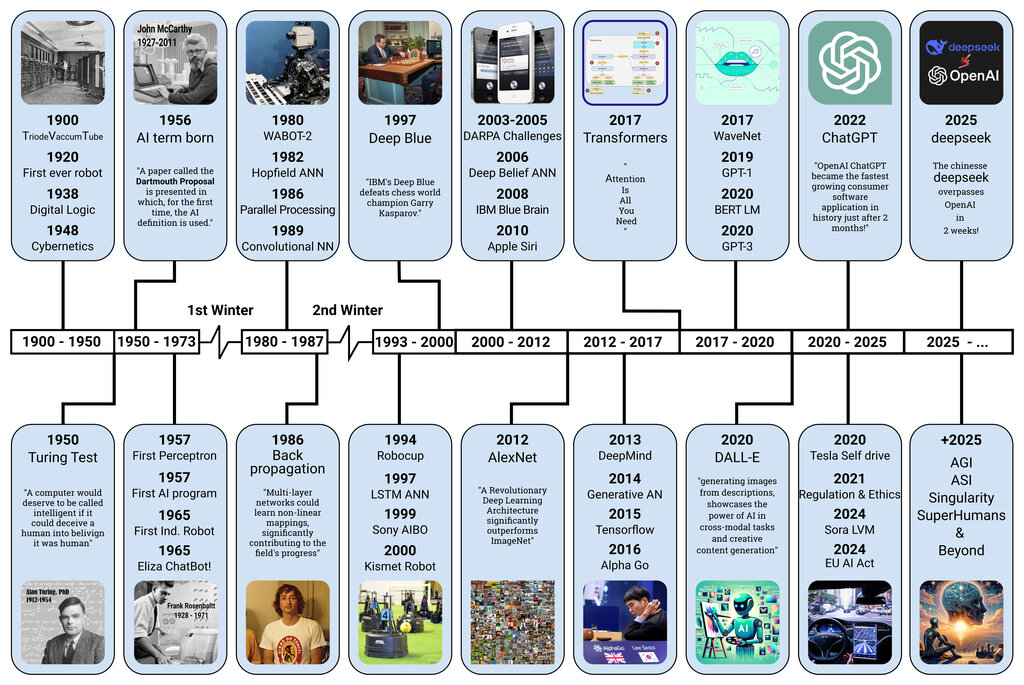
The goal is to build systems that can learn patterns and make predictions. This opens up a world of possibilities for the classroom, from creating personalized learning paths for students to automating administrative tasks for teachers.
For teachers, the rise of AI presents an exciting opportunity to enhance teaching, streamline tasks, and personalize learning for students.
The Brains Behind the Buzzwords
Two key technologies drive most of the AI you'll encounter in education: machine learning and natural language processing. Understanding them in simple terms helps demystify how AI tools actually work.
machine learning
noun
A type of AI that allows computers to learn from data without being explicitly programmed.
Machine learning (ML) is like teaching a computer by showing it examples. Instead of writing code that says, "If you see a cat, it has pointy ears, whiskers, and a tail," you show the computer thousands of pictures of cats. The ML model learns to identify the patterns that define a "cat" on its own.
In a school setting, an ML system could analyze student performance on quizzes to identify which topics are most challenging for a particular class. It learns these patterns from the data it's given.
natural language processing
noun
A field of AI that helps computers understand, interpret, and generate human language.
Natural language processing (NLP) is what allows us to talk to our devices. It’s the technology behind voice assistants and translation apps. NLP gives machines the ability to read, understand, and generate human text and speech.
This is crucial for educational tools that involve communication. For example, an AI writing assistant uses NLP to analyze a student's essay, check for grammar mistakes, and even suggest ways to make the writing clearer.
AI in the Classroom Today
AI is not a far-off future concept; it's already being used in many schools. These tools are designed to make learning more efficient, engaging, and tailored to individual student needs.
| AI Application | How It Works | Example in the Classroom |
|---|---|---|
| Personalized Learning | AI analyzes a student's progress and adapts the curriculum, offering extra help on tough topics or new challenges in areas of strength. | An adaptive math program gives a student more practice problems on fractions after noticing they struggled on a quiz. |
| Automated Grading | For certain types of assignments, like multiple-choice quizzes or math problems, AI can provide instant scoring and feedback. | A science quiz is graded automatically, freeing up the teacher to spend more time preparing the next day's lab experiment. |
| Content Creation | AI tools can help teachers generate lesson plans, quiz questions, or presentation materials based on a specific topic. | A history teacher uses an AI tool to create a quick review game based on a chapter about the American Revolution. |
| Writing Assistance | NLP-powered tools can help students with grammar, style, and structure, offering real-time suggestions to improve their writing. | A student uses a grammar-checking tool to proofread their essay, learning about common mistakes like subject-verb agreement. |
These applications aim to handle repetitive or time-consuming tasks, giving educators more time to focus on what they do best: inspiring and guiding their students.
The goal is not to automate teaching but to augment it, providing teachers with data and tools to make more informed decisions.
Benefits and Challenges
Integrating any new technology comes with both exciting opportunities and important considerations. With AI, it's crucial to have a balanced perspective.
Benefits
- Personalization: Learning can be tailored to each student's pace and style.
- Efficiency: Automating tasks like grading and lesson planning saves valuable teacher time.
- Accessibility: AI tools can provide support for students with diverse learning needs, such as text-to-speech or translation services.
- Engagement: Interactive AI-powered games and simulations can make learning more dynamic.
On the other hand, there are challenges to address.
Challenges
- Bias: AI systems learn from data, and if that data contains biases, the AI can perpetuate them.
- Data Privacy: Using AI tools requires careful handling of sensitive student data.
- Equity: Not all students or schools have equal access to the technology needed for AI-powered learning.
- Over-Reliance: It's important to ensure students are still developing fundamental skills like critical thinking and problem-solving, not just relying on AI for answers.
Navigating these challenges requires thoughtful planning and a focus on using AI as a tool to support, not replace, great teaching.
Ready to check your understanding?
What is the primary characteristic that distinguishes an AI system from a traditional computer program?
An AI tool that analyzes student essays to suggest improvements for grammar and clarity is primarily using which technology?
By understanding the basics of what AI is and how it works, educators can begin to explore these tools with confidence, making informed decisions about how to best use them to support their students' learning journeys.