AI Product Risk and Responsibility
Introduction to AI Risk Assessment
What Is AI Risk Assessment?
Building an AI system is a bit like building a bridge. You wouldn't just start construction without first understanding the potential problems. How much weight can it hold? What happens during a heavy storm? You need to identify potential dangers and plan for them. AI risk assessment is the same idea, but for artificial intelligence.
It’s a structured process for identifying what could go wrong with an AI system, figuring out how likely those problems are, and deciding what to do about them. The goal is simple: ensure that AI is deployed safely, ethically, and effectively. As AI systems make more decisions that affect our lives—from recommending medical treatments to filtering job applications—this process isn't just a good idea, it's essential.
Risk assessment helps us move from simply asking "What can this AI do?" to the more critical question, "What should this AI do, and what are the potential consequences?"
Common AI Risks
The risks tied to AI are unique. They often stem from the very data used to train the models and the complex, sometimes unpredictable, ways they operate. Here are a few of the most common issues that risk assessments look for.
| Risk | Description | Example |
|---|---|---|
| Algorithmic Bias | The AI system produces unfair or prejudiced outcomes for certain groups. | A hiring tool trained on historical company data consistently ranks male applicants higher because the industry has been historically male-dominated. |
| Privacy Violations | Personal or sensitive information is exposed or misused. | A healthcare chatbot inadvertently leaks patient conversation data due to a security flaw. |
| Unreliable Outputs | The AI generates incorrect, nonsensical, or made-up information (often called "hallucinations"). | A legal research AI cites fake court cases in a summary it provides to a lawyer. |
| Security Flaws | Malicious actors exploit vulnerabilities to manipulate the AI's behavior. | An attacker subtly alters a stop sign so a self-driving car's vision system sees it as a speed limit sign. |
| Misuse | The AI is intentionally used for harmful or unethical purposes. | A powerful text-to-speech model is used to create a realistic but fake audio recording of a public figure saying something they never said. |
How Is Risk Assessed?
While there are many specific frameworks, most AI risk assessments follow a similar, logical progression. It's a cycle, not a one-time checklist, because AI systems and the world they operate in are constantly changing.
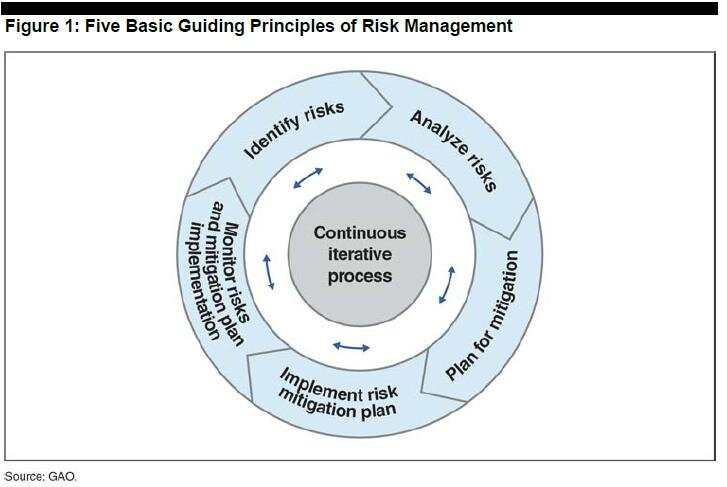
The process generally involves these steps:
-
Identify the Risks: The first step is to brainstorm everything that could possibly go wrong. This involves thinking about the AI's purpose, the data it uses, who will use it, and the context in which it will operate. What if the data is biased? What if the system is hacked? What if the outputs are misunderstood?
-
Analyze and Evaluate: Once risks are listed, the team evaluates each one based on two key factors: its likelihood (how probable is it that this will happen?) and its impact or severity (if it does happen, how bad will the consequences be?). A risk that is very likely and has a severe impact is a top priority.
-
Plan Mitigation: This is where you decide what to do about the identified risks. The goal is to reduce or eliminate them. Strategies might include gathering more diverse training data to fight bias, adding security measures to prevent attacks, or building in human oversight for critical decisions.
-
Implement and Monitor: After a plan is in place, the mitigations are implemented. But the work doesn't stop there. The system must be continuously monitored after deployment to see if the fixes are working and to watch for new, unexpected risks that may appear over time.
Who Is Involved?
Assessing AI risk isn't a job for one person or even one team. It requires a diverse group of people who bring different perspectives to the table.
-
AI Developers and Data Scientists: These are the people building the system. They have a deep technical understanding of the model's capabilities and limitations.
-
Domain Experts: If the AI is for healthcare, you need doctors and nurses involved. If it's for finance, you need bankers and analysts. These experts understand the real-world context and can spot potential problems the tech team might miss.
-
Legal and Compliance Experts: These professionals ensure the AI system complies with laws and regulations, especially around data privacy and consumer protection.
-
Ethicists: An ethicist helps the team think through the moral implications of the AI, focusing on fairness, accountability, and societal impact.
-
End-Users: The people who will actually use or be affected by the AI system have invaluable insights. Their feedback can uncover usability issues or unintended negative consequences.
An AI Impact Assessment and Risk Management Framework provides this essential mechanism, ensuring a thorough review of technical, ethical, legal, and social impacts before and during deployment.
By bringing these varied viewpoints together, organizations can build a more complete picture of the risks and create AI that is not only powerful, but also responsible and trustworthy.