AI Product Management Strategy and Execution
Data as Requirements
From Logic to Learning
In traditional software, we tell the computer exactly what to do. A product manager writes a Product Requirements Document (PRD) that details features and logic: if a user clicks this button, then show this screen. The logic is hard-coded by engineers.
AI turns this on its head. Instead of coding explicit rules, we show the system examples and it learns the logic itself. The quality of the final product—a recommendation engine, a fraud detection model, a language translator—depends entirely on the quality of the examples we provide. This means our primary requirement is no longer a set of logical rules, but a well-defined dataset.
Data ceases to be a backend asset and becomes the core specification. Shifting your mindset from defining functional requirements to defining data requirements is the first and most critical step in AI product management.
The BTD Framework
To build successful AI products, you need to balance three competing priorities: Business goals, Technological capabilities, and Data realities. The Business-Technology-Data (BTD) framework helps you manage this balancing act.
-
Business: What is the specific business problem you are trying to solve? For example, instead of a vague goal like "improve user experience," a clear goal is "reduce customer support tickets related to billing by 20% by automatically answering common questions."
-
Technology: What are the technical constraints? This includes the algorithms available, the expertise of your engineering team, and the infrastructure for training and deploying models. A state-of-the-art model is useless if you don't have the computing power to train it.
-
Data: What data do you have, and what data can you realistically get? This is the feasibility check. You might have a great business idea and the perfect algorithm, but if you don't have the right data, the project is a non-starter.
These three pillars are interconnected. A change in one affects the others. If the business goal changes, the data you need will change. If you discover a limitation in your data, you may need to adjust your business goal or technological approach.
The "Data" corner of this framework requires its own deep dive. You can't just assume the data you have is ready for AI. You need to perform an audit.
Auditing for AI Readiness
Before committing to an AI project, you must assess if your data is "AI-ready." This audit focuses on three key characteristics, often called the "Three Vs":
-
Volume: Do you have enough data? Machine learning models, especially complex ones like deep neural networks, learn patterns from vast numbers of examples. Insufficient volume can lead to a model that fails to generalize to new, unseen data. The amount you need varies wildly, from a few thousand examples for simple tasks to billions for training large language models.
-
Velocity: How quickly is new data generated and collected? For products that need to adapt to changing trends, like a news recommendation engine or a stock market predictor, high velocity is critical. If your data is static and updated only once a year, your model will quickly become stale.
-
Variety: Does your data represent the full range of scenarios your model will encounter in the real world? A model trained only on data from one demographic will perform poorly when deployed to a wider audience. Lack of variety is a primary cause of algorithmic bias, where a model systematically discriminates against certain groups.
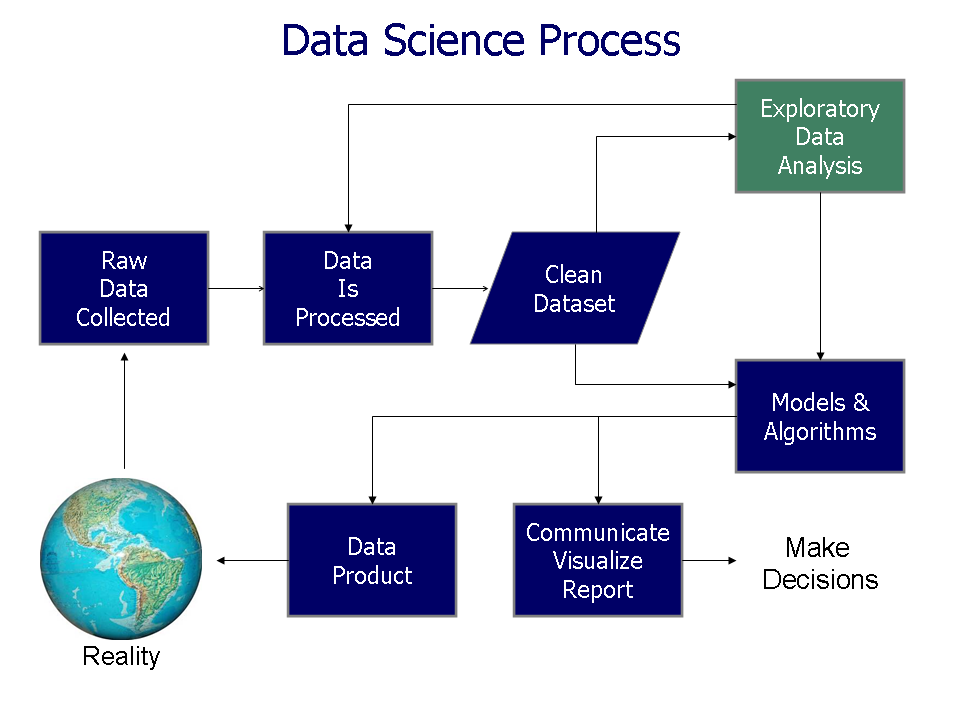
An audit is not a one-time check. It's a continuous process. As your product evolves and user behavior changes, your data requirements will change too.
Defining Data Quality
Once you've audited your data for the three Vs, you must define specific quality metrics. Poor data quality is the single biggest reason AI projects fail. Garbage in, garbage out.
Key quality metrics include:
-
Completeness: Are there missing values in your dataset? A user profile missing an age or location can't be used effectively for personalization. You need a strategy for handling incomplete data, whether it's discarding the record or filling in the gaps (imputation).
-
Bias: We've touched on this, but it's worth repeating. Does your data disproportionately represent one group over another? For example, a speech recognition model trained primarily on male voices will have a higher error rate for female voices. Identifying and mitigating bias must be a core requirement from day one.
-
Labeling Accuracy: Many AI models rely on labeled data, where humans have tagged examples with the correct answer (e.g., this image is a 'cat,' this email is 'spam'). If these labels are inconsistent or incorrect, the model will learn the wrong patterns. The process for ensuring accurate labels is a critical part of the data requirement.
For an AI system, a dataset with 5% inaccurate labels is like a textbook with 5% of its facts wrong. The system will learn those falsehoods just as readily as the truths.
A crucial distinction in data labeling is between explicit and implicit data. is information that users consciously provide, like filling out a profile or rating a movie. It's often high-quality but can be scarce. , on the other hand, is collected by observing user behavior: what they click on, how long they watch a video, what they add to their cart. It's abundant but can be noisy and harder to interpret. A user adding an item to their cart doesn't always mean they intend to buy it. Defining how you will interpret this implicit data is a key product decision.
Treating data as a core requirement is a fundamental shift, but it's the foundation upon which all successful AI products are built. By using frameworks like BTD, performing rigorous audits, and defining clear quality metrics, you move from hoping your model works to designing it for success.