AI Product Management Essentials
Introduction to AI Product Management
What Is AI Product Management?
At its core, AI product management is about guiding the creation and growth of products that use artificial intelligence. It's not just about adding an AI feature for the sake of it. It’s about deeply understanding user problems and figuring out where machine learning can provide a unique and powerful solution.
AI Product Management is the practice of managing the product lifecycle of AI-powered software, focusing on the integration of artificial intelligence to solve real-world problems and deliver value to users.
Think of a traditional product manager who works on a mobile banking app. Their focus is on user flows, feature sets, and a predictable user interface. Now, imagine an AI product manager working on the same app's new fraud detection system. Their focus shifts to data quality, model performance, and handling uncertainty. The system might flag a transaction as fraudulent, but it might be wrong. How does the product handle that? These are the kinds of new challenges AI introduces.
A Quick History Lesson
AI isn't new. The ideas have been around for decades. For a long time, though, AI was mostly confined to research labs or used for very specific, behind-the-scenes tasks like optimizing supply chains or sorting mail. The computing power and data just weren't available for widespread consumer products.
That all changed in the last 15 years. The rise of big data, powerful cloud computing, and breakthroughs in machine learning algorithms brought AI into the mainstream. Suddenly, AI wasn't just a back-end optimizer; it was the product itself. Think of Netflix's recommendation engine, Spotify's Discover Weekly playlist, or the voice assistant on your phone. These features are powered by complex AI models that learn from user behavior.
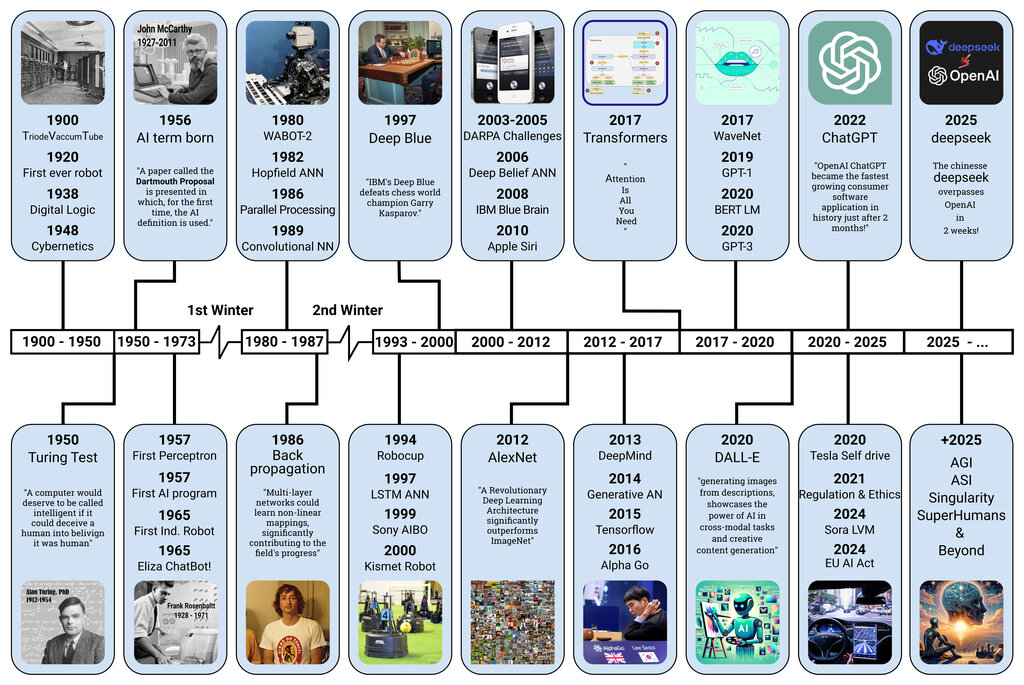
This shift created a need for a new kind of product leader, one who could navigate the complexities of AI development while staying focused on user value and business goals.
The AI Product Manager Role
So what does an AI Product Manager actually do? Their responsibilities include everything a traditional PM does, like defining product vision, creating roadmaps, and working with stakeholders. But they also have unique duties related to the nature of AI.
They must be the bridge between the data science team, engineers, designers, and the business. They don't need to be able to build a neural network from scratch, but they must understand the language of data science. They need to ask the right questions about data sources, model accuracy, and potential biases.
They spend a lot of time thinking about data. Is the training data representative of the real world? How will the product collect new data to keep learning and improving? How will we measure success when the output isn't a simple pass or fail, but a probability?
How Is It Different?
Managing an AI product is fundamentally different from managing a traditional software product. The development process is less predictable, the outcomes are probabilistic, and the reliance on data is absolute.
| Feature | Traditional Product Management | AI Product Management |
|---|---|---|
| Core Unit | Features & User Stories | Models & Data |
| Development | Deterministic, rule-based logic | Probabilistic, learning-based logic |
| Data Needs | Data is an output | Data is the critical input |
| Success Metric | Functionality (Does it work?) | Performance (How well does it work?) |
| User Experience | Predictable and consistent | Adaptive and sometimes uncertain |
| Roadmap | Feature-driven | Experimentation and iteration-driven |
One of the biggest shifts is moving from a world of certainty to one of probability. A traditional software feature either works or it doesn't. An AI model is never 100% perfect. It provides predictions with a certain level of confidence. The AI PM must decide what level of accuracy is acceptable for the user experience and how to design the product to handle cases where the AI gets it wrong.
This means embracing experimentation. AI product roadmaps are often less about shipping a specific feature on a specific date and more about running experiments to see if a model can achieve the performance needed to solve a user problem.
Finally, AI PMs must be deeply aware of ethical considerations. AI models can inherit biases from the data they're trained on, leading to unfair or harmful outcomes. It's the AI PM's responsibility to ask tough questions and champion fairness, transparency, and accountability in their products.
AI is imperfect, and product managers will likely encounter inaccuracies and biases in developing their own AI products or in the AI programs the product team uses to optimize their workflows.
Now that you have a foundational understanding of AI product management, let's test your knowledge.
What is the primary focus of an AI Product Manager?
A key shift for an AI PM is moving from a world of certainty to one of probability. What does this mean in practice?
Understanding these core concepts is the first step. AI product management is a dynamic field that requires a blend of traditional product skills with a new way of thinking about data, uncertainty, and user interaction.