AI Product Management Essentials
AI Fundamentals
What Is AI Anyway?
Artificial intelligence, or AI, is about making computers smart. The goal is to enable machines to perform tasks that typically require human intelligence, like learning, reasoning, and problem-solving. It's a broad field that has been around for decades, with roots stretching back to the 1950s when researchers first imagined a world with "thinking machines."
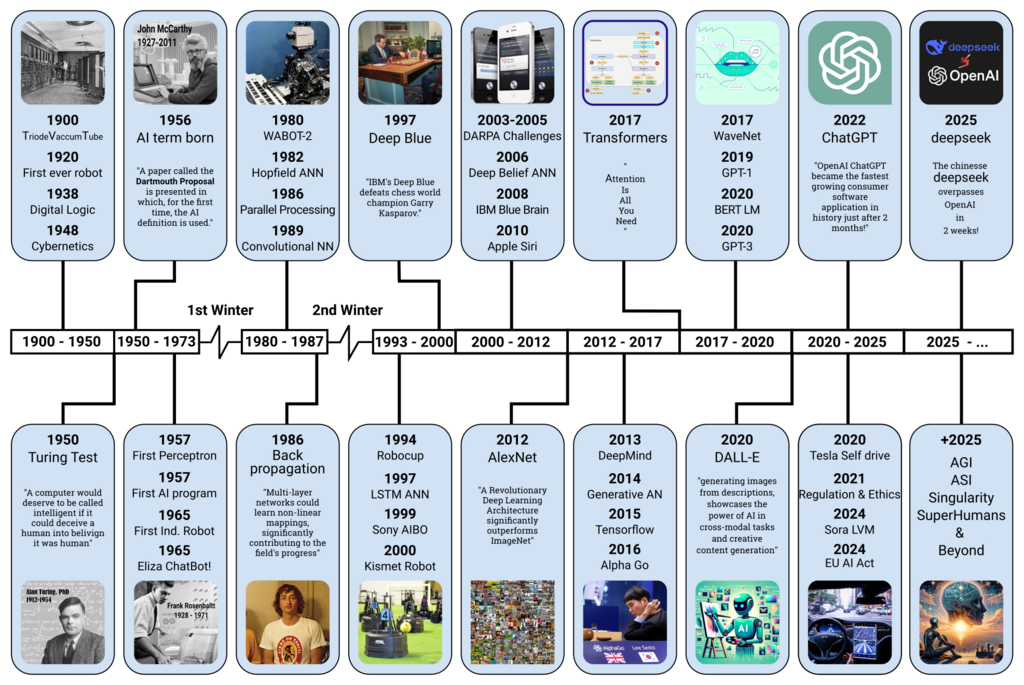
Early AI relied on hand-crafted rules. For example, a chess program might have rules like, "If the opponent's queen is threatened, move it to a safe square." This worked for simple problems, but it was brittle. The system was only as smart as the rules programmed into it.
The big shift came with a subfield of AI called machine learning. Instead of giving the computer explicit rules, we give it lots of data and let it figure out the rules for itself.
The Building Blocks of AI
To talk about AI, it helps to know a few key terms. The most important relationship to understand is between AI, Machine Learning, and Deep Learning. Think of them as nested dolls, where each one is a specialized part of the one before it.
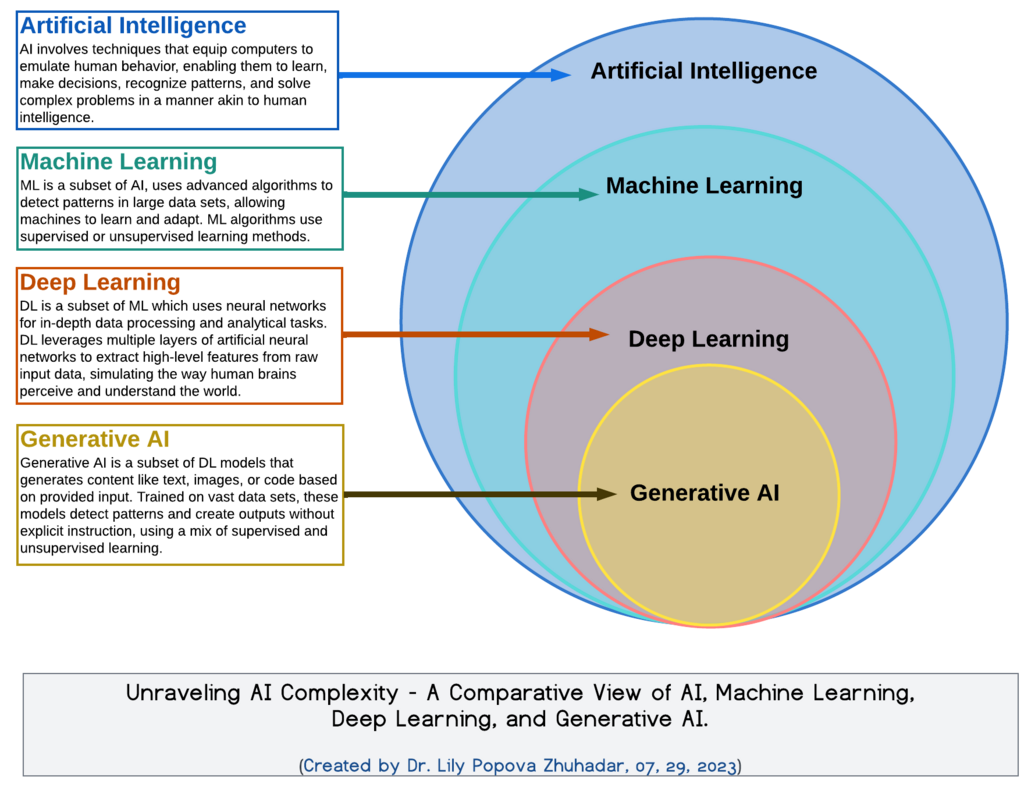
Here's a breakdown:
Artificial Intelligence
noun
The broad science of making machines that can simulate human intelligence and behavior.
Machine Learning
noun
A subset of AI where algorithms are trained on data to find patterns and make predictions without being explicitly programmed for the task.
Deep Learning is a further subset of Machine Learning. It uses complex structures called neural networks, which are loosely inspired by the human brain, to find intricate patterns in very large datasets. This is the technology behind image recognition and advanced language translation.
How Machines Learn
Machine learning isn't a single thing; it's a collection of approaches. The three main ways a machine can learn are supervised, unsupervised, and reinforcement learning.
Think of them as different ways of teaching. You can give a student an answer key, ask them to find groups in a pile of photos, or have them learn by trial and error.
Supervised Learning is like studying with flashcards. The algorithm is given a dataset where each piece of data is labeled with the correct answer. For example, you'd show it thousands of pictures of cats, each labeled "cat," and thousands of pictures of dogs, each labeled "dog." After training, it can look at a new picture and predict whether it's a cat or a dog.
Unsupervised Learning is the opposite. The algorithm gets a dataset with no labels and has to find patterns or structures on its own. Imagine giving a computer a box of different fruits and asking it to sort them. It might create groups based on color, shape, and size without ever being told the names "apple" or "banana." This is useful for tasks like customer segmentation, where a business wants to find natural groupings in its customer base.
Reinforcement Learning is about learning through trial and error. An algorithm, or "agent," learns to make decisions by performing actions and getting rewards or penalties. It’s like training a dog. When it performs a good action (like sitting), it gets a reward (a treat). Over time, the agent learns to take actions that maximize its total reward. This is the method used to train AI to play complex games like Go or to control robotic arms.
| Learning Type | How It Works | Common Use Case |
|---|---|---|
| Supervised | Learns from labeled data (has an "answer key") | Spam detection |
| Unsupervised | Finds patterns in unlabeled data (no answer key) | Customer segmentation |
| Reinforcement | Learns by trial and error (rewards and penalties) | Game playing AI |
AI in the Real World
AI is no longer just a concept from science fiction; it's a part of our daily lives. Many of the services you use every day are powered by some form of machine learning.
In e-commerce and entertainment, recommendation engines suggest products on Amazon or movies on Netflix. They learn your preferences from your past behavior to predict what you might like next.
In finance, AI systems are constantly at work detecting fraudulent transactions. They learn the patterns of normal spending and can flag activity that looks unusual, protecting customers from theft.
In healthcare, AI is helping doctors analyze medical images like MRIs and X-rays to spot signs of disease earlier and more accurately than the human eye alone.
And in transportation, AI is the brain behind logistics software that optimizes delivery routes, saving fuel and time. It's also the driving force behind the development of self-driving cars, which use a combination of learning types to navigate complex road conditions.
AI is imperfect, and product managers will likely encounter inaccuracies and biases in developing their own AI products or in the AI programs the product team uses to optimize their workflows.
Understanding these fundamental concepts is the first step for anyone looking to work with AI. Now, let's test your knowledge.
What is the primary goal of Artificial Intelligence?
Which statement best describes the relationship between Artificial Intelligence (AI), Machine Learning (ML), and Deep Learning (DL)?
With these basics in hand, you're ready to explore how these powerful technologies are turned into real products.