AI Processes Explained
Introduction to AI
What Is Artificial Intelligence?
Artificial intelligence, or AI, is the science of making machines smart. The goal is to create computer systems that can perform tasks that usually require human intelligence. This includes things like learning from experience, solving problems, understanding language, and recognizing objects in a scene.
Think of it like teaching a robot to be more like a person. Instead of just following a rigid set of pre-programmed instructions, an AI system can adapt and make decisions on its own. It's not about creating a walking, talking robot from a sci-fi movie; it's about building software that can reason and learn.
intelligence
noun
The ability to acquire and apply knowledge and skills.
A Brief History
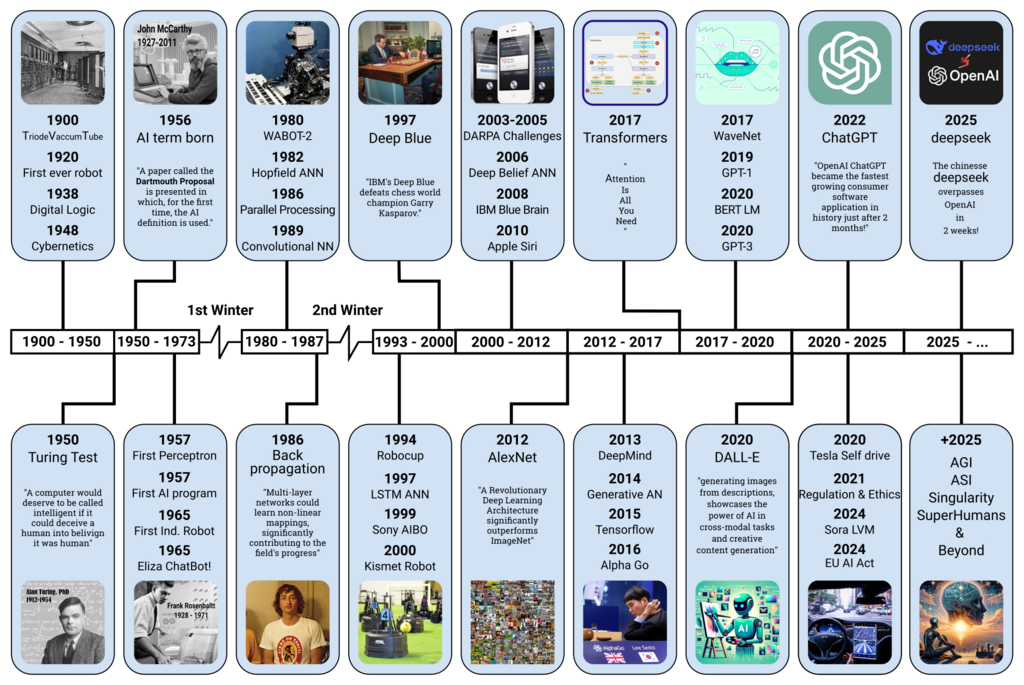
The idea of artificial minds has been around for centuries in myths and stories, but the actual scientific journey began in the mid-20th century. The term "artificial intelligence" was first used at a workshop at Dartmouth College in 1956. Early researchers were very optimistic, believing machines with human-like intelligence were just a few decades away.
Progress wasn't a straight line. The field went through periods of excitement and funding, known as "AI summers," followed by periods of disappointment and budget cuts, called "AI winters." Early AI focused on rule-based systems, where programmers tried to write down every possible rule for a given task. This worked for simple games like checkers but failed for more complex problems.
The real breakthrough came with a shift towards machine learning and, later, deep learning. Instead of being explicitly programmed, systems could now learn patterns directly from massive amounts of data. This approach, powered by faster computers and the internet's data explosion, is behind the AI boom we're seeing today.
The Family of AI
AI isn't a single technology. It's a broad field with many specialized subfields, much like "medicine" includes everything from cardiology to dermatology. Understanding these branches helps clarify what AI can do.
Machine Learning (ML) is the most common type of AI today. It's the process of teaching a computer to make predictions or decisions by showing it a lot of data. For example, you can train an ML model to recognize spam emails by showing it thousands of examples of spam and legitimate messages.
Deep Learning is a more advanced type of machine learning that uses complex structures called neural networks, which are loosely inspired by the human brain. Deep learning is particularly good at finding intricate patterns in large datasets, making it the engine behind many cutting-edge applications, like realistic image generation.
Other key subfields include:
-
Natural Language Processing (NLP): This gives machines the ability to understand, interpret, and generate human language. Chatbots, translation apps like Google Translate, and voice assistants like Siri all rely on NLP.
-
Computer Vision: This is how computers learn to "see" and interpret the visual world. It's used in self-driving cars to identify pedestrians, in social media to tag photos, and in medical imaging to help doctors spot diseases.
Clearing Up Common Myths
AI is powerful, but it's often misunderstood. Let's tackle a few common misconceptions.
| Myth | Reality |
|---|---|
| AI is a single, all-knowing brain. | AI is a collection of specialized tools. The AI that plays chess can't write an email or drive a car. |
| AI will take everyone's jobs. | AI will change jobs, automating some tasks while creating new roles that require human skills. |
| AI is conscious and has feelings. | Today's AI systems are not conscious or sentient. They are advanced pattern-matching tools that simulate understanding but do not experience emotions or self-awareness. |
AI's importance in society is growing every day. It's helping scientists accelerate medical research, making agriculture more efficient, personalizing education, and powering the recommendation engines that suggest what you should watch or buy next. Understanding its basic principles is no longer just for tech experts; it's becoming essential for everyone.
The goal is not to replicate human intelligence perfectly, but to create tools that augment our own abilities and help us solve complex problems.
Time to check what you've learned.
What is the primary goal of Artificial Intelligence (AI)?
The history of AI development is best described as a straight line of steady, uninterrupted progress.
Next, let's review the key terms we've covered.
By understanding the basics of what AI is, where it came from, and its main components, you're better equipped to navigate a world increasingly shaped by this transformative technology.