AI-Powered Systematic Problem Solving
Introduction to AI Problem Solving
What is AI Problem Solving?
At its heart, Artificial Intelligence is about solving problems. But this isn't about finding the answer to a math equation. In AI, problem-solving is a structured process of getting from a starting point to a desired goal when you're not sure how to get there. It's about teaching a machine to think through a challenge, much like a human would.
Think of an AI as a detective. A crime has been committed (the problem), and the goal is to identify the culprit. The detective can't just guess. They have to gather clues (data), analyze the evidence (find patterns), and follow a logical path to a conclusion (the solution). AI problem-solving works the same way: it defines a clear goal, considers all the available information, and uses a systematic process to arrive at an answer.
Artificial intelligence, at its core, involves the design of algorithms and systems that enable machines to perform tasks typically requiring human cognition, such as problem-solving, decision-making, pattern recognition, and language processing.
Why Structure Matters
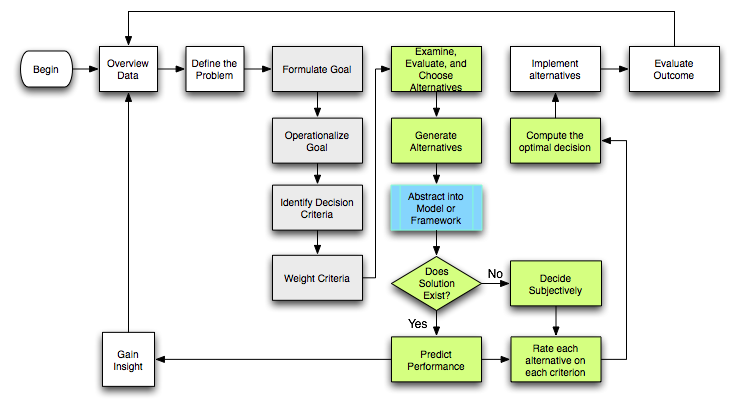
You can't just point an AI at a vague goal like "improve my business" and expect results. Success with AI depends on a systematic approach. You need to frame the problem in a way the machine can understand. This means defining the goal precisely, identifying the data it can use, and setting the rules and constraints it must follow.
Without this structure, an AI is just wandering in the dark. A clear, step-by-step process ensures the AI works efficiently and effectively toward the right objective. It turns a messy, real-world challenge into a solvable, logical puzzle.
Types of AI Problems
AI isn't a single tool; it's a toolbox filled with different instruments for different jobs. The first step in solving a problem is figuring out what kind of problem it is. Most challenges that AI tackles fall into a few common categories.
Classification: Sorting things into groups. Is this email spam or not spam? Is this tumor malignant or benign? Classification models are trained on labeled data and learn to assign new, unseen items to the correct category.
Classification is one of the most common tasks in AI. It powers everything from your email filter to medical diagnostic tools.
Continuous Estimation: Predicting a specific number. What will the temperature be tomorrow? How much will this house sell for? These models, also known as regression models, predict a value on a continuous scale rather than a category.
This is crucial for forecasting in finance, weather prediction, and estimating demand for products.
Ranking: Ordering items by relevance. When you search online, which result should be at the top of the page? Ranking algorithms determine the best order for a list of items based on a user's query or preferences.
Ranking is the magic behind search engines and social media feeds, ensuring you see the most relevant content first.
Recommendations: Suggesting items you might like. Based on the movies you've watched, what should you watch next? Recommendation engines analyze your past behavior to predict what you'll find interesting in the future.
These systems drive e-commerce sites and streaming services, personalizing the experience for each user.
Data Generation: Creating new, original content. Can you write a poem in the style of Shakespeare? Can you create a realistic image of a cat riding a bicycle? Generative AI models learn patterns from existing data to produce entirely new text, images, or sounds.
Understanding which type of problem you're facing is the first and most important step. It helps you choose the right approach and the right AI tools to find a solution.
According to the text, what is the fundamental nature of problem-solving in Artificial Intelligence?
Why is it critical to frame a problem in a structured way for an AI?
By framing challenges as specific problem types, we can apply the power of AI in a focused and effective way. This structured approach is the foundation of all modern AI systems.