AI-Powered Swift Coding
Introduction to AI in Swift
AI and the Modern Developer
Artificial intelligence is changing how software gets built. For developers, AI isn't a far-off concept anymore—it's a practical tool that lives right inside the code editor. Think of it as an incredibly smart assistant that understands programming languages, including Swift.
These AI assistants can do more than just complete a line of code. They can write entire functions based on a simple comment, explain complex code snippets in plain English, suggest bug fixes, and even help you learn new frameworks. They work by analyzing vast amounts of code from public repositories, learning the patterns, structures, and common practices of software development.
Supercharging Swift with AI
Using AI while writing Swift can significantly speed up your workflow. Imagine you need a function to sort an array of custom structs by a specific property. Instead of writing it from scratch, you could write a comment like // function to sort users by last name and let an AI assistant generate the code for you. This frees you up to focus on the bigger picture: the overall logic and architecture of your app.
It's not just about speed; it's also about quality. AI tools can act as a tireless pair programmer, spotting potential errors you might miss, suggesting more efficient ways to write a piece of logic, or refactoring a clunky function into something cleaner and more readable. By flagging issues and offering improvements, they help you write more robust and maintainable Swift code from the start.
A Tool, Not a Replacement
While AI coding assistants are powerful, it's crucial to understand their limitations. They are tools to augment your skills, not replace them. Relying too heavily on AI-generated code without understanding how it works can be a trap. The goal is to become a better developer, not just a better copy-and-paster.
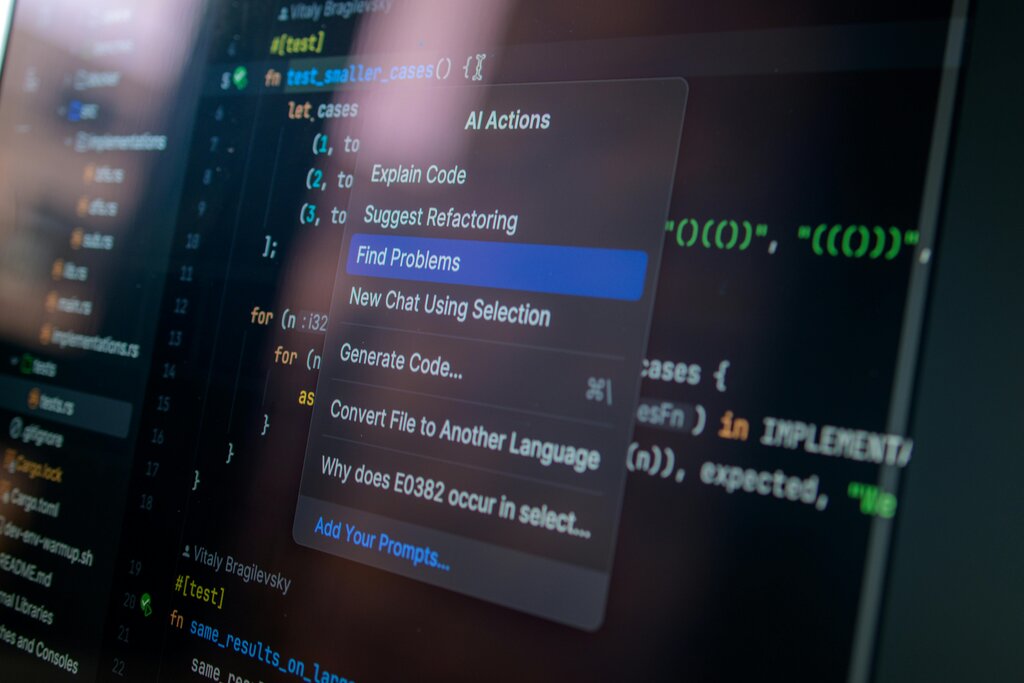
AI models can also make mistakes or "hallucinate," confidently providing code that is incorrect, insecure, or just doesn't make sense in your project's context. Always treat AI suggestions as a first draft. You, the developer, are still the final authority. It's your job to review, test, and truly understand every line of code that goes into your app.
By recognizing the limitations of AI and using it as a tool rather than a replacement, developers can harness its power to streamline their workflows while maintaining the high standards that software development demands.
Your AI Toolkit for Swift
Many AI tools are available to Swift developers. Some are standalone applications or web-based chats, while others integrate directly into your development environment.
| Tool Type | Common Use Case |
|---|---|
| IDE Extensions | Code completion, real-time suggestions, and refactoring inside Xcode or other editors. |
| Chat-based Assistants | Brainstorming solutions, explaining concepts, and generating boilerplate code. |
| Dedicated Code Tools | Analyzing code for bugs, optimizing performance, and generating unit tests. |
Tools like GitHub Copilot and Codeium offer extensions that work with many code editors, bringing AI-powered suggestions directly to your fingertips as you type. Meanwhile, large language models like ChatGPT can be great for high-level problem-solving and exploring different approaches to a feature. The key is to experiment and find the tools that best fit your personal workflow.
What is a primary benefit of using an AI coding assistant in Swift development?
When an AI coding assistant suggests a block of code, what is the most critical responsibility of the developer?