AI-Powered Renaissance Skill Synthesis
Introduction to Systems Thinking
Thinking in Circles, Not Lines
We often try to understand the world by breaking it into pieces. To fix a car, you check the engine. To grow a plant, you water it. This is linear thinking: a direct line from cause to effect. It's simple, useful, and often correct. But it doesn't tell the whole story.
Systems thinking is a different approach. It’s about seeing the big picture and understanding that everything is connected. Instead of just looking at the parts, you look at how they interact with each other within a whole. Think of a forest. You can study a single tree, but to truly understand it, you need to see its relationship with the soil, the sunlight, the other trees, the animals, and the rain. The forest is a system, and the tree is just one part of an intricate web of relationships.
Linear thinking isolates a single cause for a single effect. Systems thinking recognizes that outcomes are often the result of multiple factors interacting over time.
Consider trying to improve your health. A linear approach is simple: eat less and exercise more. A systems approach is more holistic. It considers how your sleep schedule, stress levels, social life, and access to healthy food all influence your choices and energy. These elements don't exist in isolation; they create a system that affects your overall well-being.
Core Principles
Systems thinking is built on a few key ideas. The first is interconnectedness. In any system, from your body to a company, different parts rely on each other. A change in one area will ripple through the entire system.
Another key idea is feedback loops. This is when the output of an action circles back to influence the original action. A classic example is a thermostat. When the room gets too hot (output), the thermostat signals the furnace to turn off (influencing the input). This is a balancing feedback loop, which seeks stability. There are also reinforcing feedback loops, which amplify change. Money in a savings account earns interest, which increases the balance, which then earns even more interest. The effect snowballs.
Finally, systems produce emergence. This means that complex patterns and behaviors can arise from the interaction of simple parts. A single ant is simple, but an ant colony can build complex structures and find food efficiently. The colony's intelligence is an emergent property of the system.
| Feature | Linear Thinking | Systems Thinking |
|---|---|---|
| Focus | Individual parts | The whole and its connections |
| Problem Solving | Find a single cause | Identify patterns and relationships |
| Perspective | A snapshot in time | Dynamic, evolves over time |
| Outcome | Predictable, direct | Often surprising, indirect |
Putting It to Work
So how does this apply to you? Systems thinking is a powerful tool for personal development and learning. When you want to learn a new skill, don't just focus on the hours you practice. Think about the entire system that supports your learning.
Are you getting enough sleep? Poor sleep impairs memory and focus. Is your diet helping or hurting your energy levels? Are you managing stress effectively? High stress can block learning. By seeing these elements as an interconnected system, you can make small changes in one area that lead to big improvements in another.
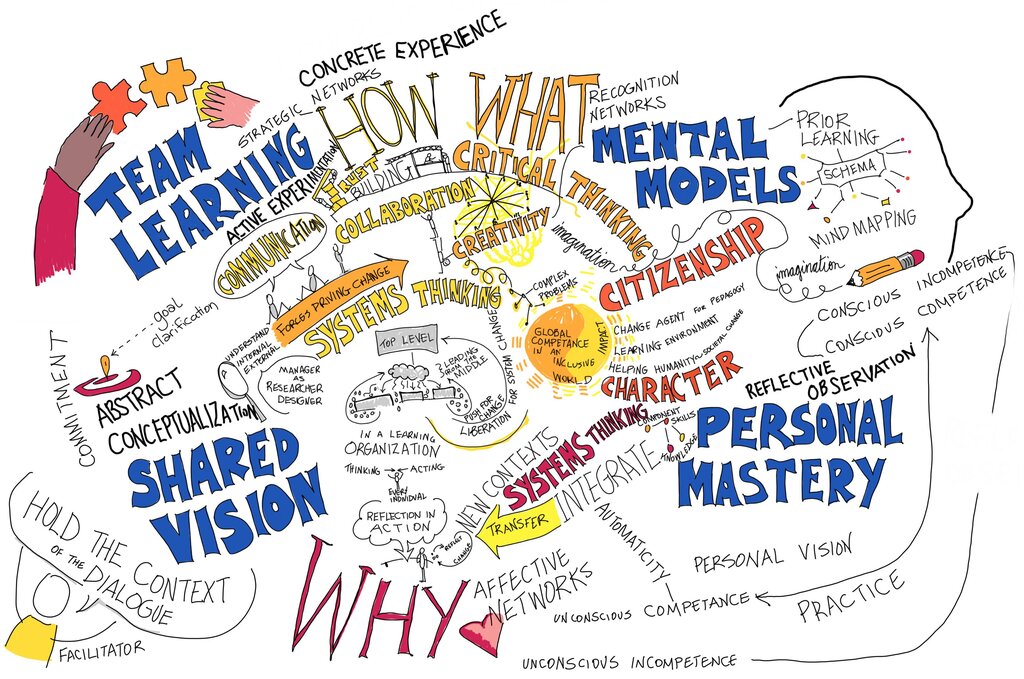
This perspective helps you move beyond simply treating symptoms. Instead of just forcing yourself to study more when you feel stuck (a linear solution), you can step back and analyze the system. Maybe the problem isn't your effort, but your environment or your learning method. You might discover that studying for shorter, more focused periods is more effective, or that you learn better when you explain concepts to someone else.
By understanding the principles of systems thinking, you can see the hidden forces and connections that shape your progress. It's about working smarter, not just harder, by improving the whole system of you.
Which statement best describes the primary difference between linear thinking and systems thinking?
A thermostat maintaining a stable room temperature by turning the heat on and off is an example of a balancing feedback loop.