AI-Powered Project Management
Introduction to AI in Project Management
AI and the Modern Project
Artificial intelligence, or AI, is no longer just a buzzword from science fiction. It's a powerful tool that is changing how we work, and project management is no exception. At its core, AI in project management is about using smart systems to help plan, execute, and oversee projects more effectively.
AI project management uses artificial intelligence to support planning, execution and monitoring of projects.
Think of a project manager as the captain of a ship. They're responsible for steering the project through calm and stormy seas, managing the crew, and ensuring the cargo arrives on time and on budget. In this analogy, AI acts as an advanced navigation system. It doesn't replace the captain, but it provides real-time data, predicts weather patterns (risks), suggests the most efficient routes (schedules), and automates routine checks, freeing up the captain to focus on the big picture and lead the crew.
By handling repetitive tasks and analyzing vast amounts of data, AI helps teams work smarter, not just harder. This leads to better decision-making, fewer surprises, and a higher chance of project success.
From Calculation to Collaboration
The journey of AI in project management didn't start overnight. It began decades ago with simple computational tools. Early project management software could perform complex calculations for scheduling and resource allocation, tasks that were incredibly time-consuming for humans. This was the first step: automation of calculation.
As computing power grew, so did the software's capabilities. We moved into an era of data analysis, where tools could track progress and generate reports. But this was still largely a reactive process. The real shift came with the rise of modern AI technologies.
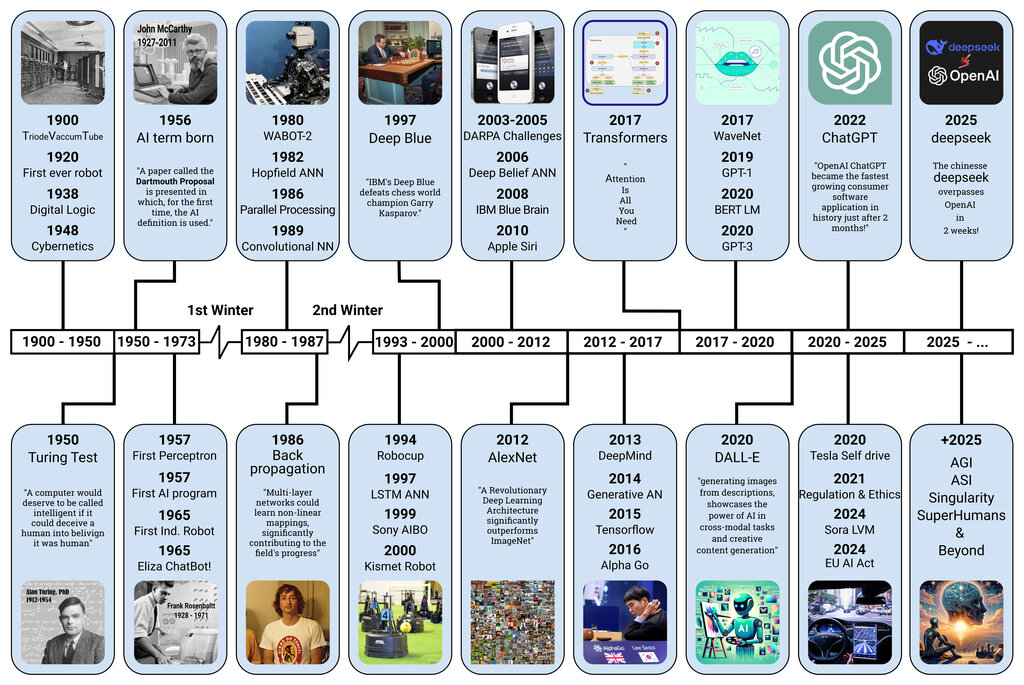
Today, we're in the collaborative era. AI has evolved from a simple calculator to a proactive partner, or a "co-pilot," for the project manager. This evolution is driven by a few key technologies that have become powerful enough to handle complex project management challenges.
The Brains Behind the System
Two main types of AI are at the heart of this transformation: Machine Learning and Natural Language Processing.
Machine Learning
noun
A type of AI that enables computer systems to learn from and make predictions or decisions based on data, without being explicitly programmed.
In project management, machine learning (ML) algorithms analyze historical project data—schedules, budgets, team performance, and outcomes. By identifying patterns in this data, ML can predict future risks, estimate task durations with greater accuracy, and even suggest the best team members for a particular job. It's like having an experienced advisor who has seen thousands of projects and can tell you what to watch out for.
Natural Language Processing
noun
A field of AI that focuses on enabling computers to understand, interpret, and generate human language.
Natural Language Processing, or NLP, is what allows AI to understand us. It's the technology behind chatbots that can answer team questions, and it enables tools to scan project documents, emails, and meeting transcripts to extract key action items, decisions, and sentiments. This saves countless hours of manual review and ensures important information isn't missed.
The adoption of these technologies is on the rise. A growing number of organizations are integrating AI into their workflows, recognizing its potential to deliver projects faster and more reliably. As these systems become more sophisticated, they will become an even more indispensable part of the project manager's toolkit.
In the 'captain of a ship' analogy, what role does AI play in project management?
Which technology is primarily responsible for an AI tool's ability to scan meeting transcripts and identify action items?
This shift from manual calculation to intelligent collaboration marks a new chapter in project management, one where data-driven insights and automation pave the way for greater success.