AI-Powered Music Production Mastery
AI in Music Production
A New Creative Partner
For decades, computers in the studio were mostly high-powered tape machines and calculators. They recorded, played back, and helped with the technical side of things, but the creative spark was all human. That's changing. Artificial intelligence is now stepping into the role of a creative collaborator, offering ideas and handling complex tasks that once took years to master.
The journey began with academic experiments in the mid-20th century, where computers composed simple, rule-based melodies. These early efforts were more curiosities than practical tools. Today, AI is integrated directly into the software musicians use every day, fundamentally altering the workflow of creating music from the first note to the final master.
From Idea to Arrangement
Every song starts with an idea—a melody, a chord progression, or a beat. But writer's block is a real hurdle. AI tools can act as a starting point or a source of inspiration when you're stuck. You can provide a simple melody, and an AI can generate a harmony that fits perfectly. Or you can give it a genre and a mood, and it can suggest a set of chord progressions to get you started.
For example, after programming a simple piano melody, you could ask an AI to create a complementary bassline in a funk style or a driving drum pattern for a rock track. The AI analyzes your input and generates parts that are musically coherent.
Beyond individual parts, AI is also becoming adept at arrangement. This involves deciding which instruments play what parts and how a song builds and evolves over time. An AI can take a basic 4-bar loop and suggest how to structure it into a full song, complete with an intro, verse, chorus, and bridge. It might suggest adding strings in the second chorus for more emotional impact or stripping the beat away for a quiet breakdown, helping to flesh out a simple idea into a complete piece.
Polishing the Sound
Once a track is composed and arranged, it needs to be mixed and mastered. Mixing is the process of balancing the individual tracks—like vocals, guitars, and drums—so they sit well together. Mastering is the final polish, ensuring the song sounds good on any system, from earbuds to a club sound system.
These stages are highly technical and traditionally require a deep understanding of audio engineering. AI is making them more accessible. AI-powered mixing tools can listen to your track and automatically adjust levels, panning, and effects based on genre conventions or a reference track you provide. So-called "intelligent equalizers" can identify and fix resonant frequencies that make a recording sound harsh or muddy.
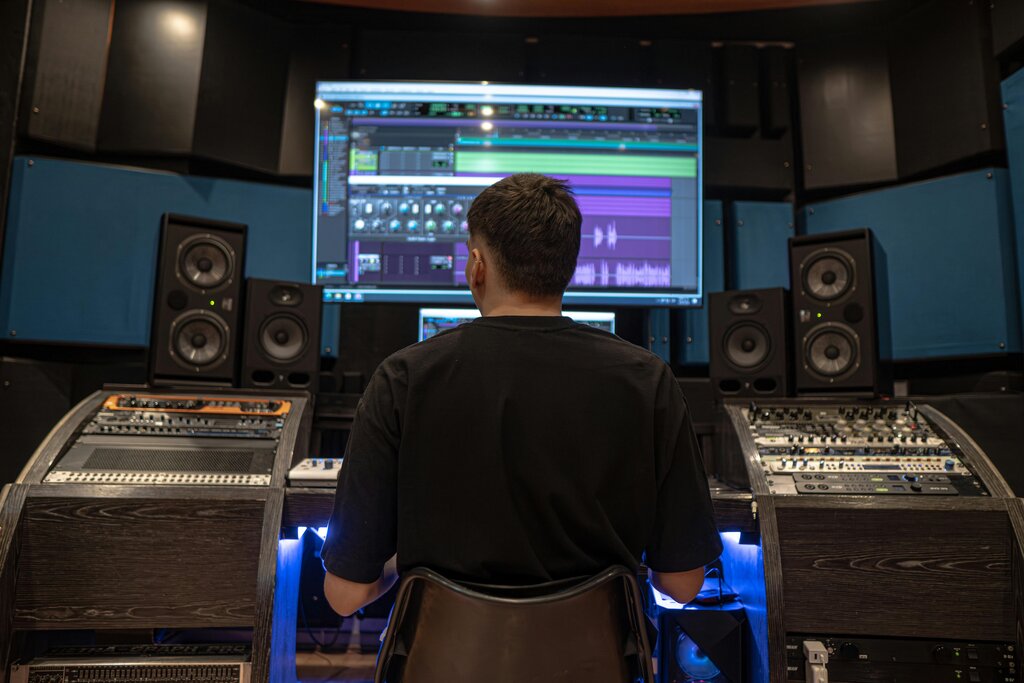
In mastering, AI algorithms can analyze your mix and apply the final compression, equalization, and limiting needed to bring it to a commercial volume and quality. While a seasoned mastering engineer's ears are still invaluable, AI provides an excellent and affordable starting point for independent artists.
Benefits and Boundaries
Integrating AI into music production has clear advantages. It lowers the technical barrier, allowing creators to focus more on their artistic vision. It can speed up tedious tasks and provide a constant stream of inspiration, helping artists overcome creative hurdles and finish more music.
However, this new technology also brings challenges. Who owns the copyright to a melody generated by an AI? Is it the user, the AI developer, or no one? There's also a risk of music becoming homogenized if too many creators rely on the same algorithms. The imperfections and unique choices made by human artists are often what give music its character and emotional depth. The key is to use AI as a tool, not a crutch, blending its computational power with human intuition and creativity.
Ready to check your understanding?
Before the widespread use of AI, what was the primary function of computers in a music studio?
A producer has a 4-bar loop but is unsure how to develop it into a full song. An AI tool that suggests adding an intro, verse, and chorus is assisting with which part of the process?
AI is a powerful new instrument in the studio, one that can suggest, assist, and polish. But like any instrument, its output is only as good as the vision of the artist using it.